
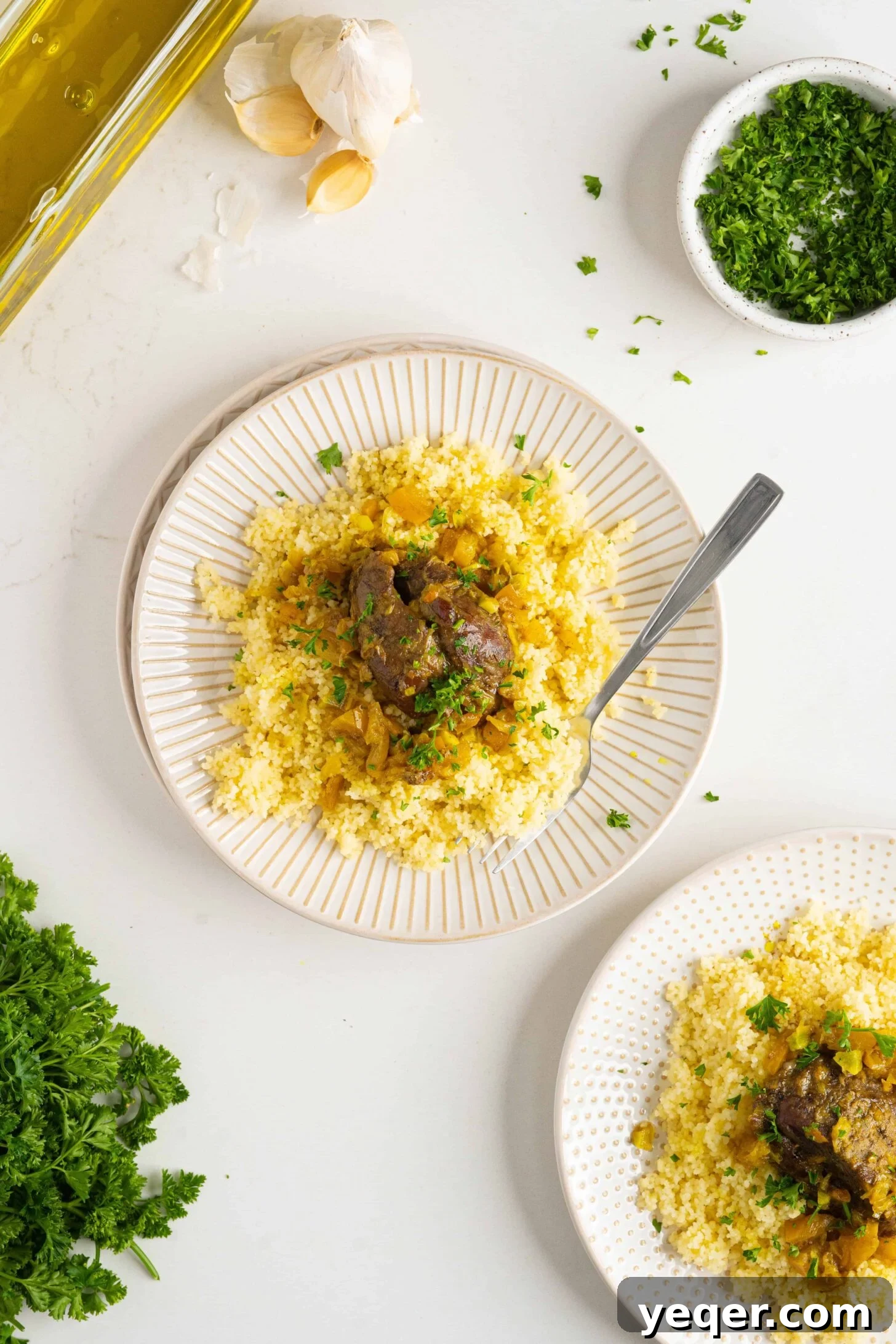
Journey to the heart of Moroccan culinary tradition with this exquisite Lamb Shank Tagine, a dish deeply rooted in the vibrant city of Marrakech. This recipe, inspired by generations of Moroccan cooking, masterfully blends tender lamb shanks with the unique zest of preserved lemons, aromatic garlic, and a symphony of traditional spices. The result is an incredibly flavorful, fall-apart tender lamb bathed in a rich, savory sauce that is utterly irresistible. Whether you serve it with crusty Moroccan bread or fluffy couscous, this tagine promises an authentic taste experience that transports you directly to the bustling souks and welcoming homes of Morocco.
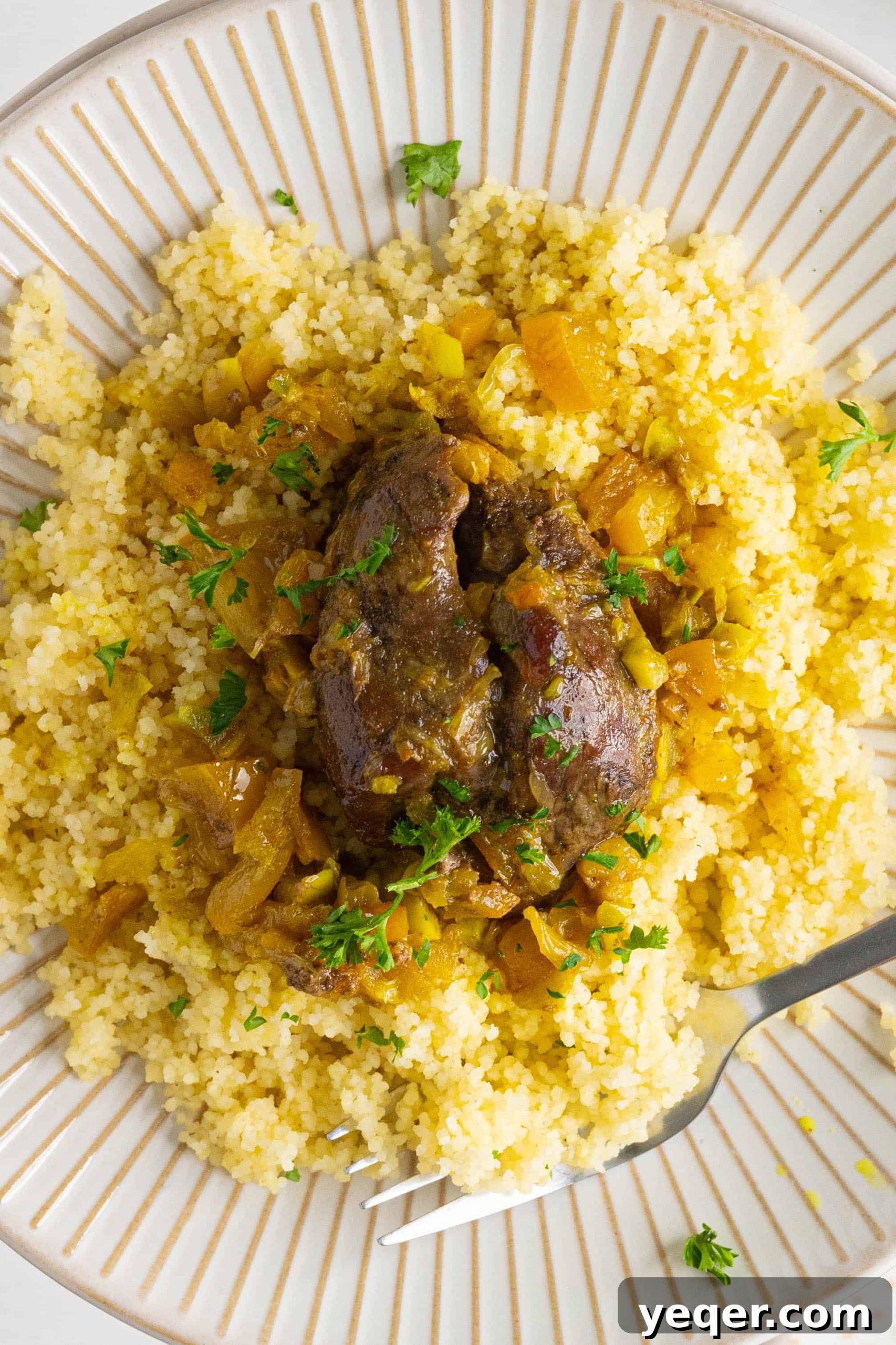
Discovering the Authentic Flavors of Marrakech: Lamb Shank Tagine (Tangia)
If you’re a connoisseur of authentic Moroccan cuisine and appreciate the depth that homemade preserved lemons bring to a dish, then this Lamb Shank Tagine is designed for you. It’s more than just a meal; it’s an exploration of flavors, a historical journey, and a testament to the slow-cooking artistry that defines Moroccan culinary heritage.
The magic of this dish lies in its simplicity and the quality of its core ingredients. The potent zest of preserved lemons, the pungent warmth of fresh garlic, and a carefully selected blend of traditional Moroccan spices transform humble lamb shanks into a dish of unparalleled richness and tenderness. Each bite offers a harmonious balance of savory, tangy, and earthy notes, making it a truly unforgettable experience.
While many associate “tagine” with the iconic conical clay pot, the dish known as “Tangia” (which this recipe closely emulates in flavor profile and slow-cooking method) has a distinct history in Marrakech. If you were fortunate enough to experience Tangia in its city of origin, you would witness a unique tradition. Chefs and locals in the bustling Medina often retrieve tall, urn-shaped clay pots – distinct in shape from the classic tagine – from deep communal ovens known as *ferrans*. These subterranean ovens, traditionally fueled by wood shavings from local hammams (public baths), provide an incredibly consistent, low heat that slow-cooks the Tangia to perfection over many hours.
Indeed, true Marrakesh Tangia is not traditionally prepared in the familiar conical tagine pot. However, the essence of its rich flavor and melt-in-your-mouth texture is perfectly achievable in a conventional tagine pot, or even a heavy Dutch oven, using a conventional oven. While the theatrical experience of the *ferran* is unique, the culinary journey we embark on with this recipe delivers the authentic taste and soul of Tangia right to your kitchen.
For those eager to delve deeper into the world of Moroccan slow-cooked stews, I highly recommend exploring other tagine variations. Expand your culinary repertoire with this hearty beef tagine, the ever-popular chicken tagine, or a vibrant and wholesome vegetable tagine.
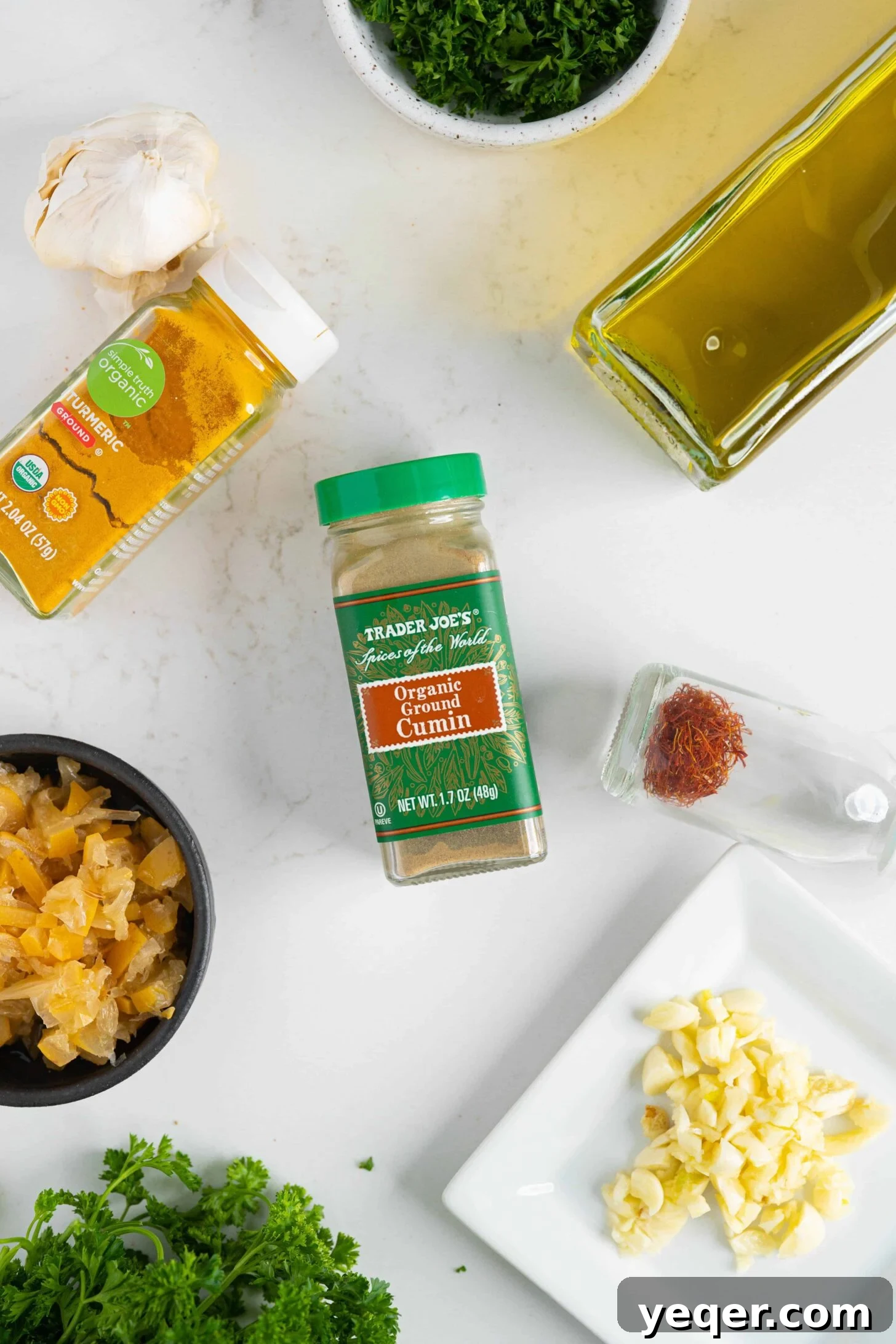
Key Ingredients for an Authentic Moroccan Lamb Shank Tagine
Crafting this soulful Moroccan Lamb Shank Tagine requires a selection of fresh, high-quality ingredients that are central to its distinctive flavor profile. Each component plays a vital role in creating the rich, tender, and aromatic experience you’re seeking.
- Lamb Shanks: Opt for bone-in lamb shanks, cut into manageable 3-4 inch cubes. The bone adds incredible depth of flavor and richness to the stew as it slow-cooks, resulting in unbelievably tender meat that effortlessly falls off the bone.
- Fresh Garlic: Minced garlic forms the aromatic foundation of our tagine. Its pungent warmth is indispensable in Moroccan cooking, building a robust flavor base for the lamb.
- Preserved Lemon: This is arguably the most crucial ingredient, lending a unique salty, tangy, and umami depth that cannot be replicated with fresh lemon. Ensure seeds are removed and the lemon is finely diced. If you haven’t made your own, consider trying this Moroccan preserved lemons recipe.
- Ground Cumin: A cornerstone spice in Moroccan cuisine, cumin provides an earthy, warm aroma that complements the lamb beautifully.
- Saffron Threads: Known as the “king of spices,” saffron imparts a subtle floral aroma, a hint of sweetness, and a beautiful golden hue to the sauce. If genuine saffron is unavailable or beyond your budget, a double quantity of turmeric can be used as an alternative for color, though the flavor profile will differ slightly.
- Ground Turmeric: This vibrant yellow spice contributes both color and a mild, earthy bitterness that balances the richness of the lamb and other spices.
- Fine Sea Salt: Essential for seasoning, salt enhances all the other flavors in the dish. Adjust to your taste, remembering that preserved lemons are already salty.
- High-Quality Olive Oil: A good extra virgin olive oil adds fruitiness and richness, helping to meld the flavors together and create a luxurious sauce.
- Ghee (Clarified Butter): Ghee adds a nutty, rich butteriness without the milk solids, contributing a distinct depth of flavor. If ghee is not readily available, you can use a double quantity of olive oil to achieve a similar fat content and richness.
- Water: The liquid base for the tagine, allowing the ingredients to braise slowly and create that magnificent sauce.
- Optional Garnish: Fresh Parsley: Minced fresh parsley adds a touch of color and a fresh, herbaceous counterpoint when sprinkled over the finished dish.
For precise measurements, please refer to the recipe card below.
Step-by-Step Instructions: Crafting Your Authentic Lamb Shank Tagine
Creating this Moroccan Lamb Shank Tagine is a rewarding process that relies on slow, gentle cooking to coax out incredible flavors and achieve a supremely tender texture. Follow these steps to bring a piece of Marrakech to your table.


Elevate Your Tagine: Easy Additions and Flavor Combinations
Once you’ve mastered the foundational Lamb Shank Tagine, you’ll find it serves as a magnificent canvas for culinary creativity. Its rich and savory base is incredibly versatile, allowing for endless possibilities to introduce new textures and flavors. While the traditional recipe is perfect on its own, here are some cherished Moroccan combinations that can easily be incorporated to delightful effect. Remember, delicate vegetables added too early might become overly soft; therefore, for optimal texture, it’s often best to incorporate most additional vegetables during the last hour of cooking.
These beloved combinations are actual Moroccan tagines I grew up enjoying, often made with either lamb or beef. I eagerly anticipate sharing detailed, official recipes for these delicious variations in the near future!
- Green Beans & Tomato: This pairing is nothing short of magical. The crisp, slightly resistant crunch of fresh green beans provides a wonderful textural contrast to the tender lamb, while the vibrant acidity of fresh or canned tomatoes cuts through the richness of the dish, adding a bright, tangy dimension. It’s a classic for a reason!
- Artichoke Hearts & Peas: As a personal favorite, I seize every opportunity to include succulent artichoke hearts in my cooking. When combined with sweet, tender green peas, this variation becomes a truly special experience. The earthy notes of artichoke beautifully complement the lamb, while the peas add a burst of fresh sweetness.
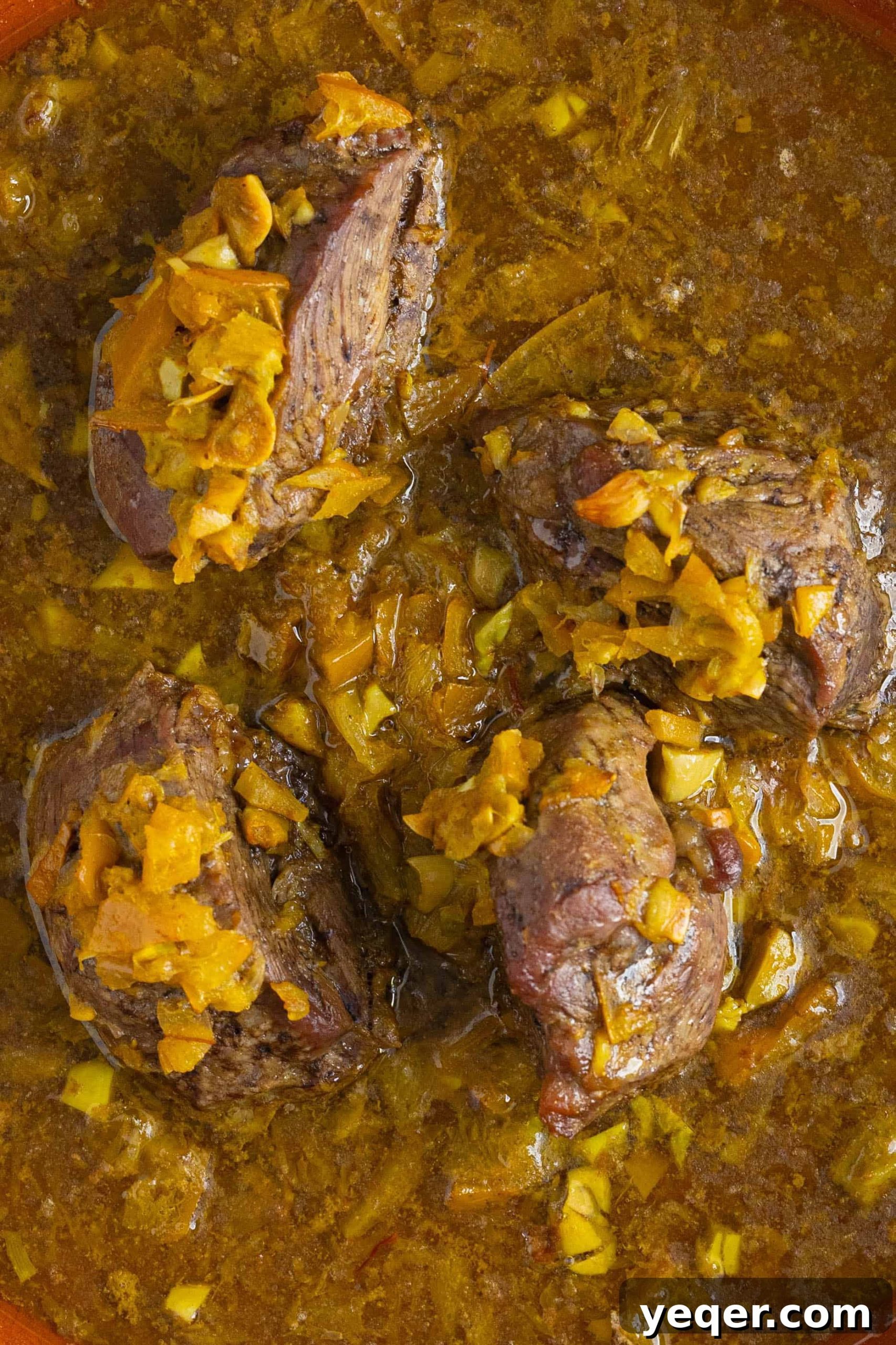
- Apricots or Prunes & Toasted Almonds: While this sweet and savory combination might have been less appealing to my younger palate, it has become a cherished favorite in adulthood. The concentrated sweetness and slightly tart notes of dried apricots or prunes, when rehydrated and slow-cooked, provide an exquisite counterpoint to the savory lamb. Finished with a sprinkle of crunchy toasted almonds, this tagine offers a delightful complexity and textural harmony.
Perfect Pairings: What to Serve with Your Moroccan Tagine
Serving your Lamb Shank Tagine is an art in itself, and traditionally, it’s accompanied by an array of fresh Moroccan salads. This pairing is not merely customary; it’s a culinary necessity, providing a refreshing counterpoint to the rich, deeply flavored tagine. The cool, crisp textures and vibrant flavors of these side dishes beautifully balance the warmth and intensity of the slow-cooked lamb.
- Moroccan Salads: A collection of fresh, zesty salads is the ideal accompaniment. This classic Moroccan tomato salad, with its simple yet vibrant flavors, is my top recommendation for cutting through the richness of the lamb. You will also find immense enjoyment in a savory Moroccan carrot salad, offering a touch of sweetness and spice, or a hearty lentil salad, which adds a wonderful earthy texture and nutritional balance to your meal.
- Traditional Moroccan Mint Tea: No Moroccan meal is truly complete without a pot of fragrant Moroccan mint tea. Served piping hot and often sweetened, this refreshing beverage is the perfect digestive and a symbol of Moroccan hospitality. Its invigorating minty notes provide a lovely cleanse for the palate after a rich meal.
- Fresh Seasonal Fruit: In Morocco, fresh fruit often serves as the quintessential dessert. It’s a light, natural, and refreshing end to a satisfying meal. Beautifully arranged platters of seasonal fruits are frequently presented directly after the main course, offering a sweet and healthy finish.
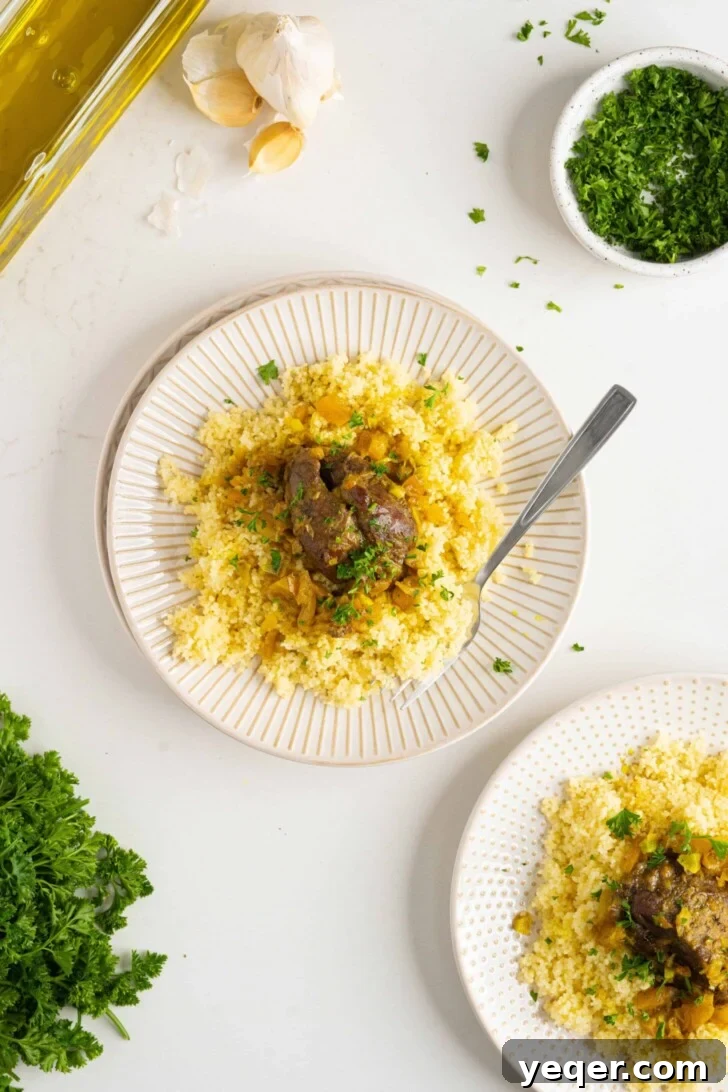
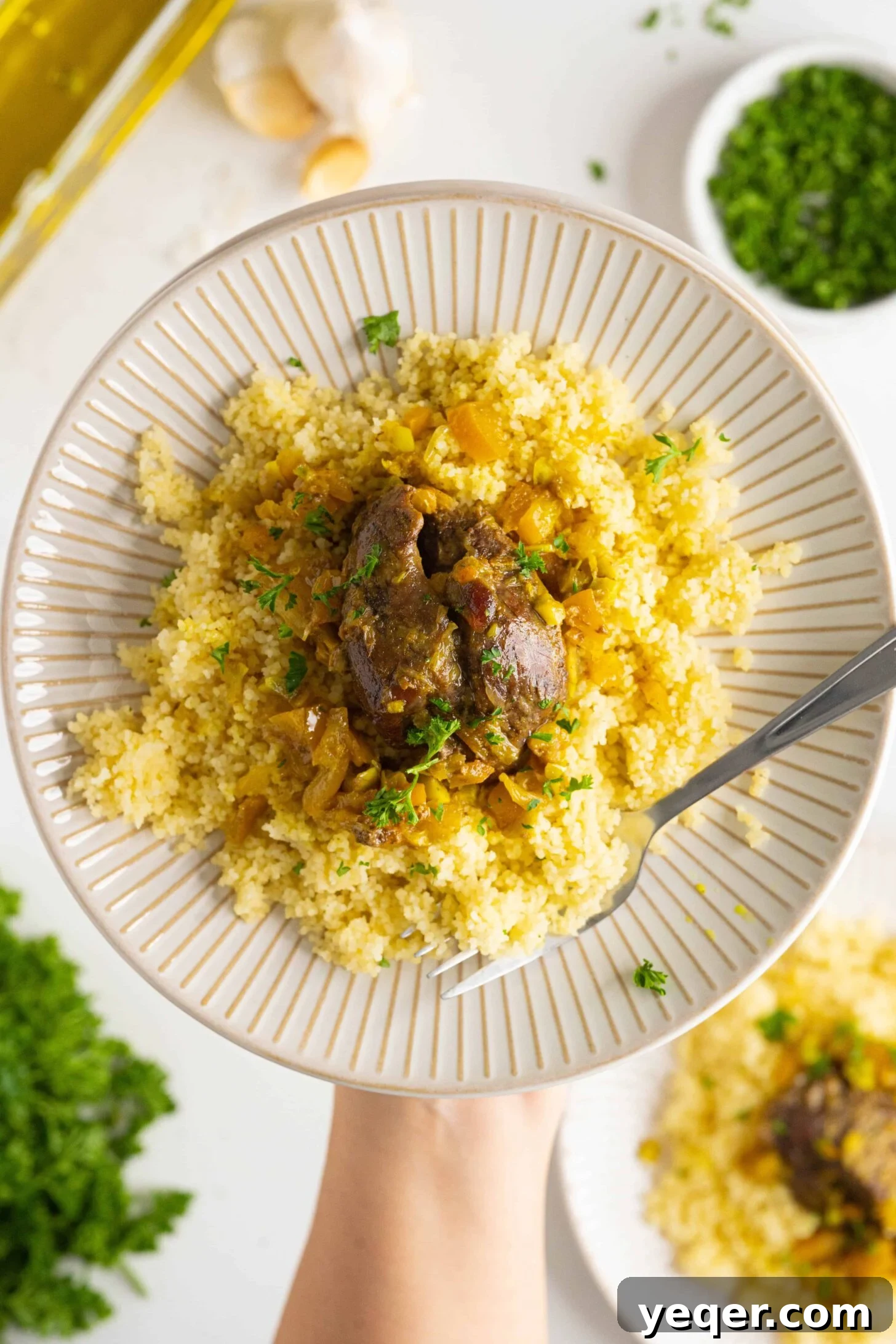
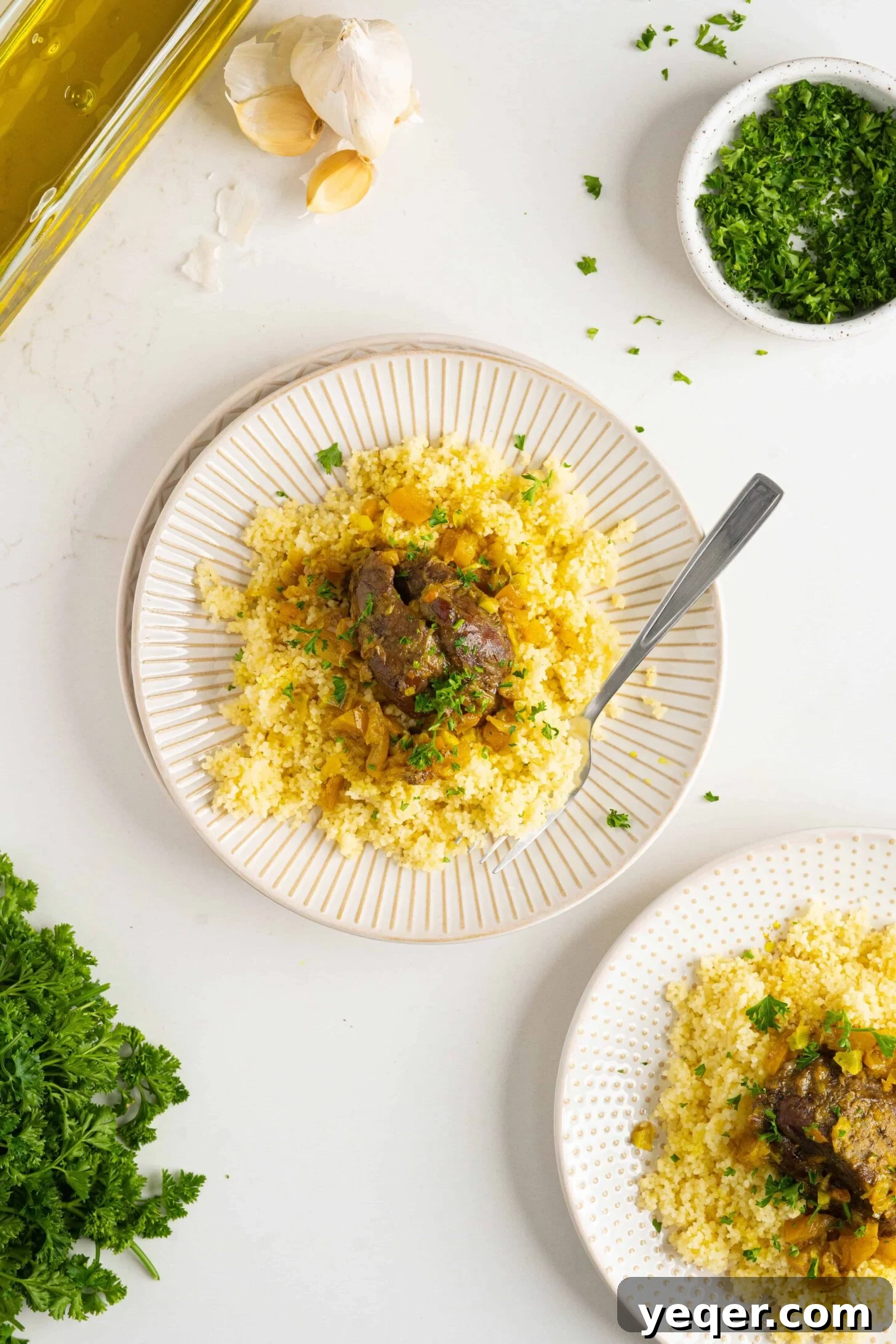
- Warm Bread or Fluffy Couscous: This tagine is designed to be enjoyed with something that can soak up its magnificent sauce. Traditionally, freshly baked Moroccan bread (khobz) is the utensil of choice, torn into pieces and used to scoop up the tender lamb and savory gravy. Alternatively, and equally delicious, is serving the tagine over a generous bed of light and fluffy couscous, which readily absorbs all the delectable juices, as pictured.
Essential Equipment for Cooking Moroccan Tagine
To embark on your Moroccan culinary journey and create this authentic Lamb Shank Tagine, the primary specialized piece of equipment you’ll need is a cooking vessel that can handle slow, gentle braising. While the traditional Tangia from Marrakech is prepared in a distinctive urn-shaped clay pot, its essence can be captured beautifully in other versatile options.
Choosing Your Cooking Vessel:
- The Tagine Pot: This is the most common and accessible option for home cooks. A traditional tagine consists of a shallow circular base and a tall, conical lid designed to trap steam and return moisture to the dish, ensuring tender results. While it differs from the *tangia* pot, it excels at creating the same moist, slow-cooked environment. I’ve been incredibly fortunate to inherit my collection of tagines from my father, each carrying stories and seasoning from years of use. However, I understand that sourcing an authentic, handmade tagine directly from Morocco isn’t always practical for everyone.
- Dutch Oven: If a tagine pot isn’t available, a heavy-bottomed Dutch oven with a tight-fitting lid is an excellent substitute. Its ability to retain and distribute heat evenly, coupled with a lid that minimizes moisture loss, makes it perfectly suitable for slow-braising dishes like this lamb tagine.
Recommended Tagine Brands for Home Cooks:
For those looking to invest in a quality tagine pot, whether it’s your first or an addition to your collection, I’ve compiled a short list of trusted brands that are widely available and perform exceptionally well. These options offer durability and excellent heat retention, mimicking the conditions of traditional Moroccan cooking:
- Le Creuset Tagine: I particularly admire this tagine by Le Creuset for its exceptional sturdiness and superior heat distribution. Crafted from enameled cast iron, it’s built to last and provides consistent cooking results, making it a reliable choice for any home chef.
- Emile Henry Tagine: This option from Emile Henry, made from high-resistance ceramic, offers a cooking experience that feels remarkably close to using a traditional Moroccan clay pot. Its natural clay material helps to gently tenderize ingredients and infuse flavors deeply, creating a truly authentic taste.
No matter which vessel you choose, the key is to allow the ingredients ample time to slow-cook and meld, transforming simple components into a rich and complex masterpiece.
Bismillah! (In the name of God – a common Arabic phrase used before starting something, often a meal or work, akin to ‘bon appétit’.)

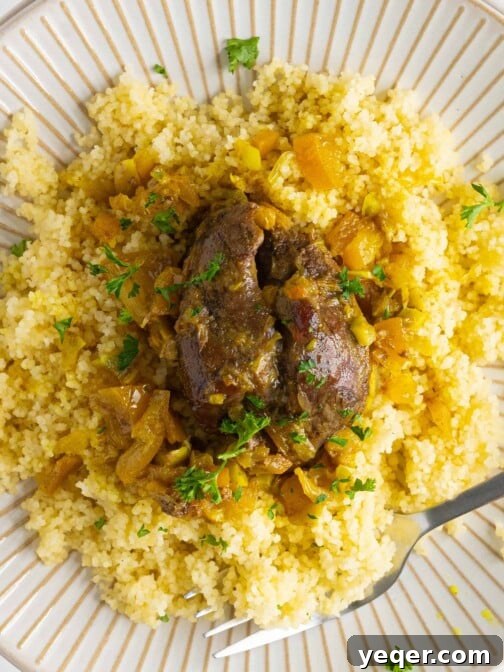
Authentic Moroccan Lamb Shank Tagine (Tangia)
- Author: Salima Benkhalti
- Prep Time: 10 minutes
- Cook Time: 4 hours
- Total Time: 4 hours
- Yield: 3–4 servings
- Category: Entree, Dinner, Lunch
- Method: Tajine, Tagine
- Cuisine: Moroccan, Mediterranean
- Diet: Gluten Free
Description
This Moroccan Lamb Shank Tagine, originating from the bustling markets and ancient traditions of Marrakech, is a true celebration of flavor. Infused with the aromatic notes of garlic, the unique zest of preserved lemon, and the rich depth of slow-cooked lamb, this dish is a culinary masterpiece. The resulting succulent sauce, brimming with fragrant spices, is perfect for soaking up with a fresh baguette or serving over a delicate bed of couscous, promising an authentic taste of Morocco.
Ingredients
- 2 lb lamb shanks, cut into 3-4 inch cubes
- 5 cloves garlic, minced
- 1 preserved lemon, diced with seeds removed
- 3 tsp cumin
- 1 tsp saffron (use twice the turmeric if you can’t find saffron)
- 2 tsp turmeric
- 1 tsp salt
- 1 tbsp olive oil
- 1 tbsp ghee (use twice the olive oil if you can’t find ghee)
- 1 tbsp water
- Moroccan bread or couscous (optional, for serving)
Instructions
- Prep the oven to 275 degrees F / 135 degrees C. Start by preheating your oven to 275 degrees Fahrenheit (135 degrees Celsius) for a slow, gentle cook. Arrange the lamb shank pieces evenly in the base of your tagine pot.
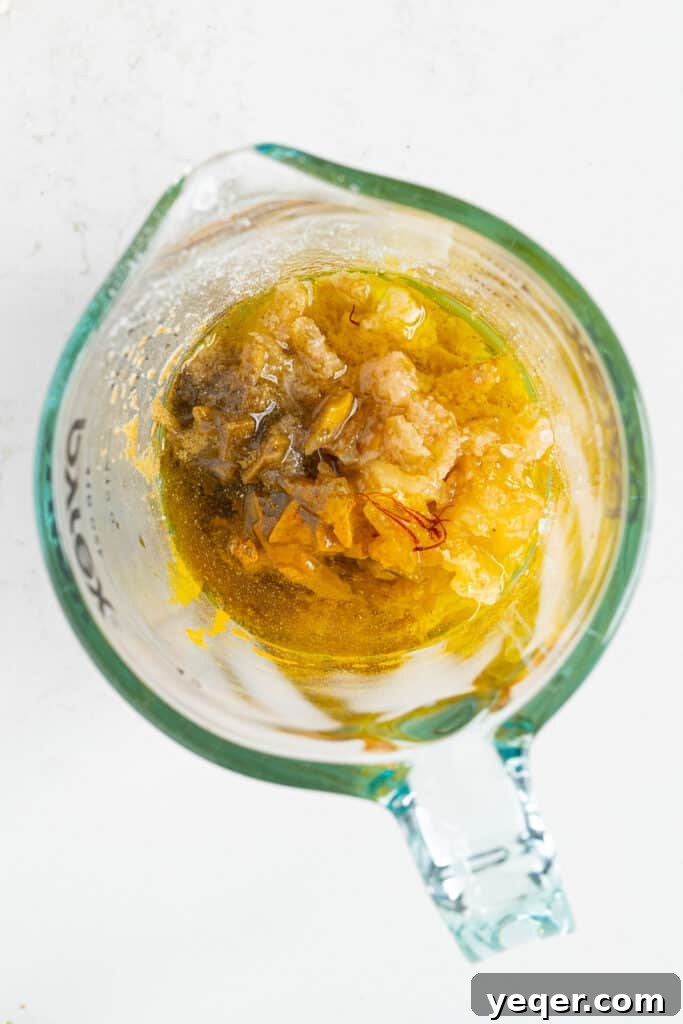
- Prep the marinade. In a small bowl, combine the minced garlic, diced preserved lemon, cumin, saffron (or turmeric), salt, olive oil, ghee, and water. Mix these ingredients together thoroughly until well combined, then pour the mixture generously over the lamb in the tagine.
- Bake for 2 hours, or until lamb is fully cooked and tender. Cover the tagine securely with its lid and bake in the preheated oven for at least 2 hours, or until the lamb is incredibly tender and easily pulls apart. For fall-off-the-bone tenderness, cook until internal temperature reaches 190-205°F (88-96°C).
- Serve. Enjoy this flavorful tagine with traditional Moroccan bread (khobz) or your favorite crusty bread to soak up the rich sauce. Alternatively, serve it over freshly cooked couscous, perhaps garnished with a sprinkle of minced parsley for freshness.