
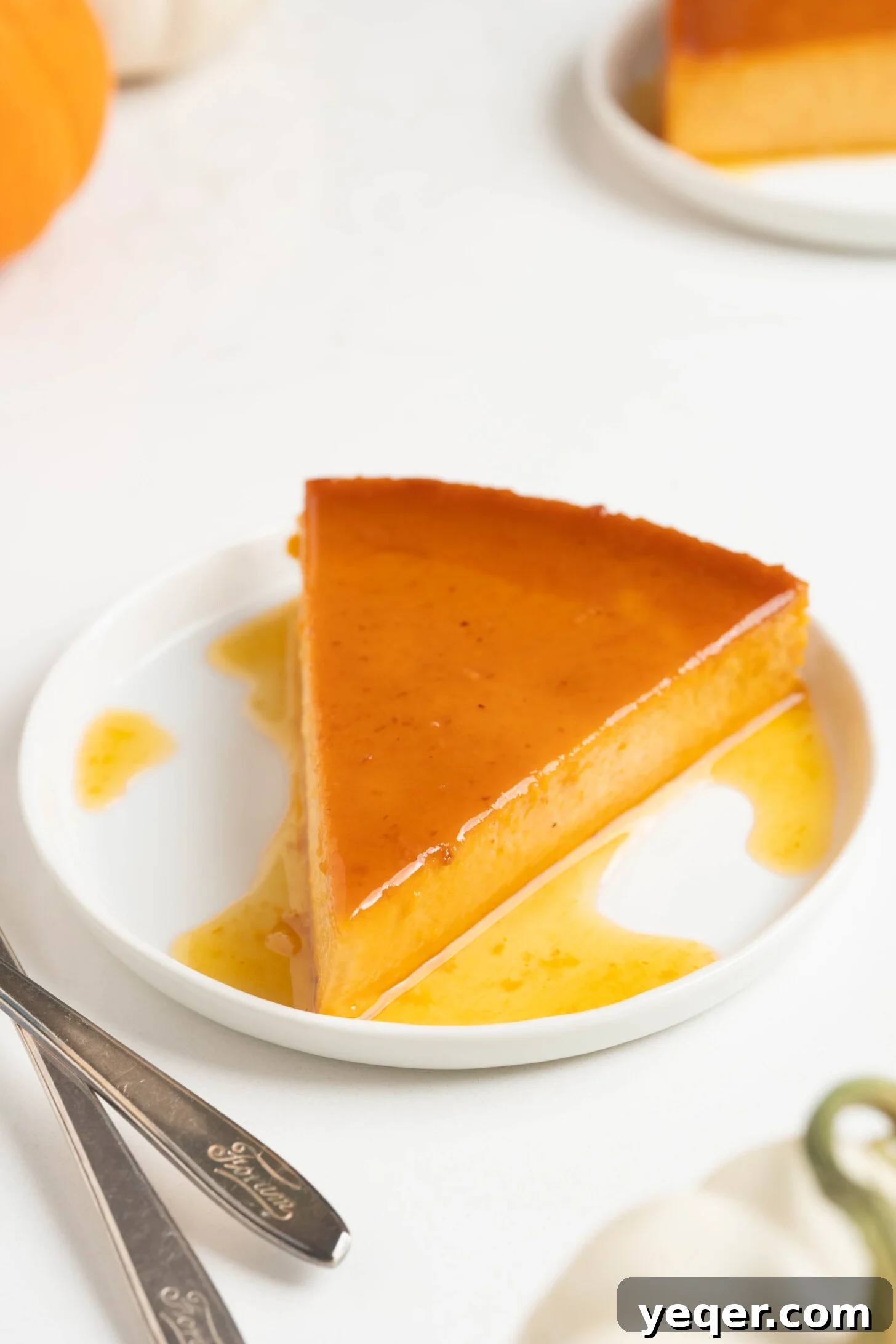
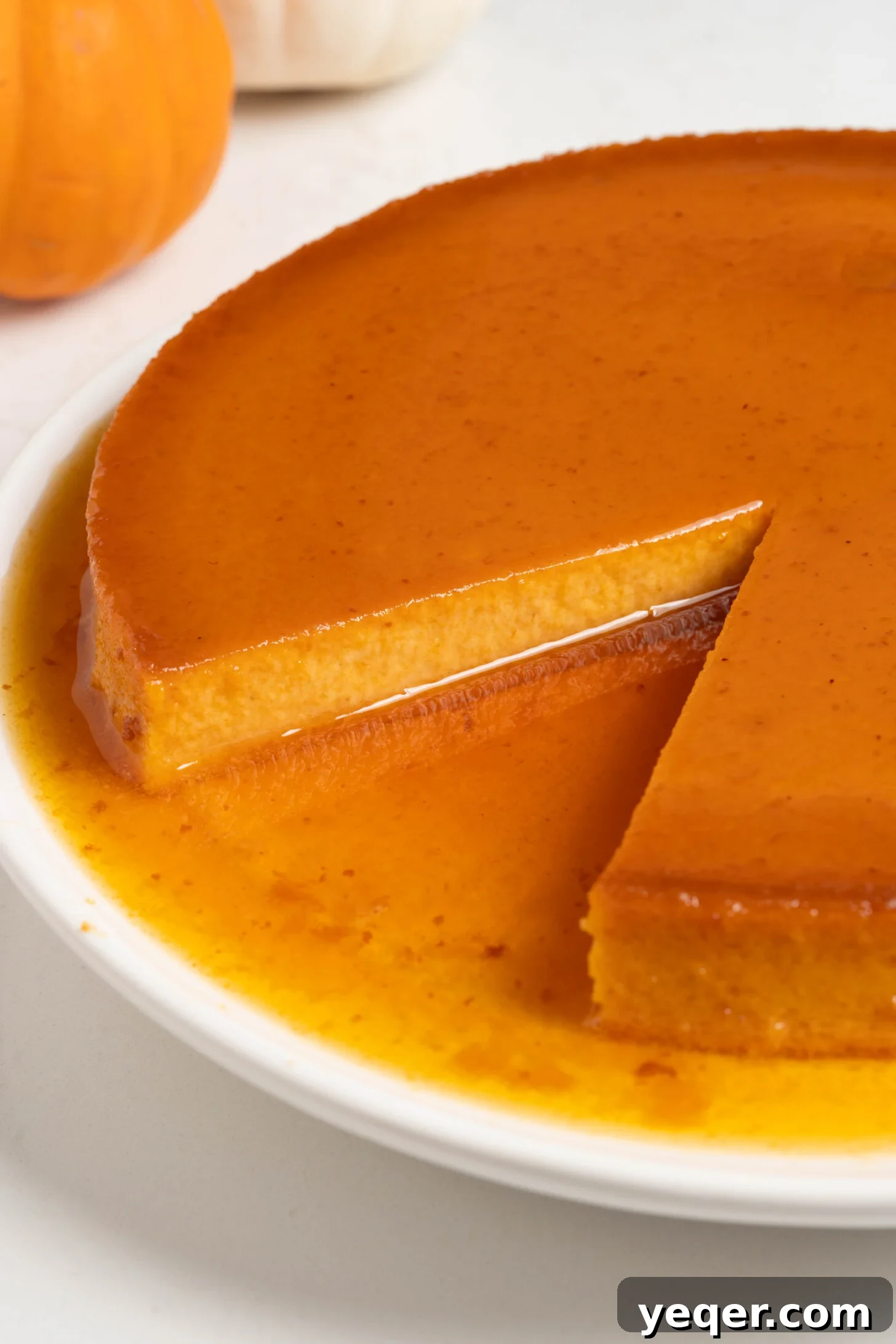
Welcome the cozy flavors of autumn into your kitchen with this delightful Pumpkin Flan (Flan de Calabaza). This recipe offers a unique and festive twist on the beloved traditional Puerto Rican dessert, infusing its signature creamy custard base with the rich, earthy notes of pumpkin. Topped with a glistening, classic caramel sauce, this flan is a perfect blend of nostalgic comfort and seasonal celebration. Whether you’re a seasoned flan maker or new to this exquisite treat, our guide will help you create a dessert that is both impressive in presentation and wonderfully easy to prepare.
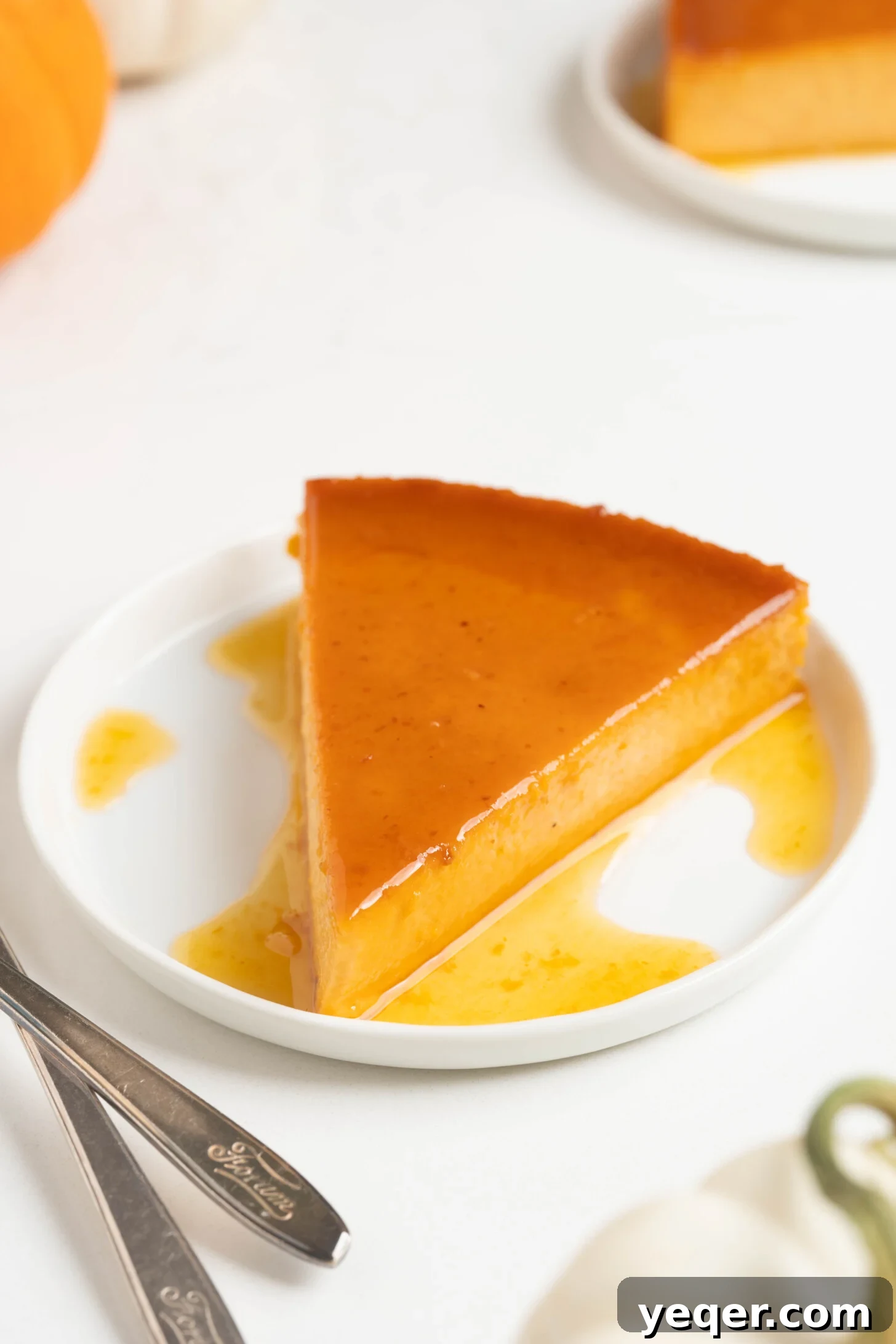
This Flan de Calabaza transforms ordinary gatherings into special occasions. Its velvety smooth texture and deep, comforting flavors evoke the essence of pumpkin pie, but with the elegant, jiggly consistency unique to flan. The secret to its incredible flavor lies in blending a full cup of pumpkin puree with staple ingredients like evaporated milk, rich whole milk, fragrant vanilla extract, and farm-fresh eggs. This combination creates a custard that’s not only incredibly smooth but also deeply satisfying, making it an ideal dessert for Thanksgiving, Halloween, or any autumn get-together.
Inspired by one of our blog’s most cherished recipes, my mom’s authentic Puerto Rican flan, this pumpkin rendition maintains the classic technique and charm. The entire custard base comes together effortlessly in a blender, then is carefully poured over a homemade, golden caramel sauce. This method ensures a seamless, beautiful presentation every time, where the caramel naturally cascades over the flan once inverted, creating a stunning visual and an irresistible taste.
The Allure of Flan: A Global Sweet Treat
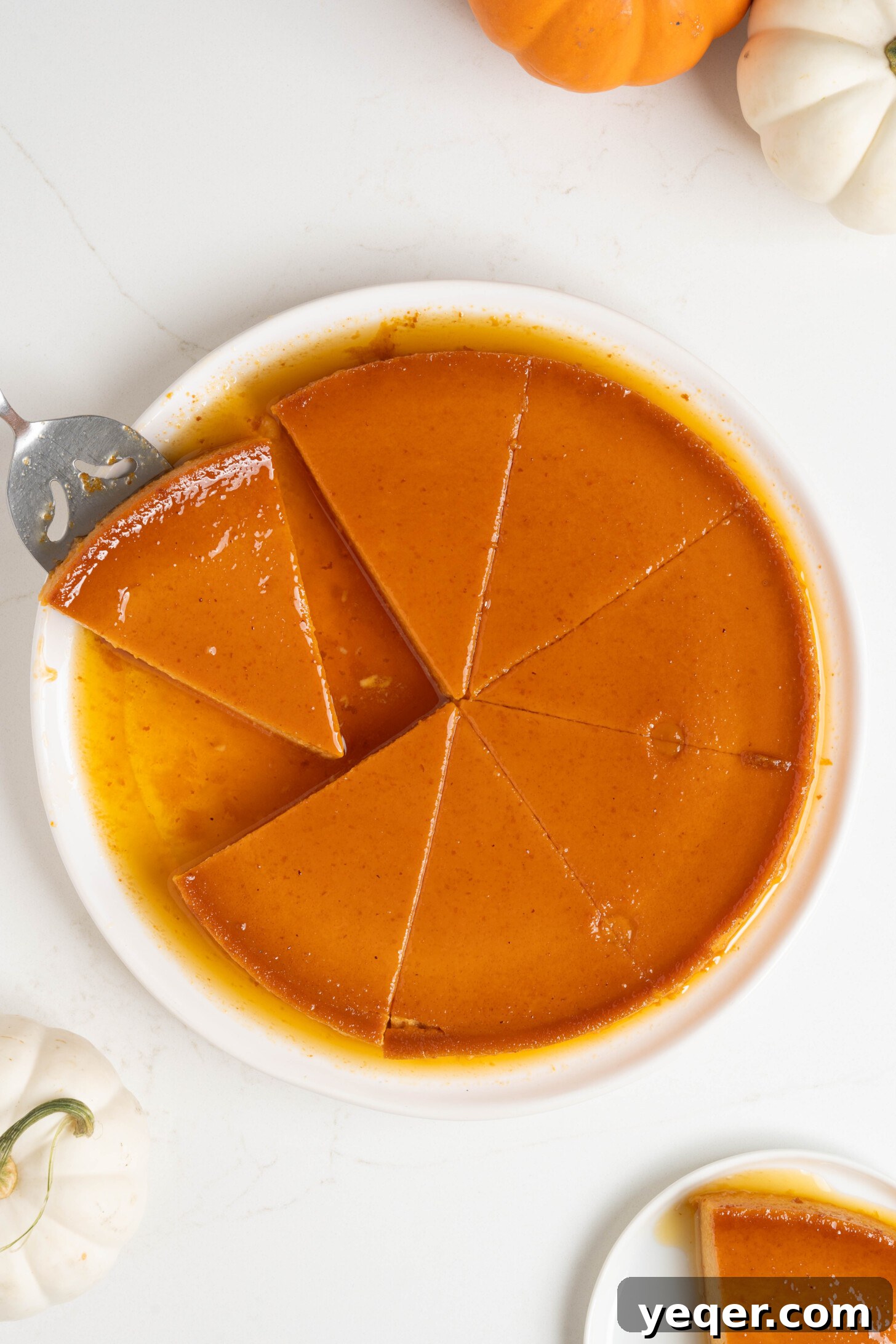
Flan, known by various names such as crème caramel or caramel custard, is a dessert that transcends cultural boundaries. Its appeal lies in its simplicity and elegance: a rich, smooth custard base topped with a delicate layer of liquid caramel. Originating from Roman times, flan evolved through European cuisines and found a particularly strong foothold in Latin American culinary traditions, including those of Puerto Rico. Each region boasts its own variations, often incorporating local ingredients and flavor profiles. Our Pumpkin Flan respects this rich heritage while introducing a seasonal twist that celebrates the autumn harvest, making it a perfect fusion of classic technique and contemporary flavor.
The beauty of making flan is its straightforward process, especially when utilizing modern kitchen tools. Blending the ingredients ensures a perfectly smooth custard, free from lumps, which is essential for that signature melt-in-your-mouth texture. The magic truly happens when the warm flan is inverted, revealing the luscious caramel coating that has seeped into the custard, adding both sweetness and a beautiful amber sheen. This Pumpkin Flan is more than just a dessert; it’s a culinary experience that brings warmth and joy to any table.
Crafting the Perfect Caramel Base
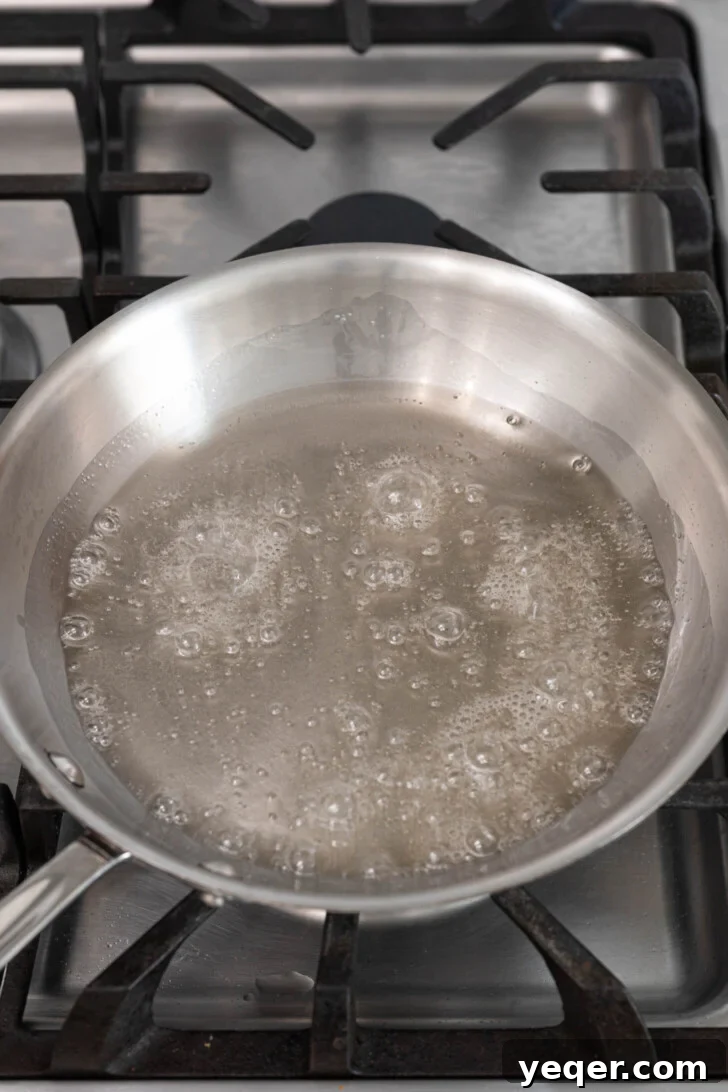
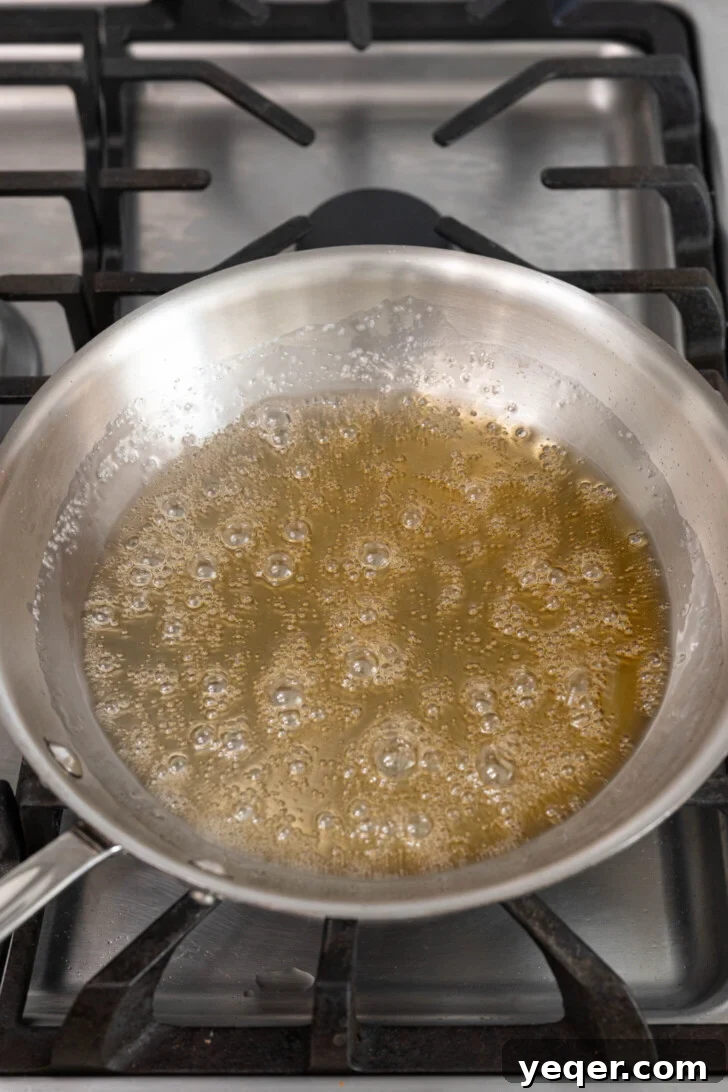
Creating the caramel layer is arguably the most crucial step in making flan, as it sets the foundation for both flavor and presentation. While it requires a bit of patience and attentiveness, the result is incredibly rewarding. Here’s a detailed look at how to achieve that flawless, golden caramel.
Assembling and Baking Your Pumpkin Flan
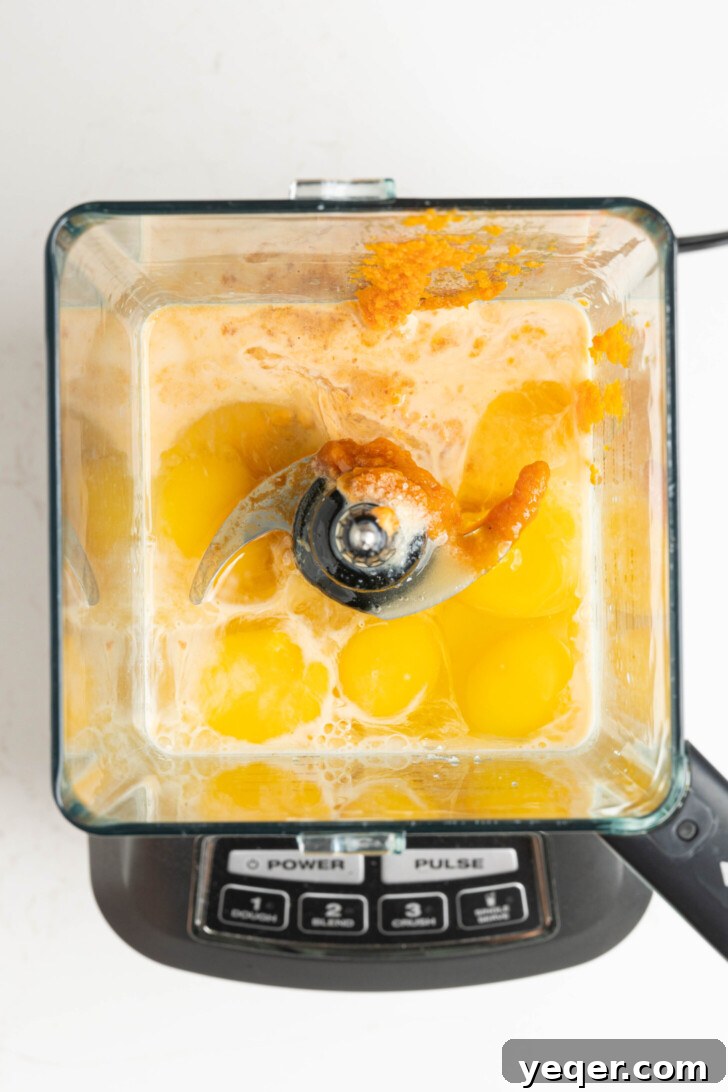
Once your caramel base is set, the process of creating the pumpkin custard is wonderfully straightforward, thanks to the efficiency of a blender. The key is to achieve a velvety smooth mixture that will bake into a perfectly tender flan.
Essential Tips for Caramel Perfection
As mentioned, the caramelization process is the most delicate but rewarding step in preparing your Pumpkin Flan. Getting it just right ensures that glossy, golden topping that makes flan so irresistible. Here are some invaluable tips to guide you:
- Keep it Simple: The caramel is made from just one ingredient: white granulated sugar. Its purity allows for a clear, clean caramel flavor.
- Low and Slow: Melt the sugar over medium-low heat. This allows the sugar crystals to dissolve and caramelize gradually and evenly, preventing hot spots and premature burning. Patience is truly a virtue here, as it can take anywhere from 20 to 30 minutes for the sugar to fully transform into caramel. Resist the urge to rush the process by increasing the heat.
- Watch Like a Hawk: The transition from melted sugar to perfectly golden caramel happens quickly once it starts to change color. As soon as it reaches a light golden brown hue, resembling amber, remove it immediately from the heat. Overcooking will result in a dark, bitter, and unappetizing caramel.
- Safety First: Caramel is extremely hot and can cause severe burns. When pouring the hot caramel into your baking dish(es), proceed with extreme caution.

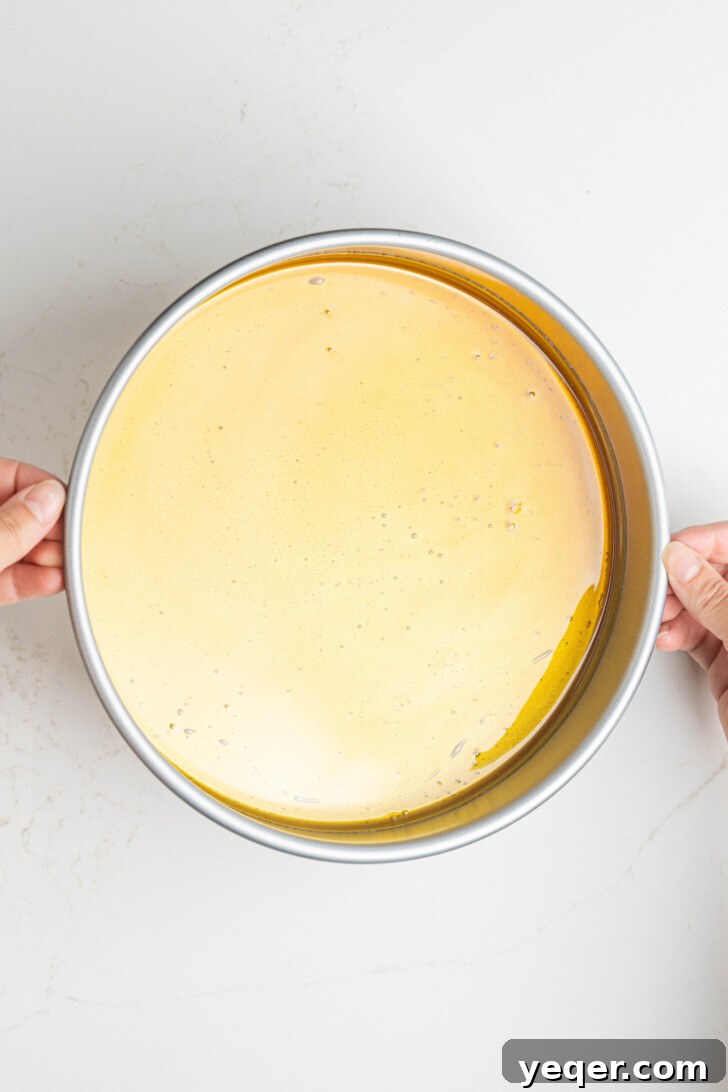
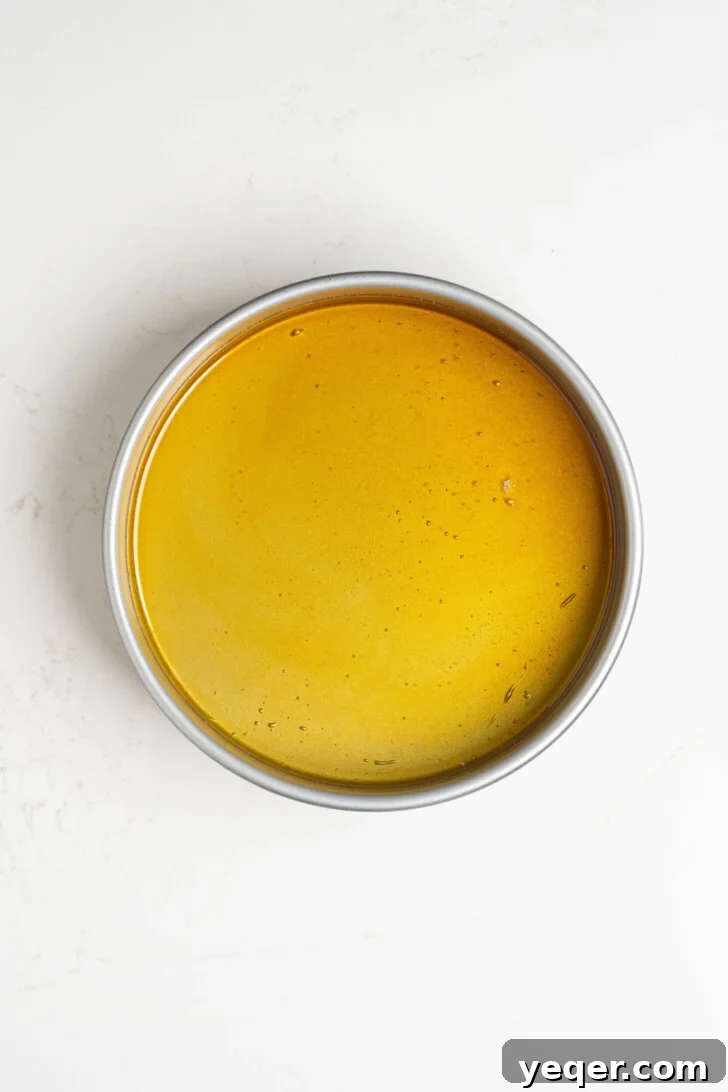
After pouring, carefully tilt and rotate the baking dish in all directions to create an even, thin layer of caramel across the bottom. The dish will become very hot, so using oven mitts or a thick kitchen towel to protect your hands is highly recommended. I cannot emphasize enough how important safety is during this step – I’ve personally experienced caramel burns, and the scars serve as a vivid reminder! A thin, even layer of caramel is key for a smooth release and optimal caramel distribution when the flan is inverted.
Why a Water Bath (Bain-Marie) is Essential for Flan
The water bath, or bain-marie, is a classic culinary technique that is absolutely indispensable for baking flan and other delicate custards. It creates a gentle, moist, and even cooking environment that prevents the custard from overcooking too quickly, cracking, or developing a rubbery texture. Here’s why it’s so crucial:
- Even Heat Distribution: Water transfers heat more gently and consistently than air. By surrounding the flan dish with hot water, the custard bakes uniformly from all sides, preventing the edges from setting too fast while the center remains raw.
- Prevents Cracking: The gentle, moist heat reduces the drastic temperature difference between the outside and inside of the flan, minimizing the risk of unsightly cracks appearing on the surface of your beautiful dessert.
- Silky Smooth Texture: The slow, steady cooking facilitated by the water bath results in an incredibly smooth, tender, and silky custard texture that is the hallmark of a perfectly made flan. It prevents the eggs from scrambling or becoming tough.
- Moisture Control: The steam from the hot water bath adds moisture to the oven, which is beneficial for custards that can dry out easily.
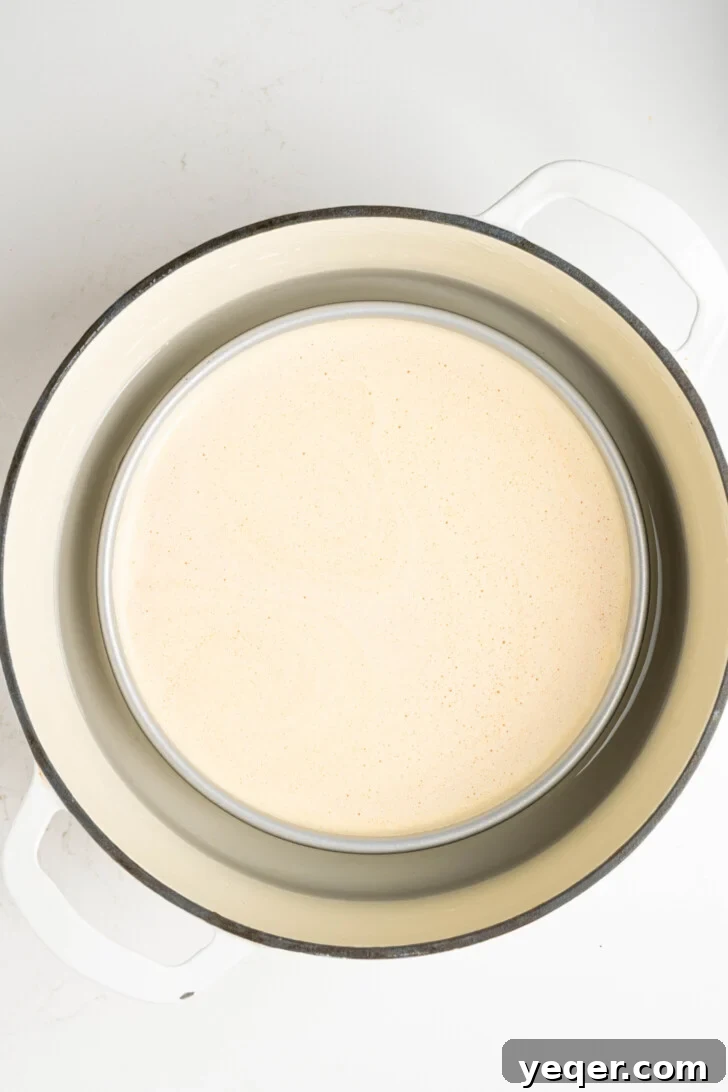
To set up your water bath, simply place your flan baking dish(es) into a larger roasting pan. Once the oven is preheated, pour hot (preferably boiling) water into the larger pan until it comes about halfway up the sides of your flan dish. Be careful not to splash water into the custard. This simple step makes all the difference in achieving a professional-quality flan at home.
Flan de Calabaza: Serving & Storage Suggestions
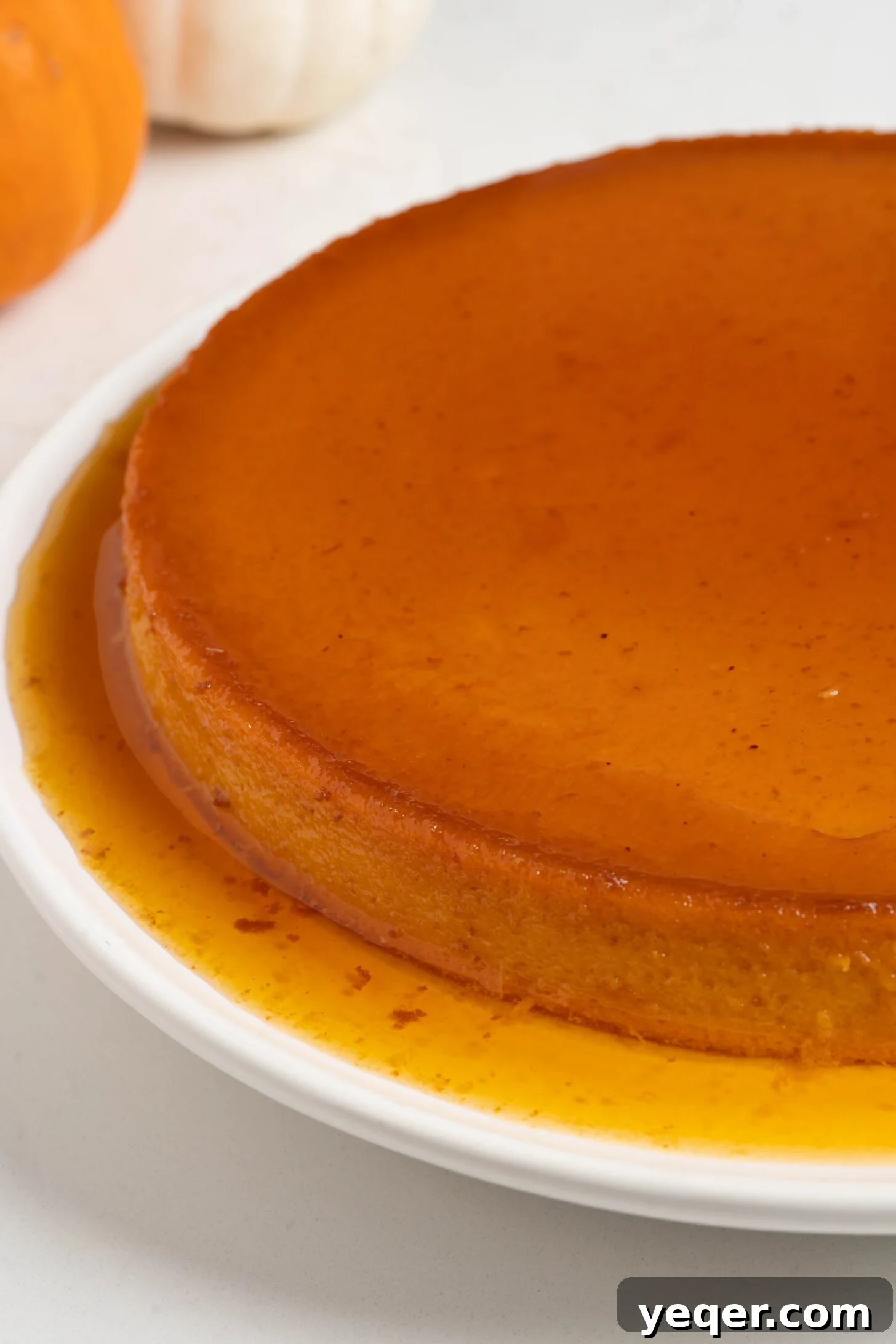
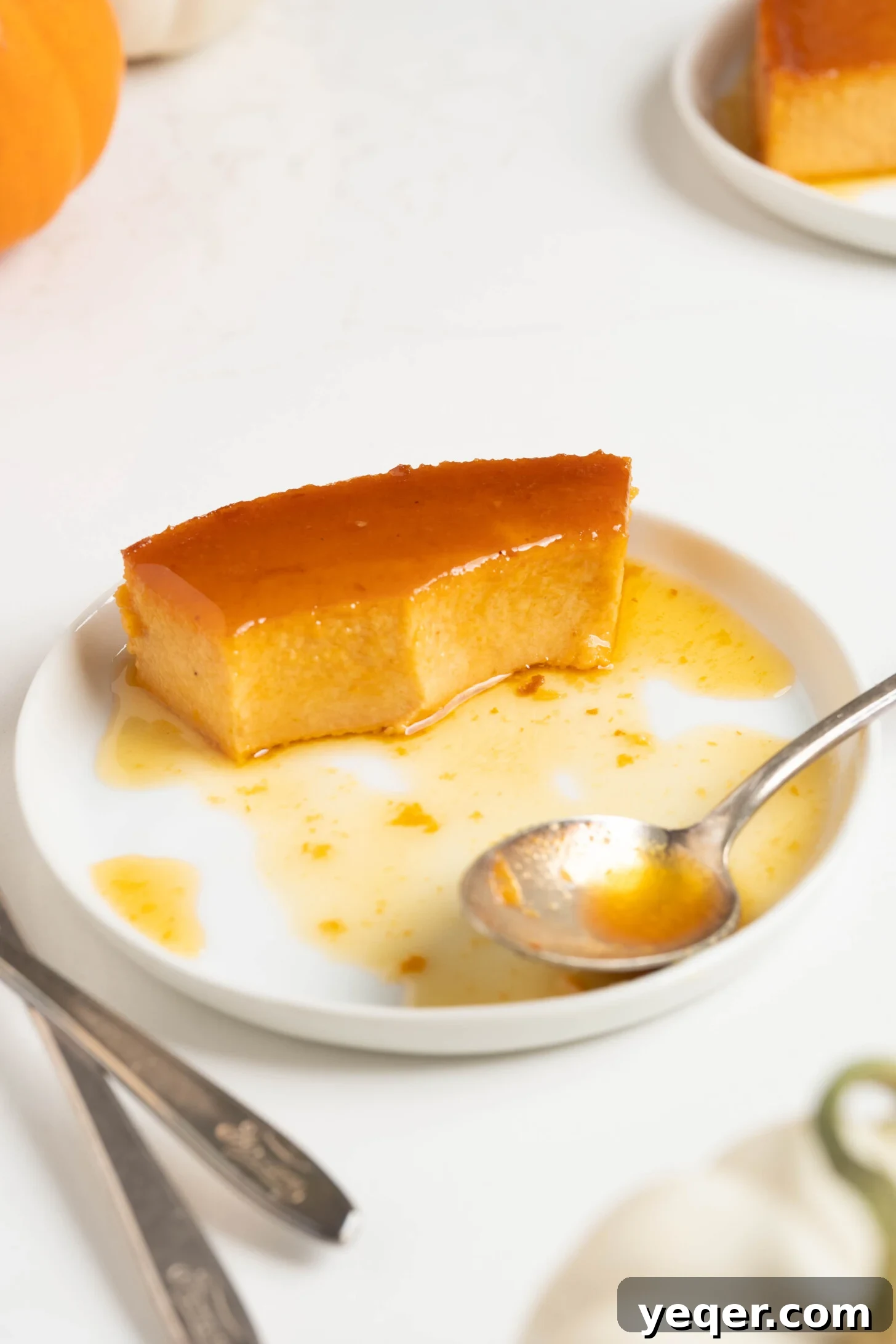
Once your Pumpkin Flan is baked, cooled, and inverted, it’s ready to be the star of your dessert table. For the best experience, ensure the flan is thoroughly chilled; this firming period allows the flavors to meld beautifully and the custard to achieve its ideal smooth consistency. Garnish with a light dusting of cinnamon or a small dollop of whipped cream, if desired, for an extra touch of elegance. The rich caramel sauce that pools around the flan and cascades over each slice is typically all the adornment it needs.
When it comes to storage, flan is an excellent make-ahead dessert. Cover the inverted flan loosely with plastic wrap and store it in the refrigerator for up to 3-4 days. The flavors often deepen and improve overnight, making it an ideal candidate for preparing in advance for parties or holiday meals. Individual servings can also be stored this way, ensuring you have a delightful treat ready whenever a craving strikes.
Beyond Pumpkin: Exploring More Flan Recipes
If you’ve fallen in love with the luscious texture and rich flavor of this Pumpkin Flan, you’re in for a treat! The world of flan is vast and full of exciting variations. Here are some other flan recipes from our kitchen that you might enjoy, each offering a unique spin on this classic dessert:
Buen provecho!

Print Recipe
Pumpkin Flan (Flan de Calabaza)
5 Stars (No reviews yet)
- Author: Salima Benkhalti
- Prep Time: 30 minutes
- Cook Time: 1 hour
- Total Time: 1 hour 30 minutes
- Yield: 8 servings
- Category: Dessert
- Method: Baked
- Cuisine: Puerto Rican, Latin
- Diet: Gluten Free
Description
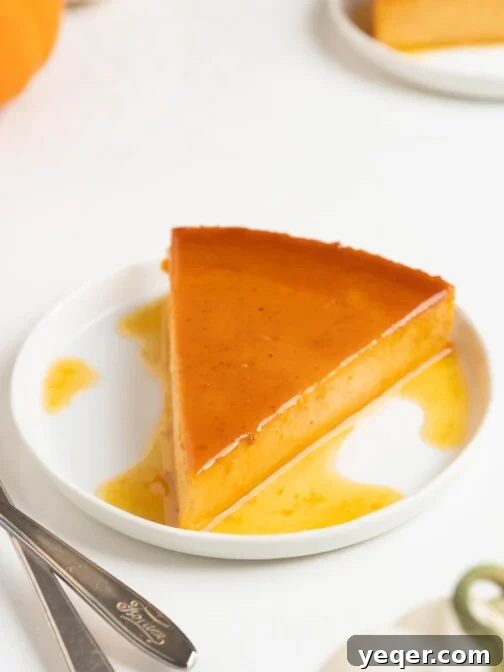
This Pumpkin Flan (Flan de Calabaza) is a fun Fall twist on the traditional Puerto Rican dessert. It has that signature custard filling with creamy pumpkin and is topped with a classic caramel sauce.
Ingredients
For the Caramel:
- 1 heaping cup white granulated sugar
For the Pumpkin Custard Filling:
- 1 (12oz) can evaporated milk
- 1 cup milk
- 1 cup canned pumpkin puree
- 1 tsp vanilla extract
- a pinch of salt
- 5 eggs
- 1/2 cup white granulated sugar
Instructions
- Make the caramel: Preheat the oven to 350° F (175°C). Pour sugar into a heavy-bottomed pan and melt over medium-low heat. Continue to melt as the sugar turns into a transparent liquid and then develops into a beautiful light golden color.
- Pour the caramel: Once the sugar is fully melted and a light golden liquid forms, carefully pour it into an oven-safe baking dish (or dishes). Immediately tilt the pan around (being very careful not to burn yourself) to create an even, thin layer of caramel at the base. Set aside to cool and harden.
- Make the pumpkin filling: Add all pumpkin custard filling ingredients (evaporated milk, milk, pumpkin puree, vanilla extract, pinch of salt, eggs, and sugar) to a blender and blend until completely velvety smooth. Pour the mixture through a fine-mesh strainer into the baking dish(es) over the cooled caramel. This step helps ensure an extra smooth custard.
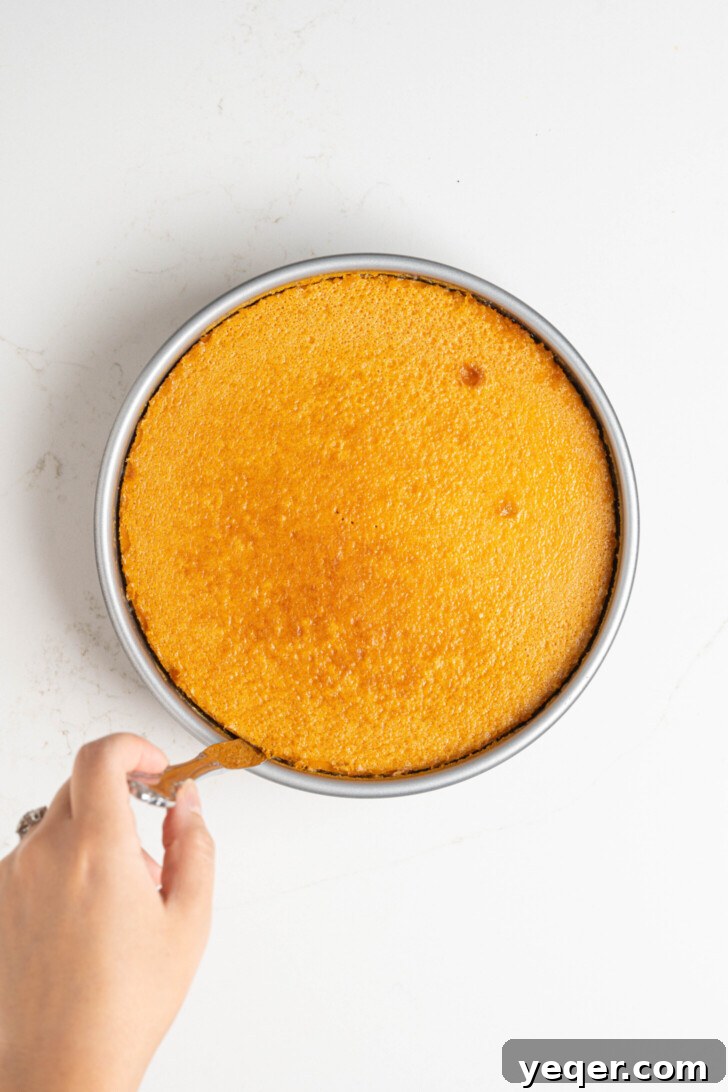
- Bake in a water bath: Place the flan baking dish(es) into another larger baking dish with high enough walls to create a water bath. Carefully pour hot water into the larger pan until it reaches about halfway up the sides of the flan dish. Bake for 60-80 minutes, or until the center looks set but still slightly jiggly like gelatin, rather than liquid.
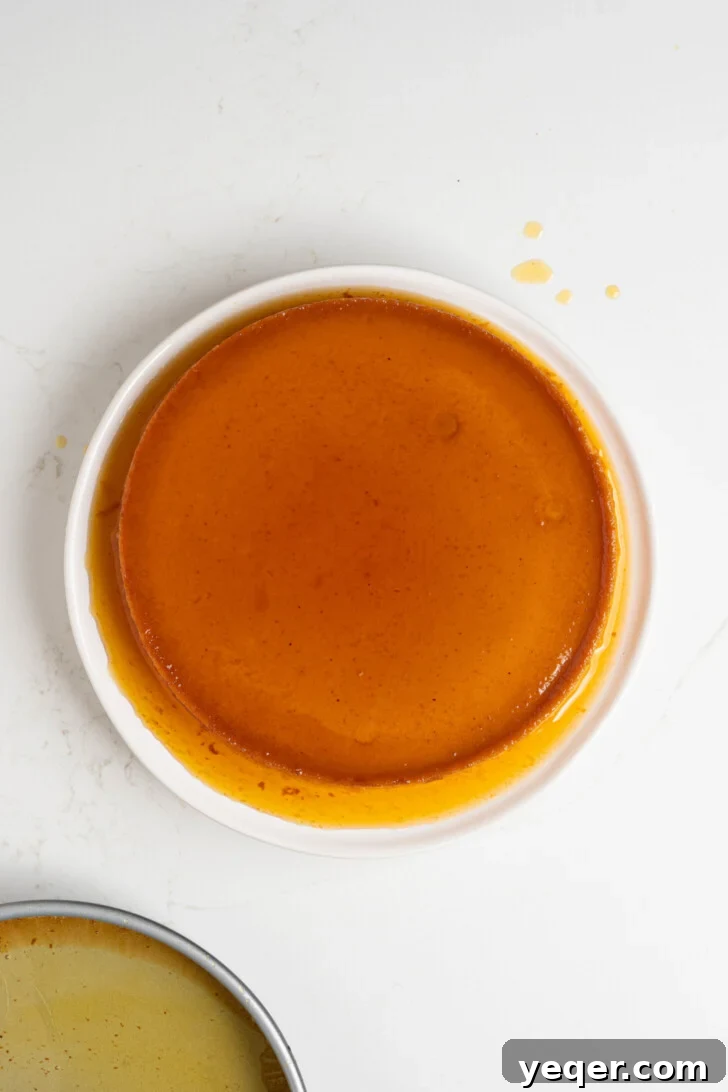
- Cool & serve: Remove the flan from the water bath and allow it to cool completely at room temperature. Then, refrigerate the flan for at least 4 hours, or preferably overnight, until thoroughly chilled. When ready to serve, use a thin spatula or knife to gently loosen the edges around the baking dish. Grab a serving platter and place it firmly over the top of the baking dish. Carefully but swiftly flip the flan onto your platter, allowing the caramel to drizzle down and coat the top. You can leave the pan inverted over the flan for a few minutes to ensure as much caramel as possible drips down. Slice and enjoy this exquisite pumpkin flan!
Equipment
Buy Now →
Buy Now →
Buy Now →
Buy Now →
Notes
You’ll know the flan is ready to come out of the oven when it appears firm around the edges and somewhat jiggly in the center. The slight jiggle indicates a perfectly set custard that will firm up beautifully upon cooling.
You can also insert a knife or toothpick into the center of the flan; if it comes out clean (without wet custard clinging to it), your flan is good to remove from the oven.
Troubleshooting: Caramel Sticking to the Pan?
Occasionally, even with the best intentions, a stubborn layer of caramel might adhere to the bottom of the pan after you’ve flipped your flan. This can be a common occurrence, but understanding why it happens can help you prevent it in the future:
- Reason 1: Caramel Layer Too Thick: If the initial layer of caramel at the bottom of the baking dish was too thick, it might not fully melt or release during the inversion process. A thinner, even layer allows for better melting and a cleaner release.
- Reason 2: Insufficient Surface Area: In some cases, if the baking dish is too small or has an irregular shape, the caramel might not distribute evenly or melt consistently. This can create areas where the caramel is too dense to fully liquefy and release.
Even when you follow all the right steps, this can still happen from time to time. A helpful trick I use is to leave the inverted baking dish over the flan on the serving platter for an extended period, sometimes until just before serving. This allows gravity and any residual warmth to encourage as much of the caramel as possible to slowly drizzle down onto the flan, ensuring you don’t miss out on any of that delicious, golden sauce!