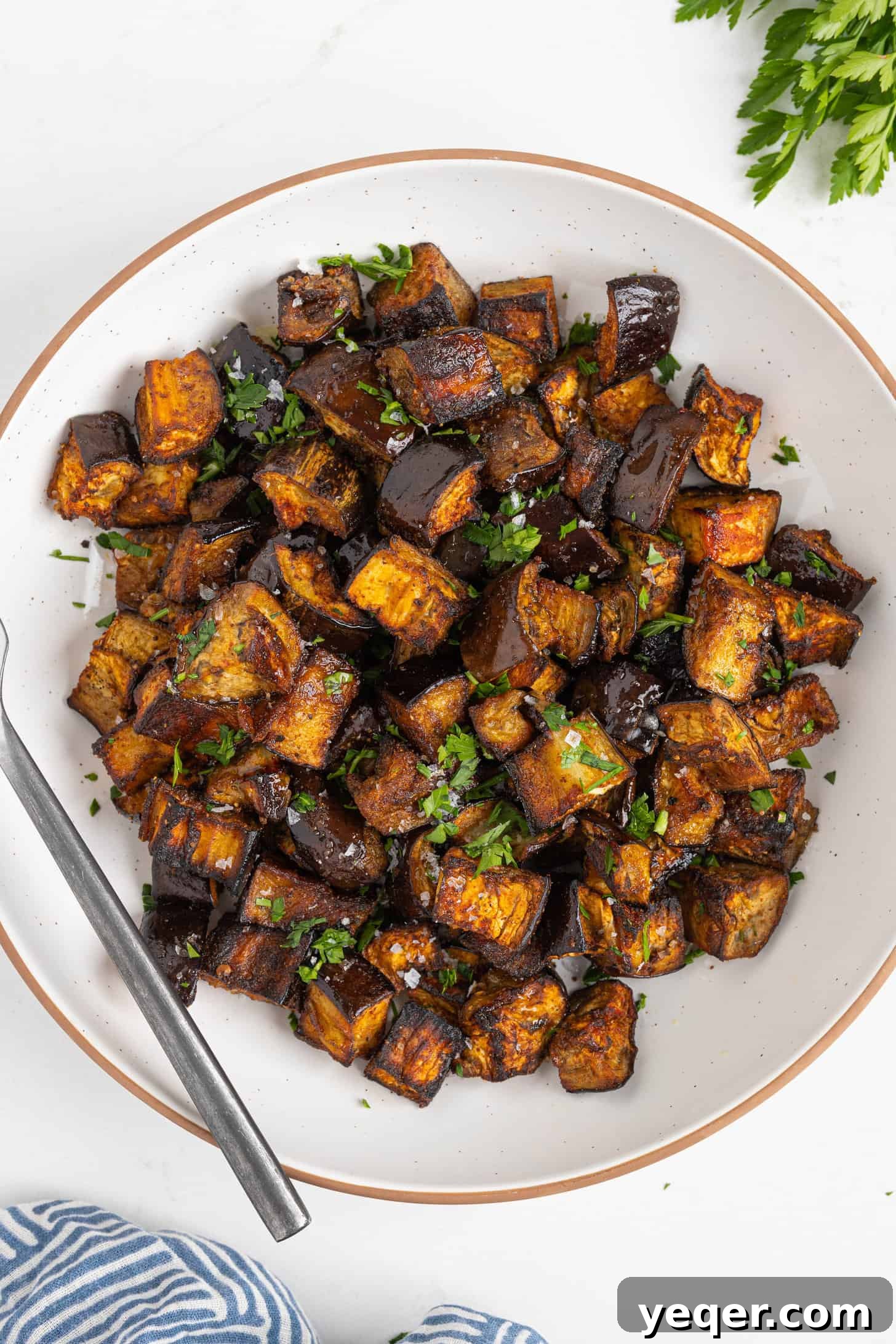
Exquisite Moroccan Roasted Eggplant: A 30-Minute Culinary Delight
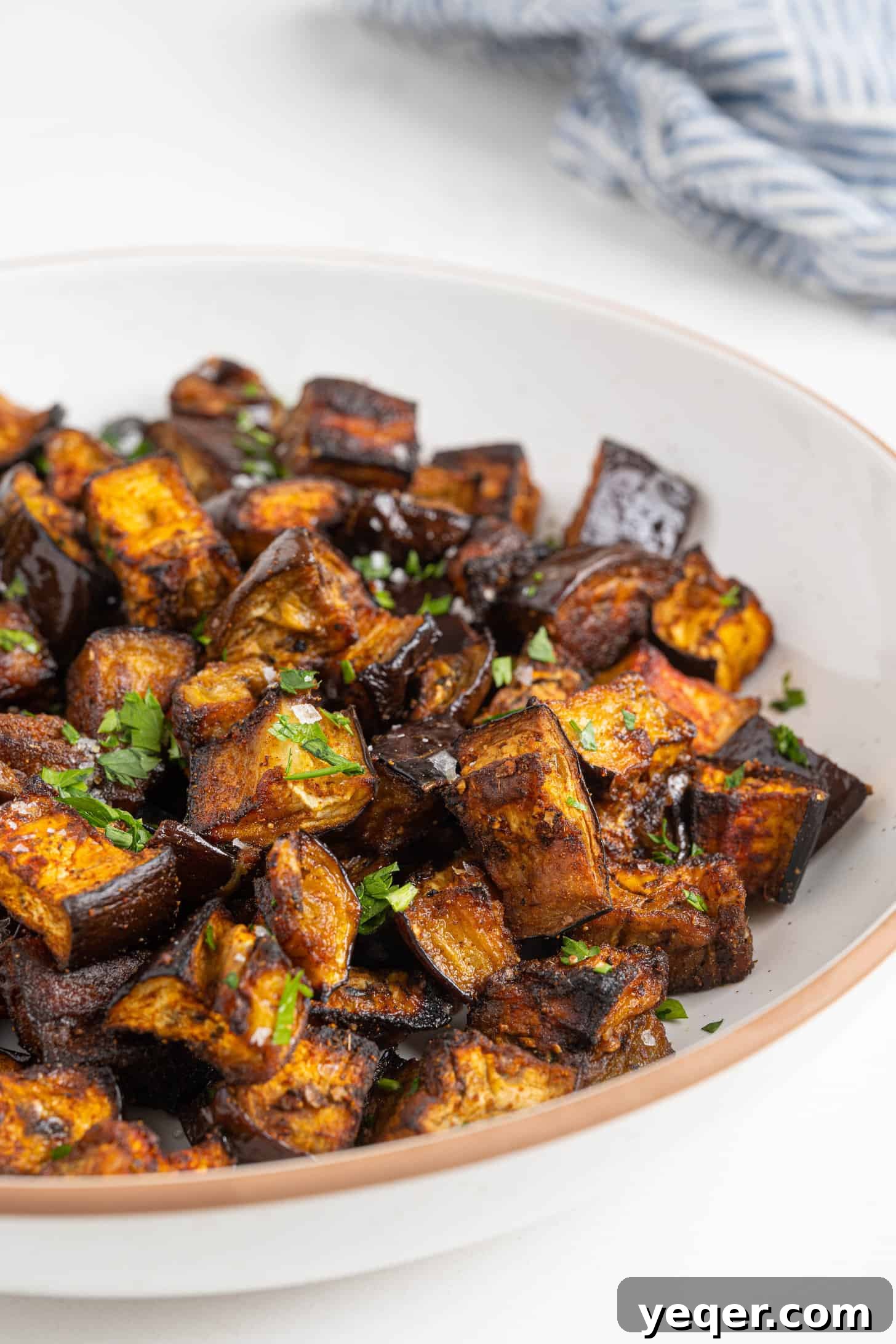
Uncover the vibrant flavors of North Africa with this exquisite Moroccan Roasted Eggplant recipe. In just 30 minutes, you can transform humble eggplant cubes into a tender, aromatic, and wonderfully flavorful vegetable dish, perfect as a vibrant side or a sophisticated appetizer. Infused with a blend of traditional Moroccan spices, a generous drizzle of olive oil, and a sprinkle of fresh herbs, this recipe is a testament to the magic that simple ingredients can create.
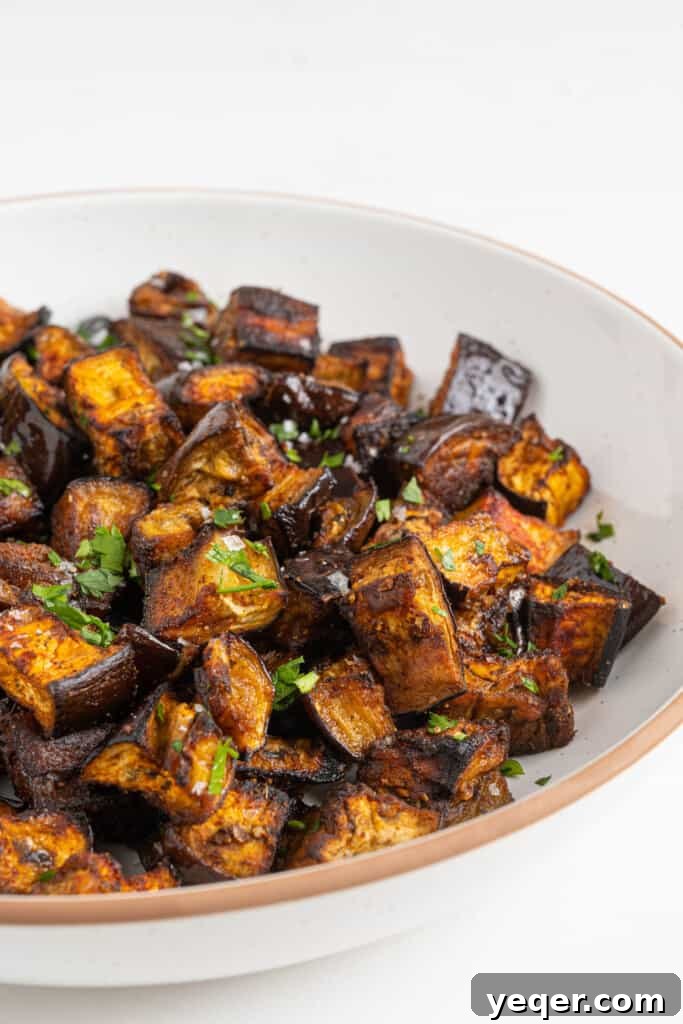
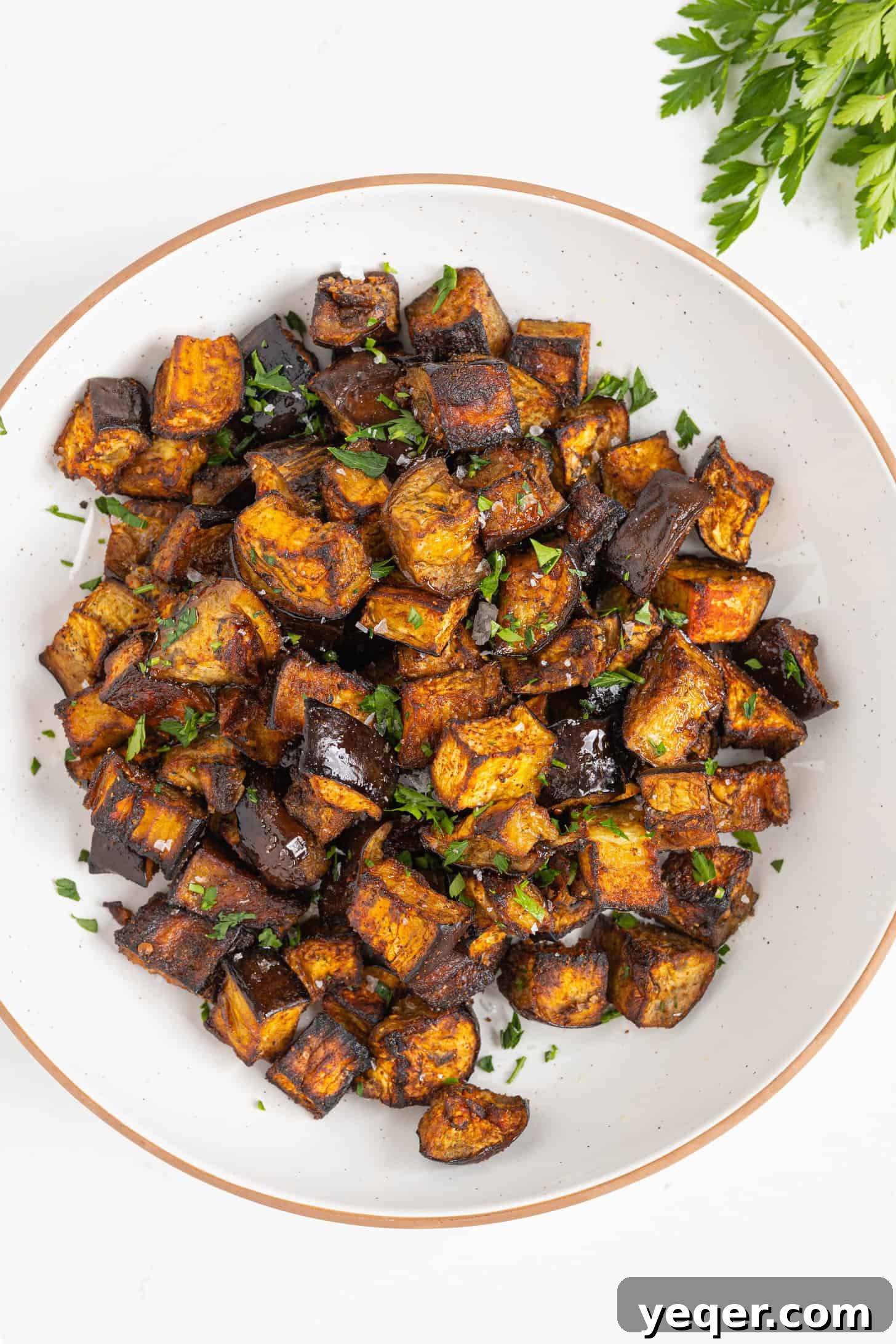
Whether you’re a seasoned chef or a beginner in the kitchen, this recipe is remarkably straightforward, promising a delightful culinary journey with minimal effort. The eggplant, once chopped and seasoned, emerges from the oven with a beautifully crispy golden-brown exterior and a meltingly tender interior. It’s a versatile vegetarian option that effortlessly complements a wide array of main courses or shines brightly on its own as part of a mezze platter.
For those acquainted with the rich tapestry of Moroccan cuisine, the prominence of paprika and cumin in this dish will be no surprise. These two essential spices are the heart and soul of many Moroccan dishes, and they truly sing when paired with the earthy sweetness of roasted eggplant. The resulting flavor profile evokes a similar warmth and depth found in beloved Moroccan classics like Eggplant Dip, known as Zaalouk, offering a comforting and authentic taste experience.
To elevate this already exceptional dish to new heights, we highly recommend serving it with a generous drizzle of your favorite tahini sauce. The creamy, nutty notes of tahini perfectly complement the spiced eggplant, adding another layer of complexity and luxuriousness that will leave your taste buds craving more. This simple addition transforms the dish from merely good to absolutely unforgettable.
This recipe is not only a feast for the senses but also a fantastic way to incorporate more vegetables into your diet. Eggplant is known for its high fiber content, antioxidants, and various vitamins and minerals, making this dish a healthy and satisfying choice for any meal. The plant-based nature of this recipe also makes it an excellent option for vegan and vegetarian diets, providing robust flavors without compromising on dietary preferences.
Mastering Moroccan Roasted Eggplant: A Step-by-Step Guide
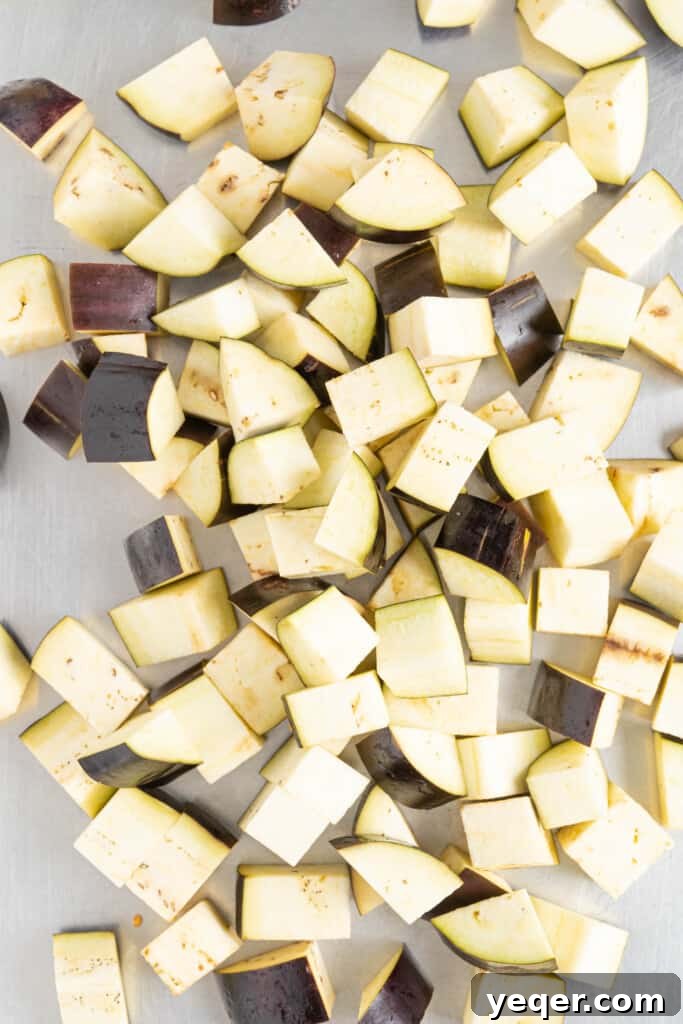
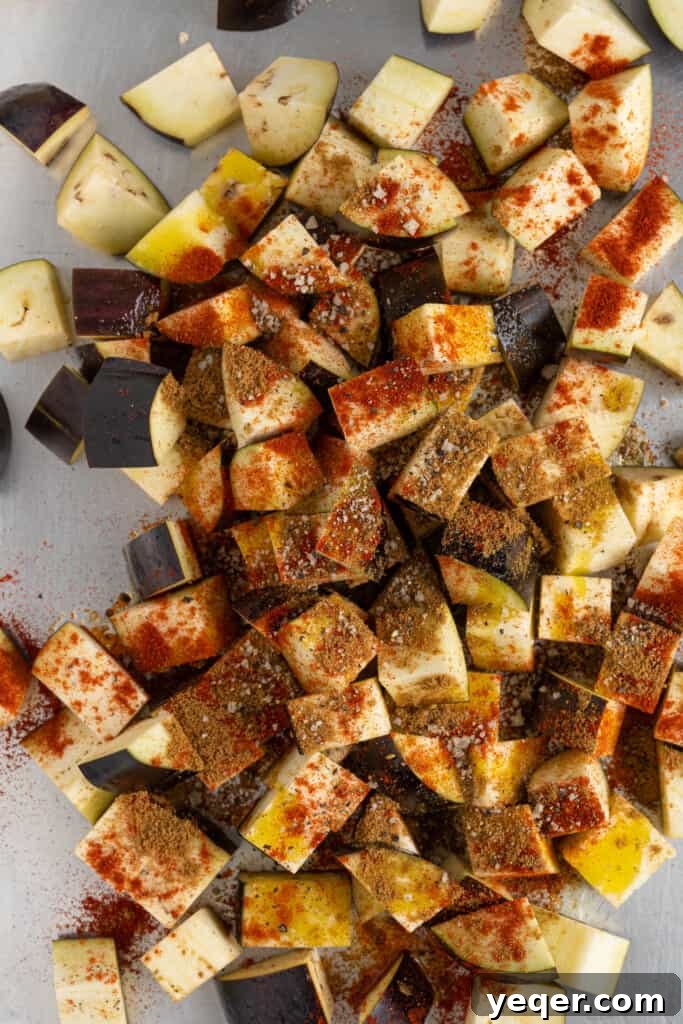
Helpful Hint: Deciding whether to peel your eggplant is a matter of personal preference. If you find the texture of the skin unappealing, feel free to remove it. Otherwise, leaving it on contributes to the structural integrity and nutritional value of the roasted cubes.
Understanding Eggplant Varieties and Optimal Quantity
The world of eggplant is surprisingly diverse, offering a range of shapes, sizes, and textures. For this particular recipe, the most readily available and highly recommended choice is the globe eggplant, often found in American grocery stores. Its substantial size and robust texture make it ideal for cubing and roasting, holding its shape well under high heat while absorbing the rich Moroccan flavors.
However, don’t let the recommendation limit your culinary creativity! This versatile recipe can be adapted to almost any eggplant variety you have on hand. Whether you find slender Japanese eggplants, elongated Italian eggplants, or smaller Indian varieties, the core principles of roasting with Moroccan spices remain the same. The key is to be mindful of the size of your chosen eggplants and adjust the quantity accordingly to achieve the desired volume for a hearty side dish.
When working with standard globe eggplants, two medium to large specimens are typically sufficient to yield the perfect amount of chopped cubes. If you opt for smaller or thinner varieties, such as Japanese or Italian eggplants, you may need to use more – perhaps three to five, depending on their individual size. The goal is to ensure you have enough eggplant to create a satisfying serving for everyone at the table.
A General Guideline: Regardless of the variety you choose, aim for approximately 4 cups of uniformly chopped eggplant cubes to ensure consistent flavor and cooking time.
Beyond the common globe eggplant, consider exploring:
- Japanese Eggplant: Long, slender, and typically sweeter with thinner skin, making it less bitter and often requiring no peeling. It cooks quickly and becomes incredibly tender.
- Italian Eggplant: Similar in shape to globe but generally smaller and slightly thinner. It has a rich flavor and creamy texture when cooked.
- Fairytale Eggplant: A charming miniature variety with purple and white stripes. These are very tender and almost seedless, perfect for quick roasting.
- White Eggplant: Similar to globe eggplant in texture but with a milder flavor.
No matter your selection, the magic of Moroccan spices will transform it into a delectable dish. If you encounter a particularly large or older eggplant, you might consider salting it first. This process draws out excess moisture and bitterness, resulting in a creamier, less watery final product. Simply toss the chopped eggplant with a teaspoon of salt, let it sit for 15-30 minutes, then rinse thoroughly and pat dry before proceeding with the olive oil and spice mixture.
The Magic of Moroccan Spices: Paprika and Cumin
At the heart of this Moroccan Roasted Eggplant recipe are two indispensable spices: paprika and cumin. These aren’t just flavor enhancers; they are the very essence of Moroccan culinary identity, imbuing dishes with warmth, depth, and an exotic aroma that transports you to the bustling markets of Marrakech.
Paprika: Often associated with Hungarian cuisine, paprika plays a vital role in Moroccan cooking, particularly the sweet and mild varieties. It brings a beautiful reddish hue to the eggplant, making the dish visually appealing, and imparts a subtly sweet, slightly smoky flavor. It’s an excellent base spice that enhances other flavors without overpowering them. Don’t confuse it with hot or smoked paprika (though a pinch of smoked paprika could add an interesting twist if you enjoy that profile).
Cumin: This earthy, warm spice is a cornerstone of Moroccan and North African cuisine. Its distinctive aroma and slightly pungent, yet sweet, flavor profile are unmistakable. Cumin works wonders with vegetables, especially roasted ones, adding an undeniable depth that makes the eggplant truly “Moroccan.” Together, paprika and cumin create a balanced and inviting spice blend that makes this roasted eggplant so uniquely delicious.
While this recipe focuses on these core spices, Moroccan cuisine is also rich with others. For an even more complex flavor, you could experiment with a pinch of turmeric for warmth and color, a touch of coriander for citrusy notes, or even a tiny dash of cayenne pepper if you enjoy a subtle kick. However, for a classic and authentic taste, paprika and cumin are your best friends.
Serving Suggestions and Culinary Pairings
The beauty of this Moroccan Roasted Eggplant lies in its incredible versatility. While it stands proudly as a delicious side dish or an impressive appetizer, it can also be incorporated into a variety of meals to add a touch of exotic flavor.
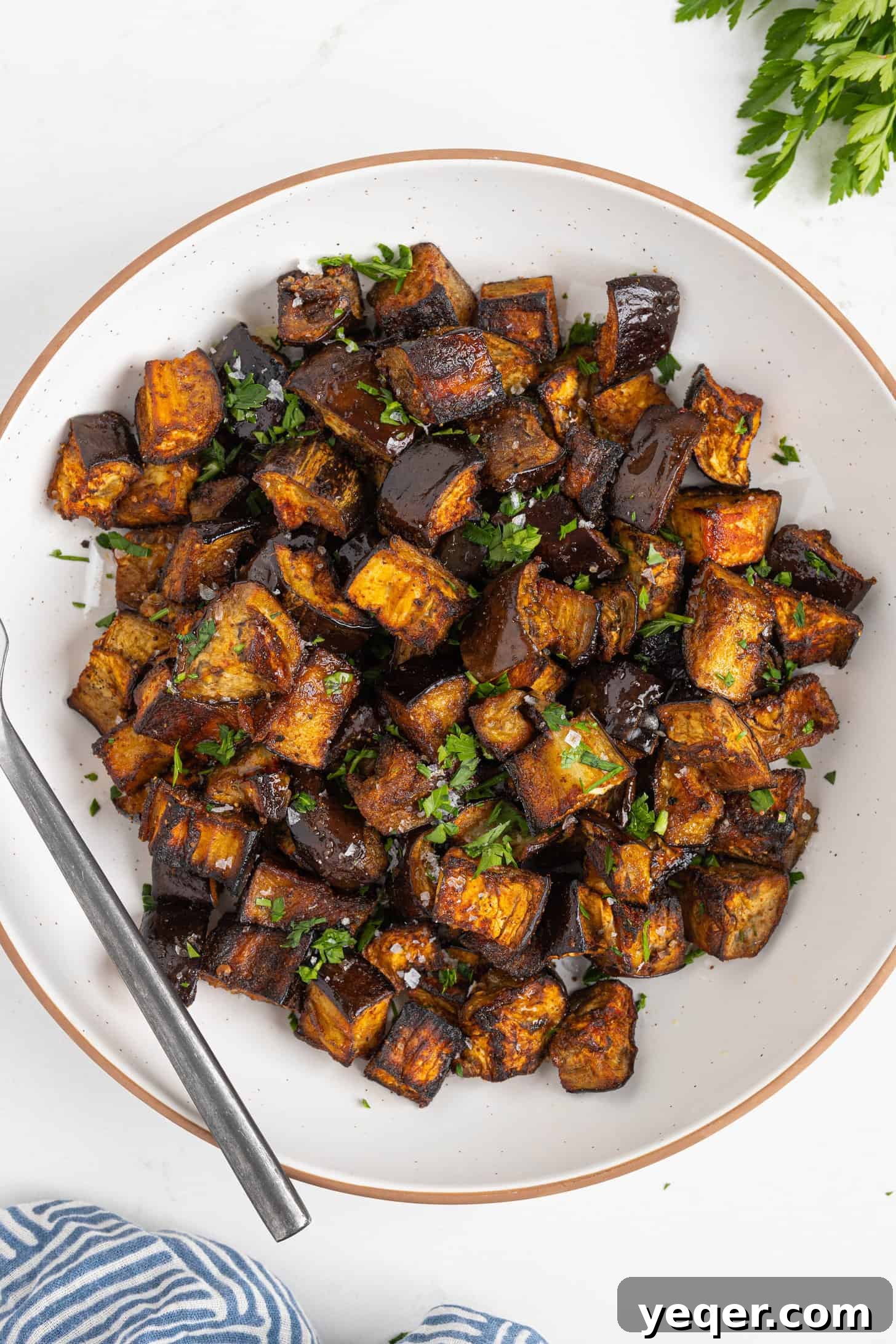
- With Tahini Dressing: As mentioned, a drizzle of creamy tahini sauce is a game-changer. The nutty, slightly bitter notes of tahini perfectly balance the sweetness of the roasted eggplant and the warmth of the spices, creating a harmonious flavor profile. You can make a simple tahini dressing by whisking tahini paste with lemon juice, water, a pinch of salt, and a crushed garlic clove until smooth and creamy.
- As a Side Dish: Serve alongside grilled chicken, lamb, or fish for a complete and wholesome meal. Its robust flavors make it an excellent accompaniment to heartier proteins.
- Part of a Mezze Platter: Combine with hummus, pita bread, olives, fresh vegetables, and other dips for a vibrant and inviting Mediterranean-inspired spread, perfect for entertaining.
- With Grains: Toss the roasted eggplant with fluffy couscous, quinoa, or brown rice for a light yet satisfying vegetarian main course. Add some chickpeas for extra protein and fiber.
- In Salads: Let the eggplant cool slightly and add it to a vibrant green salad with cherry tomatoes, cucumber, and a light vinaigrette for a Mediterranean twist.
- With Fresh Bread: Simply scoop the warm eggplant onto a slice of crusty bread or pita for a quick, flavorful snack.
Tips for Achieving Perfectly Roasted Eggplant
Roasting eggplant to perfection requires a few simple techniques to ensure it’s tender on the inside and beautifully caramelized on the outside, without becoming greasy or mushy:
- High Heat is Key: A hot oven (450°F / 220°C) is crucial for achieving that desirable crisp exterior and tender interior. Lower temperatures tend to steam the eggplant, making it soft rather than roasted.
- Don’t Overcrowd the Pan: Give your eggplant cubes space! If they are packed too tightly on the baking sheet, they will steam instead of roast, preventing them from browning and crisping up. Use two baking sheets if necessary.
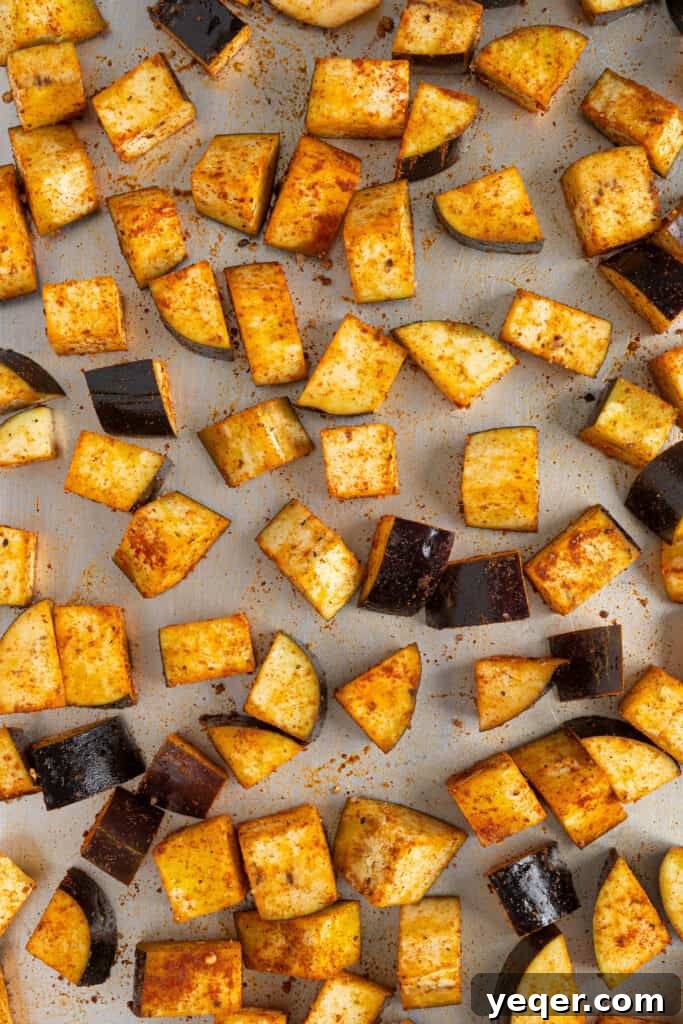
- Uniform Cubes: Cut the eggplant into roughly equal 2-inch cubes. This ensures that all pieces cook at the same rate, preventing some from being undercooked while others are overcooked.
- Adequate Oil: Eggplant is like a sponge, readily absorbing oil. Don’t be shy with the olive oil when tossing the cubes. It’s essential for flavor, browning, and achieving that silky texture. However, avoid drowning them; a good coating is sufficient.
- Flip Halfway: Flipping the eggplant halfway through the roasting process ensures even browning and crisping on all sides, contributing to a more consistent texture.
- Freshness Matters: Choose firm, shiny eggplants that feel heavy for their size. Avoid those with soft spots or blemishes. Fresher eggplant tends to have fewer seeds and less bitterness.
Health Benefits of Eggplant
Beyond its delicious taste and versatility, eggplant is a nutritional powerhouse that offers several impressive health benefits:
- Rich in Nutrients: Eggplant is a good source of vitamins C, K, and B6, as well as minerals like potassium, folate, and manganese.
- High in Antioxidants: It contains powerful antioxidants, particularly nasunin, which gives eggplant its distinctive purple color. Antioxidants help protect the body’s cells from damage caused by free radicals.
- Supports Heart Health: Studies suggest that the fiber, potassium, vitamin C, vitamin B6, and phytonutrients in eggplant can support heart health by lowering cholesterol levels and improving blood pressure.
- Promotes Blood Sugar Control: Thanks to its high fiber content, eggplant can help stabilize blood sugar levels by slowing down the rate of sugar absorption in the body.
- Aids in Weight Management: Being low in calories and high in fiber, eggplant can promote feelings of fullness, which can be beneficial for weight management.
Storage and Reheating Instructions
Leftover Moroccan Roasted Eggplant can be stored and reheated, making it an excellent dish for meal prep:
- Storage: Allow the roasted eggplant to cool completely. Transfer it to an airtight container and store it in the refrigerator for up to 3-4 days.
- Reheating: For best results, reheat the eggplant in the oven or an air fryer at 350°F (175°C) for 5-10 minutes, or until warmed through and the edges regain some crispness. You can also microwave it, but it may lose some of its crispy texture.
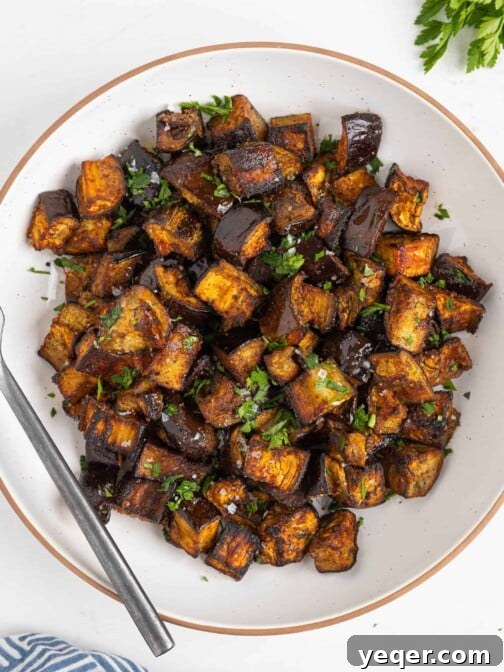
30-Minute Moroccan Roasted Eggplant (Cubes)
- Author: Salima Benkhalti
- Prep Time: 5 minutes
- Cook Time: 25 minutes
- Total Time: 30 minutes
- Yield: 4 servings
- Category: side dish, appetizer
- Method: roasted
- Cuisine: Moroccan, American
- Diet: Vegan
Description
This Moroccan Roasted Eggplant recipe comes together in just 30 minutes! Cubes of eggplant are roasted until tender with Moroccan spices, olive oil, and fresh herbs. A wonderfully flavorful vegetable side dish.
Ingredients
Scale
- 2 eggplants (medium to large)
- 4 tbsp olive oil + another 1 tsp to finish
- 1 tsp paprika
- 1 tsp cumin
- 1/2 tsp salt
- 1/2 tsp pepper
- 1 tbsp fresh parsley, minced
Instructions
- Preheat your oven to 450 degrees F / 220 degrees C. Chop the eggplant into 2 inch cubes and transfer to a baking sheet.
- Season the eggplant. Toss with olive oil before sprinkling on spices and tossing to coat. Bake for 15 minutes, flip, and bake for another 10 minutes or until the eggplant cubes are caramelized and golden brown all around.
- Finish. Drizzle with olive oil and a sprinkle of parsley before serving.
Equipment
Baking Sheets
I hope you thoroughly enjoy this simple yet profoundly flavorful Moroccan Roasted Eggplant. It’s a dish that embodies the spirit of Moroccan hospitality – warm, inviting, and packed with aromatic spices that delight the senses. Whether you serve it as a quick weeknight side, a vibrant addition to a festive table, or a healthy vegan main, it’s sure to become a cherished part of your culinary repertoire.
Don’t hesitate to experiment with the serving suggestions, adding your own personal touch to make this dish truly your own. From pairing it with a cooling yogurt sauce to tossing it with grains and fresh vegetables, the possibilities are endless. This recipe is a perfect example of how minimal effort can yield maximum flavor, proving that delicious, wholesome food doesn’t have to be complicated.
Thank you for joining me on this culinary adventure. Your feedback and engagement are what keep Salima’s Kitchen thriving. Happy cooking!