
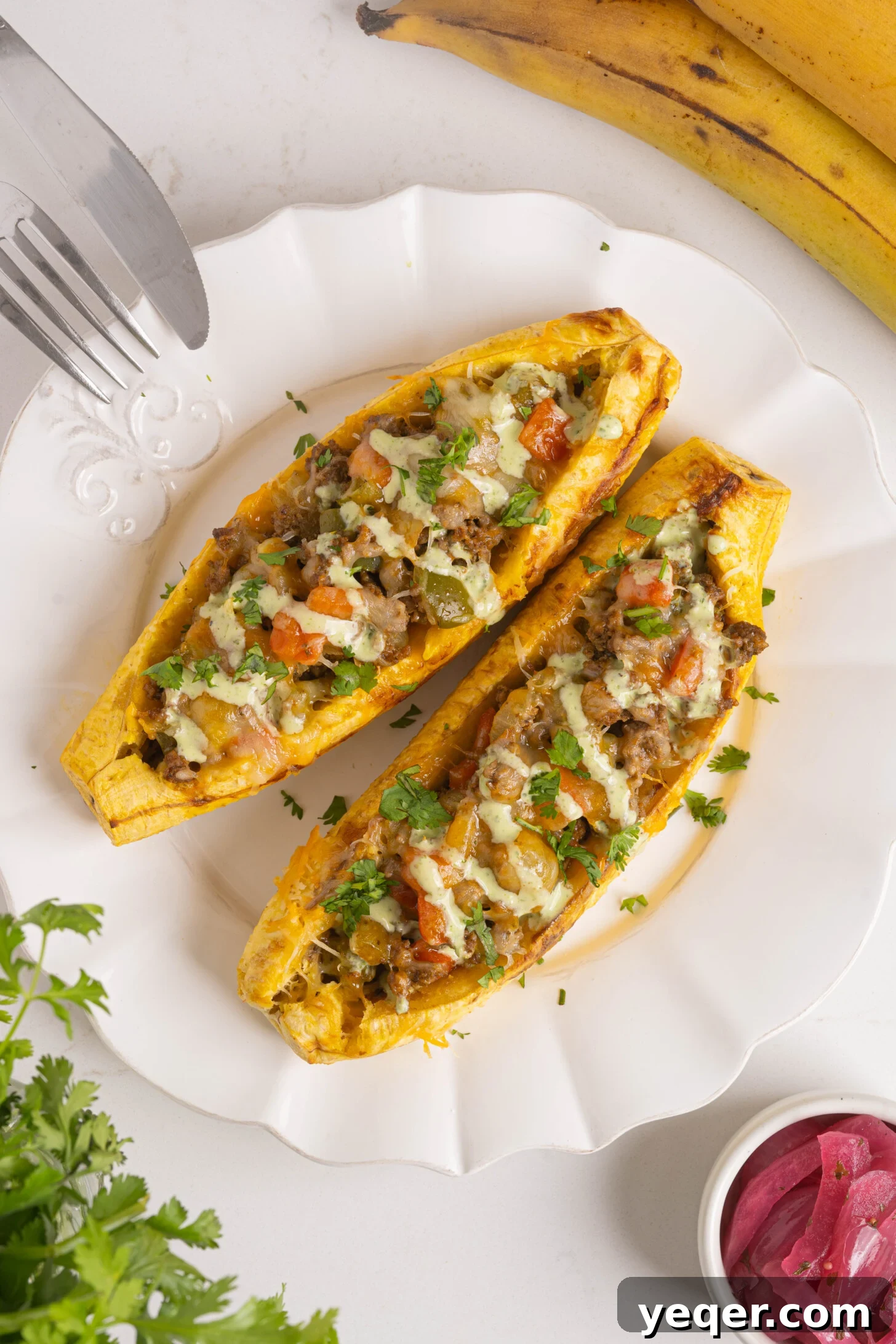
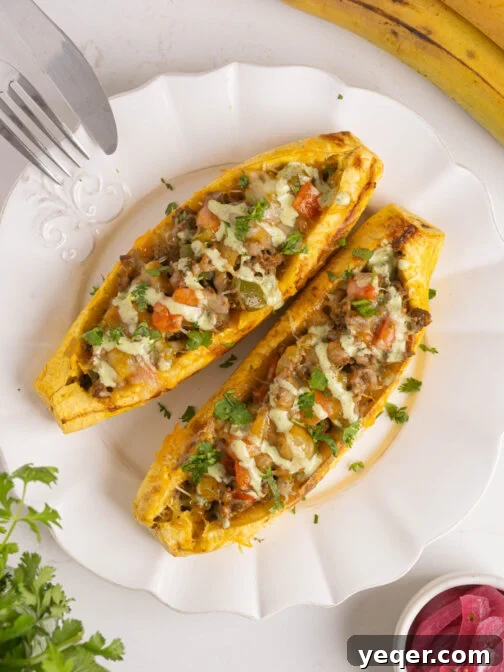
Immerse yourself in the vibrant flavors of Puerto Rico with Canoas de Platanos Maduros, an iconic dish that beautifully marries the sweetness of ripe plantains with a savory picadillo filling. Often referred to as “stuffed sweet plantains” or “plantain canoes,” this culinary masterpiece offers a delightful symphony of sweet and salty notes, perfected with a generous blanket of melted cheese. Unlike many traditional preparations that involve deep-frying, this recipe embraces a lighter, healthier approach by baking the ripe plantains, resulting in a dish that’s equally comforting and incredibly satisfying.
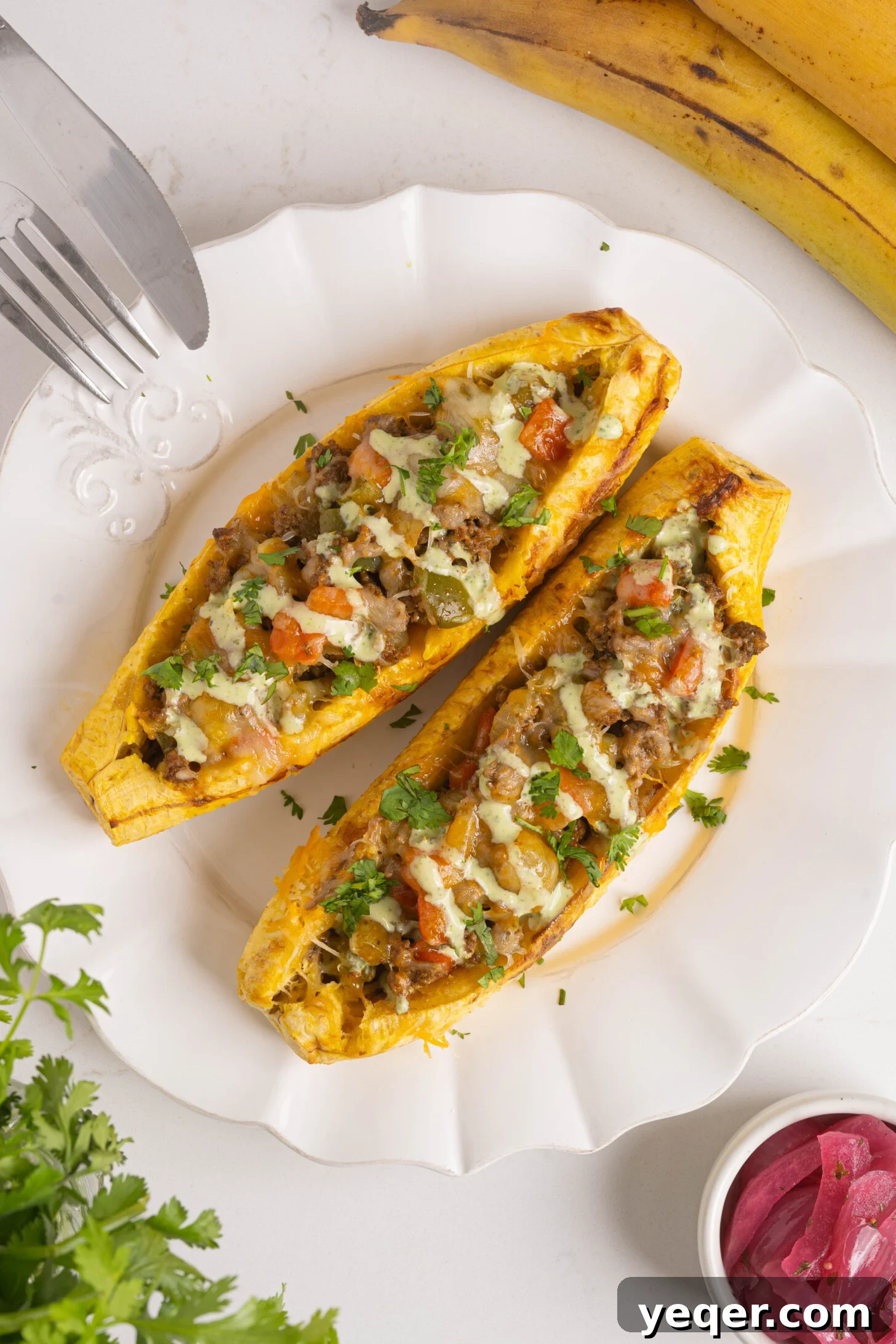
The whimsical name, “Canoas,” originates from the distinctive canoe-like shape the plantains take when gently wedged open and generously filled. This dish is a quintessential representation of Puerto Rican cuisine, showcasing its rich culinary heritage and the clever use of staple ingredients. It’s more than just a meal; it’s a celebration of flavor and culture, a dish often enjoyed during family gatherings and special occasions.
The harmonious combination of sweet plantains, seasoned ground beef (picadillo), and gooey cheese is a beloved flavor profile deeply embedded in Puerto Rican gastronomy. You’ll find this magical trio at the heart of other cherished dishes such as Pastelón, a savory plantain lasagna, and Piononos, which feature fried plantain rings filled with picadillo. Each dish offers a unique texture and presentation, but all share the same irresistibly comforting and classic taste that defines authentic Puerto Rican cooking.
What Are Canoas de Platanos Maduros? A Culinary Deep Dive
Canoas de Platanos Maduros are essentially ripe sweet plantains, split lengthwise, then filled with a savory mixture and topped with cheese before being baked to perfection. The “maduros” in the name signifies their ripeness – yellow or black-skinned plantains that are naturally sweet and tender, quite different from their greener, starchier counterparts used for dishes like tostones.
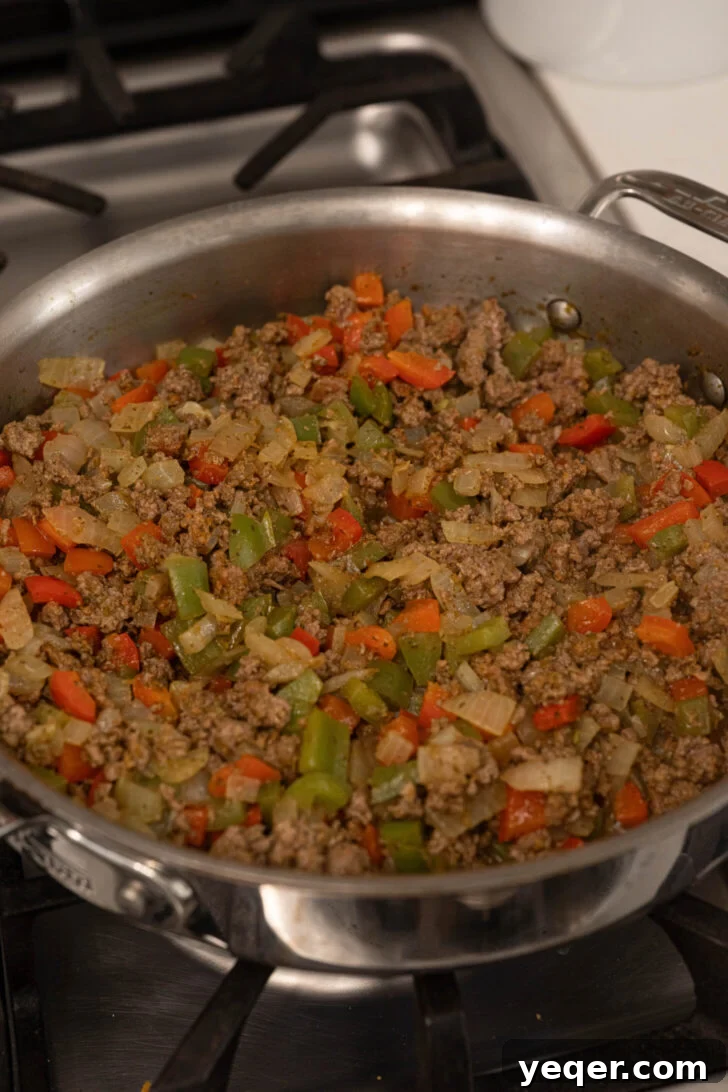
The heart of a canoa is its filling: a robust picadillo. This isn’t just any ground beef; it’s a flavorful concoction typically made with a sofrito base (a aromatic blend of onions, peppers, garlic, and herbs), seasoned with classic Puerto Rican spices like adobo and sazón, and sometimes includes olives, capers, or raisins for an extra layer of complexity. When baked, the sweet plantain caramelizes further, while the picadillo warms through and the cheese melts into a bubbly, golden crown, creating a truly unforgettable experience in every bite.
The History and Cultural Significance of Stuffed Plantains
Plantains, a staple crop introduced to the Caribbean by early Spanish explorers, quickly became an indispensable part of the local diet and culinary identity. Their versatility allowed them to be incorporated into countless dishes, from savory to sweet. Canoas de Platanos Maduros represent this culinary ingenuity, transforming a simple fruit into a hearty and satisfying meal.
The practice of stuffing vegetables or starches with savory fillings is common across many cultures, and in Puerto Rico, it’s a testament to the island’s rich fusion of Taíno, African, and Spanish influences. The use of sofrito and specific spices in the picadillo showcases the Spanish culinary legacy, while the prominence of plantains and starchy root vegetables reflects the Taíno and African heritage. Canoas are more than just food; they are a symbol of home, tradition, and the communal joy of sharing a meal with loved ones. They evoke memories of grandmothers’ kitchens, festive gatherings, and the warmth of Puerto Rican hospitality.
Why You Should Try This Baked Version: A Lighter Twist

While deep-frying is a common method for preparing plantains in many traditional Puerto Rican recipes, this version offers a compelling alternative by oven-baking them. The decision to bake rather than fry brings several advantages:
- Healthier Profile: Baking significantly reduces the fat content, making the canoas a lighter, yet equally flavorful, option. You get to enjoy the inherent sweetness of the plantains without the added oil from frying.
- Easier Preparation: Frying can be messy and requires constant attention. Baking simplifies the process, allowing for more hands-off cooking and less cleanup.
- Consistent Texture: Baking yields perfectly tender and slightly caramelized plantains that hold their shape beautifully, providing a wonderful contrast to the savory picadillo.
A simple, generous rub of oil and a hot 400°F (200°C) oven work wonders on ripe plantains, transforming them into a golden, supple foundation for the delectable filling. Trust me, the deep fryer won’t be missed when you taste the magical results of this baked approach!
Key Ingredients for Authentic Flavor
Crafting perfect Canoas de Platanos Maduros starts with understanding each ingredient and how it contributes to the overall flavor and texture. Here’s a closer look at what you’ll need:
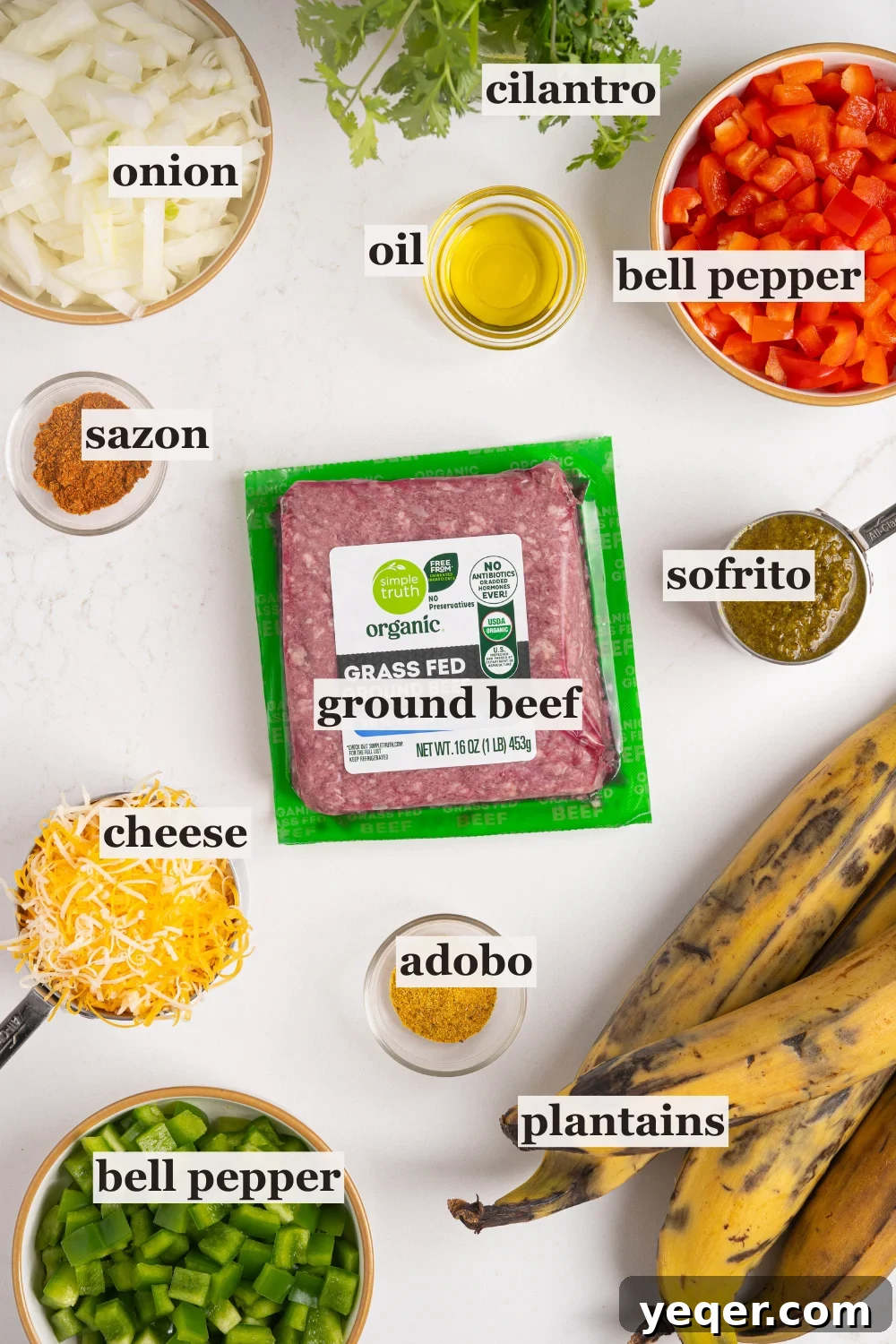
Sweet Plantains (Platanos Maduros)
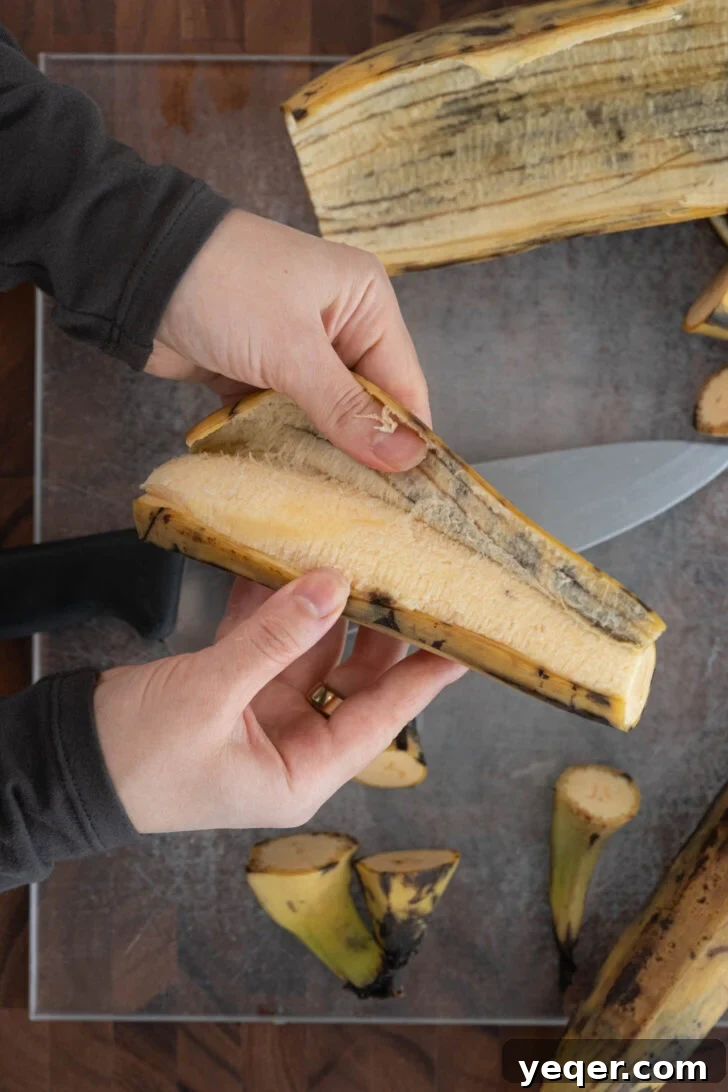
The star of the show! Selecting the right plantains is crucial. Look for plantains that are mostly yellow with significant black spots or entirely black. This indicates they are ripe and will be sweet and soft when cooked. Green plantains, on the other hand, are starchy and savory, not suitable for this recipe. If your plantains are still green, let them ripen at room temperature for a few days until they develop the desired black spots.
Savory Picadillo Filling
This flavorful ground beef mixture is the heart of the canoa.
- Ground Beef: Lean ground beef works best to keep the dish from becoming overly greasy. You can also experiment with ground turkey or a plant-based alternative for a lighter or vegetarian version.
- Sofrito: This aromatic base is non-negotiable for authentic Puerto Rican flavor. It’s a blend of culantro (or cilantro), ají dulce (or bell peppers), onions, garlic, and other herbs. You can find pre-made sofrito in most Latin markets or make your own fresh batch.
- Bell Peppers & Onion: Red and green bell peppers add color, sweetness, and a fresh crunch to the picadillo, complementing the sofrito.
- Adobo & Sazón: These are essential Puerto Rican spice blends. Adobo typically contains garlic, oregano, salt, pepper, and turmeric, while sazón often includes coriander, annatto (for color), cumin, and garlic. They provide the signature earthy and savory notes.
- Achiote Oil (or Olive Oil): Achiote oil, made by infusing annatto seeds in oil, gives dishes a beautiful orange-red hue and a subtle, earthy flavor. If unavailable, regular olive oil works perfectly fine.
Melted Cheese Perfection
The final touch that brings everything together! Shredded cheese, such as cheddar, mozzarella, or a Mexican blend, melts into a gooey, savory topping that beautifully contrasts the sweet plantain and rich picadillo. Feel free to use your favorite melty cheese.
Step-by-Step Guide to Making Delicious Canoas
Follow these detailed steps to create your own mouthwatering Canoas de Platanos Maduros at home. Each stage is designed for clarity and ease, ensuring a successful and delicious outcome.
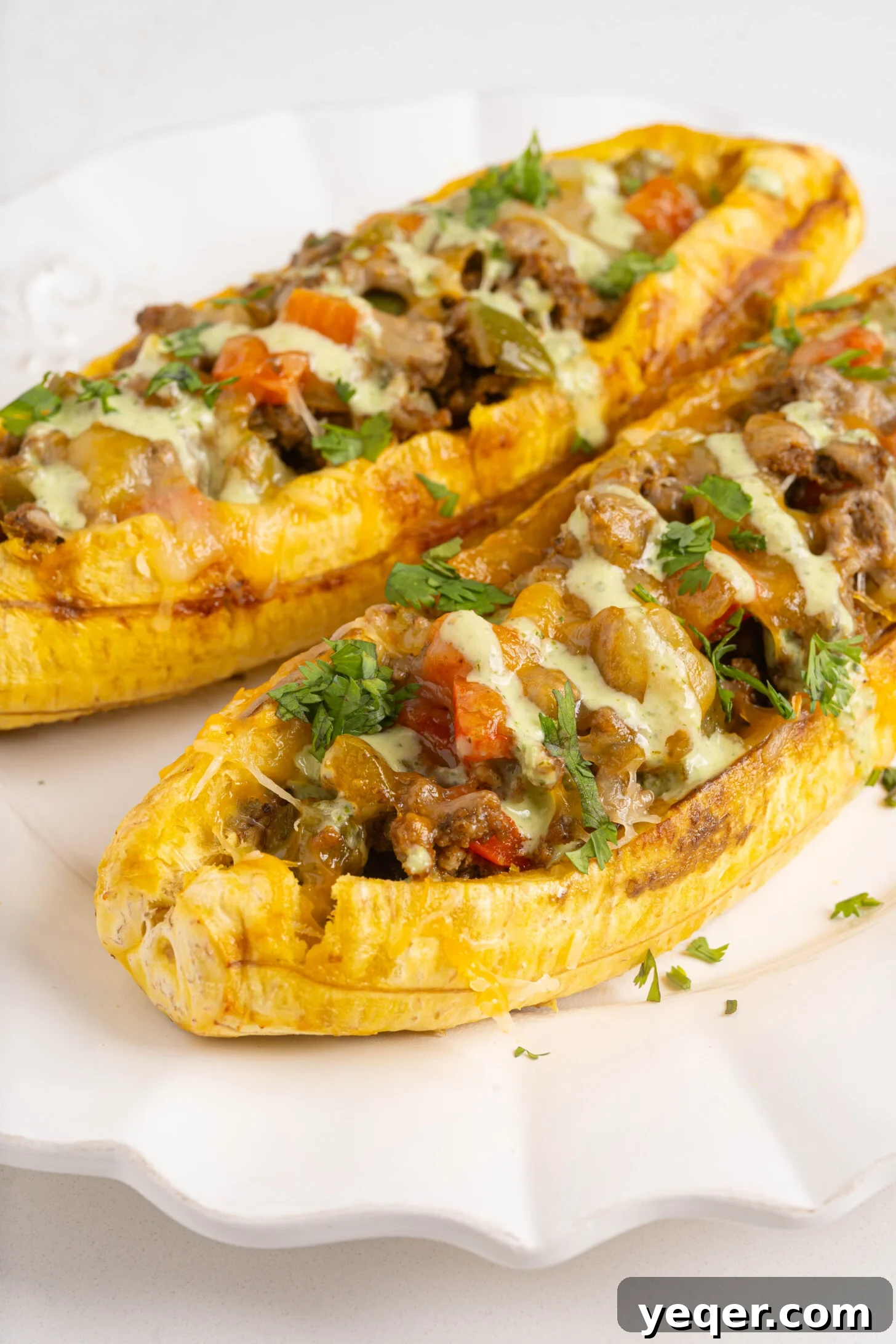
Tips for Success & Finishing Touches: For an extra burst of freshness and zing, consider topping your Canoas with a vibrant cilantro lime sauce, a scattering of fresh herbs like chopped parsley, or a garnish of pickled red onions or thinly sliced jalapeños. These additions elevate the dish, adding layers of texture and flavor. Remember to choose the darkest plantains for the sweetest result, and don’t be shy with the oil when baking them to ensure a beautiful, soft exterior.
Serving Suggestions and Perfect Pairings
Canoas de Platanos Maduros are a fulfilling meal on their own, often served as a hearty main course. However, they also pair wonderfully with a variety of side dishes that complement their rich flavors. Consider serving them alongside a simple green salad with a light vinaigrette to cut through the richness, or with a side of fluffy white rice to soak up any extra picadillo juices. A refreshing glass of homemade horchata or a vibrant fruit juice like passion fruit or guava would make an excellent beverage pairing. For a complete Puerto Rican feast, you could include a side of Arroz con Gandules (rice with pigeon peas) or a bowl of comforting Habichuelas Guisadas (stewed beans).
Variations and Dietary Adaptations
While the classic picadillo filling is irresistible, feel free to get creative with your Canoas:
- Chicken Picadillo: Replace ground beef with ground chicken or turkey for a lighter alternative.
- Vegetarian/Vegan: Use a plant-based ground meat substitute, lentils, or a mixture of finely diced mushrooms and vegetables for the picadillo. Ensure your sofrito and other seasonings are also plant-based. For cheese, use a dairy-free shredded alternative.
- Spicy Kick: Add a pinch of red pepper flakes or a dash of hot sauce to the picadillo for those who enjoy a bit of heat.
- Cheese Varieties: Experiment with different types of cheese like Monterey Jack, Colby, or even a sprinkle of cotija for a saltier finish.
- Extra Veggies: Incorporate finely diced carrots, corn, or peas into the picadillo for added nutrients and texture.
Storage and Reheating Tips
Leftover Canoas de Platanos Maduros can be stored in an airtight container in the refrigerator for up to 3-4 days. To reheat, place them on a baking sheet and warm them in a preheated oven at 350°F (175°C) for 10-15 minutes, or until heated through and the cheese is bubbly again. Microwaving is also an option for quicker reheating, but the plantains might become softer, and the cheese won’t re-crisp as well.
Frequently Asked Questions (FAQs)
Here are some common questions about making Canoas de Platanos Maduros:
Q: How do I know if a plantain is ripe enough for canoas?
A: Ripe plantains (maduros) should be mostly yellow with significant black spots, or entirely black. They should feel slightly soft to the touch. Green plantains are unripe and starchy, not suitable for this sweet dish.
Q: Can I prepare the picadillo ahead of time?
A: Absolutely! The picadillo can be made up to 2-3 days in advance and stored in the refrigerator. This makes assembly much quicker on the day you plan to serve the canoas.
Q: What if I can’t find sofrito?
A: While fresh or store-bought sofrito is highly recommended for authentic flavor, you can create a simple homemade version by blending or finely chopping a yellow onion, a green bell pepper, a few cloves of garlic, and a bunch of fresh cilantro.
Q: Can I freeze unbaked or baked canoas?
A: While it’s best enjoyed fresh, you can freeze baked canoas. Allow them to cool completely, then wrap them individually in plastic wrap and then in foil. Store in an airtight container for up to 1-2 months. Reheat from frozen in the oven at 350°F (175°C) until warmed through.
Q: Is this dish gluten-free?
A: Yes, this recipe is naturally gluten-free, assuming all your seasonings and ingredients are also gluten-free. Always check labels if you have strict dietary requirements.
More Delicious Plantain Recipes to Explore
If you love the versatility of plantains, here are a few more recipes to add to your culinary repertoire:
I hope this recipe inspires you to explore the wonderful world of Puerto Rican cuisine. Whether you’re a seasoned chef or a home cook looking for a new adventure, Canoas de Platanos Maduros offer a taste of the Caribbean that is both exotic and deeply comforting. Share this dish with your family and friends, and let the flavors transport you to the sunny shores of Puerto Rico.
Buen provecho,

Recipe Card: Puerto Rican Canoas (Sweet Stuffed Plantains)
Author: Salima Benkhalti
Prep Time: 20 minutes
Cook Time: 40 minutes
Total Time: 1 hour
Yield: 4 canoas
Category: Main Dish
Method: Baked
Cuisine: Latin, Puerto Rican
Diet: Gluten-Free
Ingredients
- 2 tsp achiote oil or olive oil
- 1 yellow onion, diced
- 1 red bell pepper, diced
- 1 green bell pepper, diced
- 1/3 cup sofrito
- 1 lb ground beef
- 1 tsp adobo seasoning
- 1 tsp sazon seasoning
- 1 tsp salt
- 4 brown plantains
- 1 cup cheese (cheddar, mozzarella, etc.), shredded
- fresh cilantro to garnish
Instructions
- Make the picadillo: Heat half of the oil in a large pan or skillet over medium heat. Add the diced yellow onion and red and green bell peppers. Cook for 5 minutes until softened. Stir in the sofrito, ground beef, adobo seasoning, sazon seasoning, and salt. Break up the beef with a spoon as it cooks until it is fully browned and cooked through. Cover the pan and set aside.
- Bake the plantains: Preheat the oven to 400°F (200°C). Carefully peel all four ripe brown plantains. Generously rub the peeled plantains with the remaining oil, ensuring they are well coated. Arrange them on a baking sheet lined with parchment paper. Bake for 20 minutes, or until they are tender and beautifully golden brown on all sides, flipping halfway through.
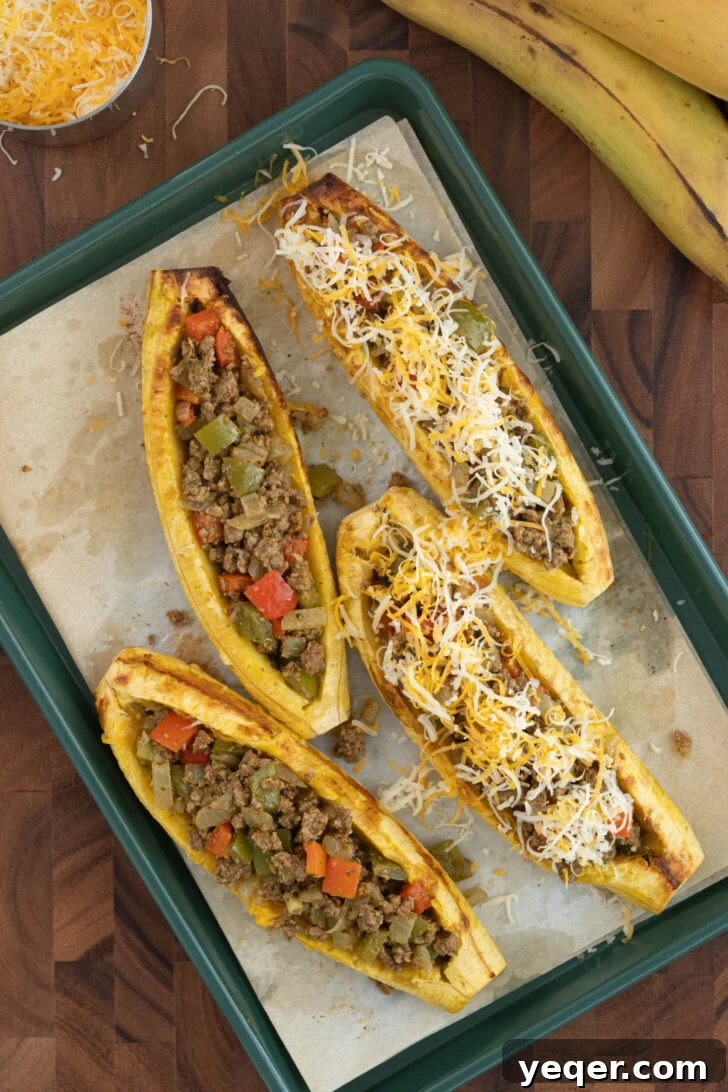
- Open the plantains & fill: Reduce the oven temperature to 350°F (175°C). Using a sharp knife, make a lengthwise slit halfway into each baked plantain, from end to end, without cutting all the way through. Gently use a spoon to wedge open each plantain, creating a “canoe” shape. Fill the hollowed-out plantains with a generous layer of shredded cheese, followed by a hearty scoop of the savory picadillo filling. Top each canoa with an additional sprinkle of shredded cheese.
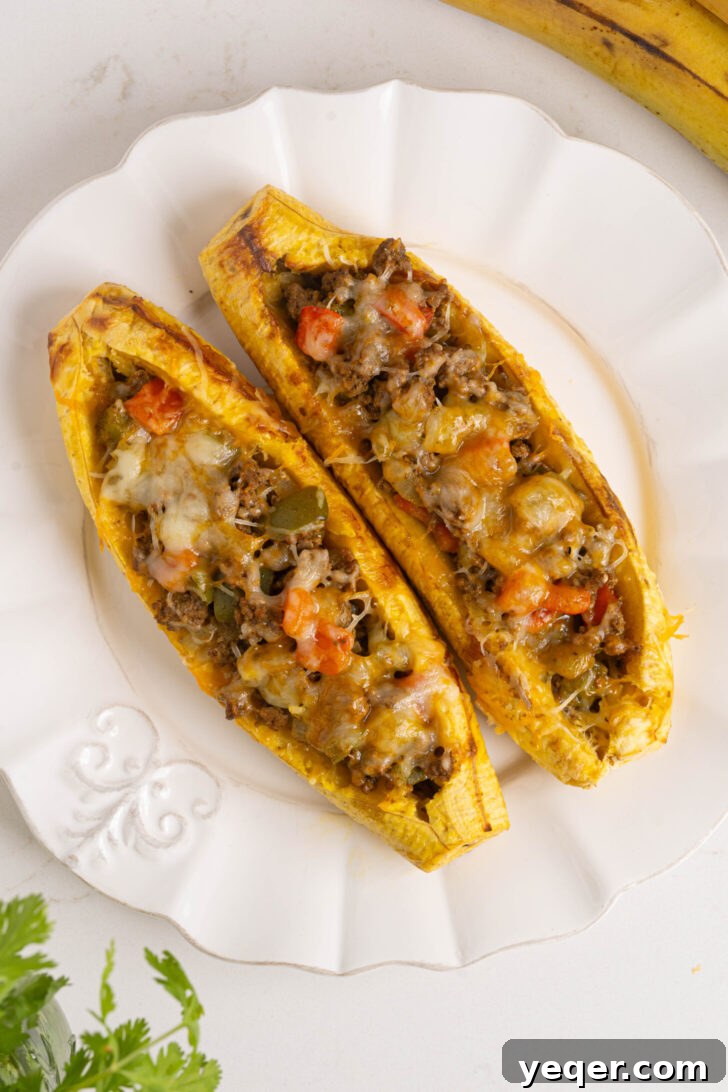
- Bake the canoas: Return the stuffed canoas to the oven and bake for another 5-10 minutes, or until the cheese is gloriously melted and bubbly. Once removed from the oven, garnish with fresh cilantro and any other desired toppings such as pickled onions or a zesty cilantro lime sauce. Serve immediately and enjoy this delightful Puerto Rican treat!
Equipment
- Baking Sheets
- Parchment Paper Sheets