
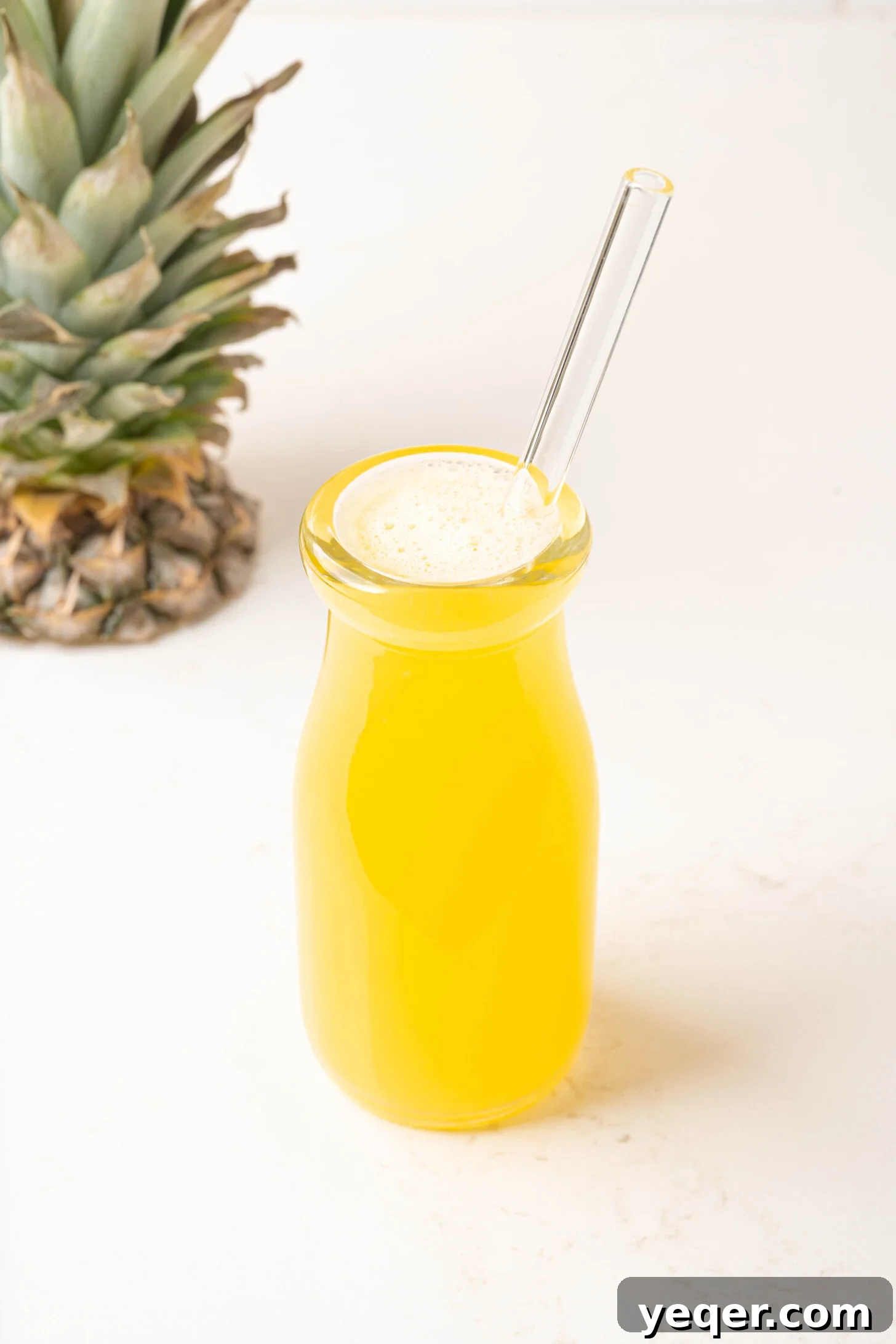
Learn how to make your own homemade pineapple juice using only fresh pineapple. It comes together in under 30 minutes and the result is ultra fresh juice, that’s high in nutrients and packed with flavor.
Homemade Pineapple Juice: Your One-Ingredient Ticket to Tropical Bliss
Imagine a glass of pure, unadulterated sunshine, bursting with sweet-tart flavor and brimming with natural goodness. That’s exactly what you get when you make homemade pineapple juice from scratch. Forget the artificial flavors and added sugars of store-bought versions; this recipe is a game-changer, proving that the best things in life truly are simple. With just one fresh pineapple and less than 30 minutes of your time, you can create an incredibly vibrant, nutrient-dense juice that will revolutionize your idea of refreshment.
Pineapple, an iconic tropical fruit, holds a special place in many cultures, especially in rich culinary traditions like Puerto Rican cuisine. Its juicy, fragrant flesh is celebrated in everything from invigorating cocktails and decadent desserts to savory main courses. While the idea of making juice at home might sound daunting, this “labor of love” is remarkably easy and yields a product far superior to any pre-packaged alternative. The intense, authentic flavor profile of fresh pineapple juice will undoubtedly elevate your expectations and tantalize your taste buds.
Once you savor the pure, unadulterated taste of this homemade elixir, you’ll likely never look at canned or bottled pineapple juice the same way again. It’s perfect for solo enjoyment, serving as a delightful pick-me-up on a warm day, or as the star ingredient in your favorite tropical beverages. Elevate classic concoctions like this refreshing Piña Colada or a zesty Pineapple Mojito. Prepare to be amazed by the difference fresh ingredients make, transforming your drink experience into something truly extraordinary.
The Single Ingredient for Pure Pineapple Perfection
In the world of high-quality juices, simplicity often reigns supreme. This recipe celebrates the natural perfection of pineapple, requiring only one star ingredient:
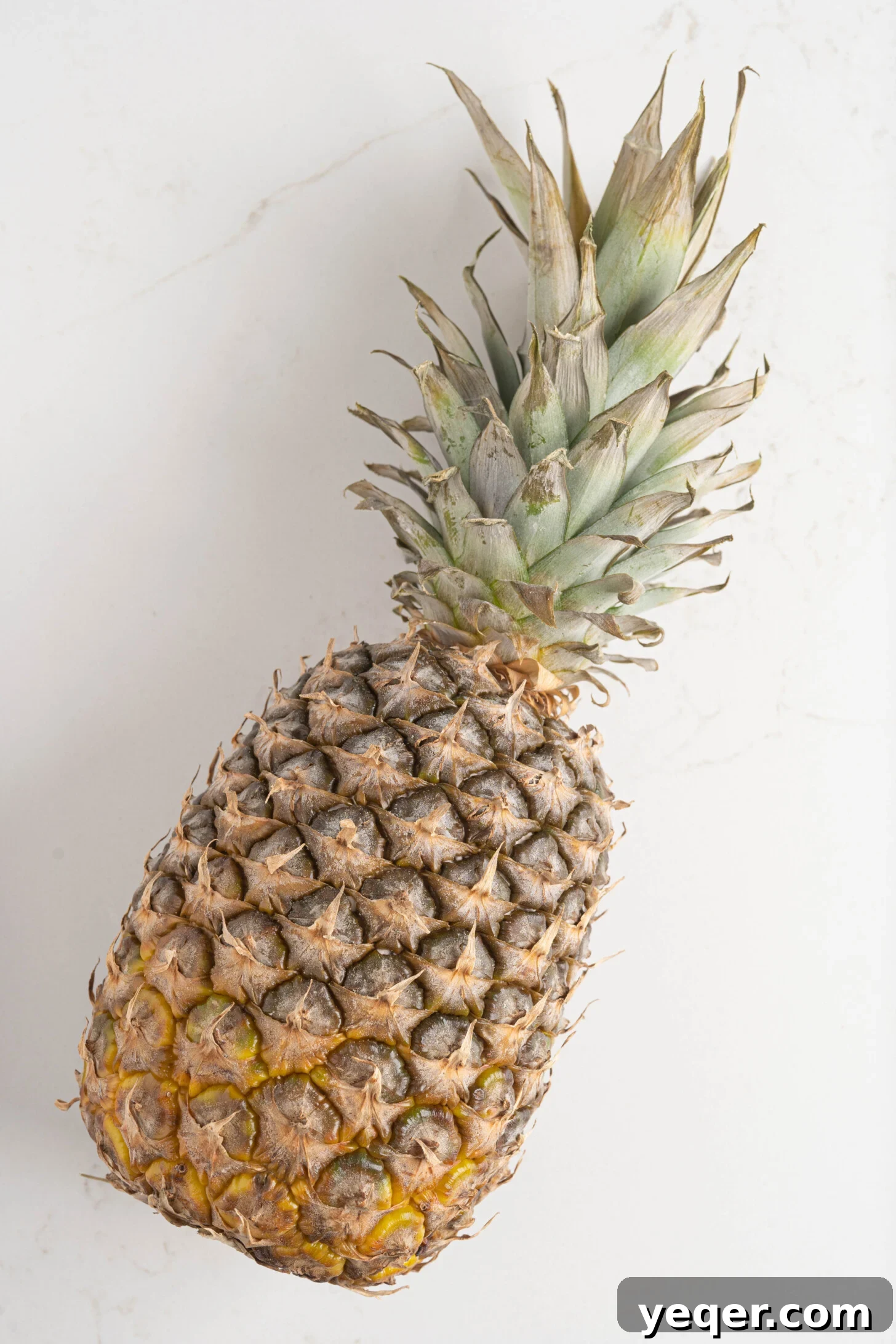
- 1 large, perfectly ripe whole pineapple
No extra sweeteners, no artificial flavors, no preservatives – just the pure, unadulterated essence of pineapple. The beauty of this recipe lies in its minimalist approach, allowing the natural sweetness and vibrant flavor of the fruit to shine through completely. For precise quantities and detailed instructions, refer to the recipe card located further down this page.
Expert Tips for Choosing a Perfectly Ripe Pineapple
The key to exceptional pineapple juice begins with selecting the right fruit. A perfectly ripe pineapple guarantees maximum sweetness and juiciness. Here’s a comprehensive guide to picking the best one:
- Color is Key: While green pineapples can ripen further, the sweetest ones typically have a rich golden-yellow color spreading from the base upwards. Look for a healthy balance of yellow and green on the peel; a completely green pineapple is likely underripe, and one that is uniformly dark orange or brown might be overripe.
- The Scent Test: This is perhaps the most reliable indicator. Lift the pineapple and sniff its base (the cut end). A ripe pineapple will emit a distinctly sweet, fragrant, and tropical aroma. If there’s no smell, it’s probably not ripe enough. If it smells fermented, vinegary, or alcohol-like, it’s past its prime.
- Tactile Assessment: Give the pineapple a gentle squeeze. It should feel firm but have a slight give, similar to a ripe peach. Avoid rock-hard pineapples, which are underripe, or excessively soft spots, which indicate spoilage.
- Leafy Clues: The leaves at the crown should be vibrant green and healthy-looking, not dry, brittle, or brown. A fun tip: a single leaf from the center of a ripe pineapple should pull out easily with a gentle tug.
- Weight Matters: A ripe pineapple will generally feel heavy for its size. This weight indicates that it’s full of juice and perfectly hydrated.
By carefully following these pointers, you’ll consistently choose a pineapple that yields the most flavorful and naturally sweet juice, making your homemade creation truly unforgettable.
Crafting Your Homemade Pineapple Juice: A Simple Step-by-Step Guide
Making fresh pineapple juice at home is a rewarding process that’s surprisingly easy, especially with a good blender. Follow these detailed steps to achieve a perfectly smooth, delicious, and pulp-free result every time.
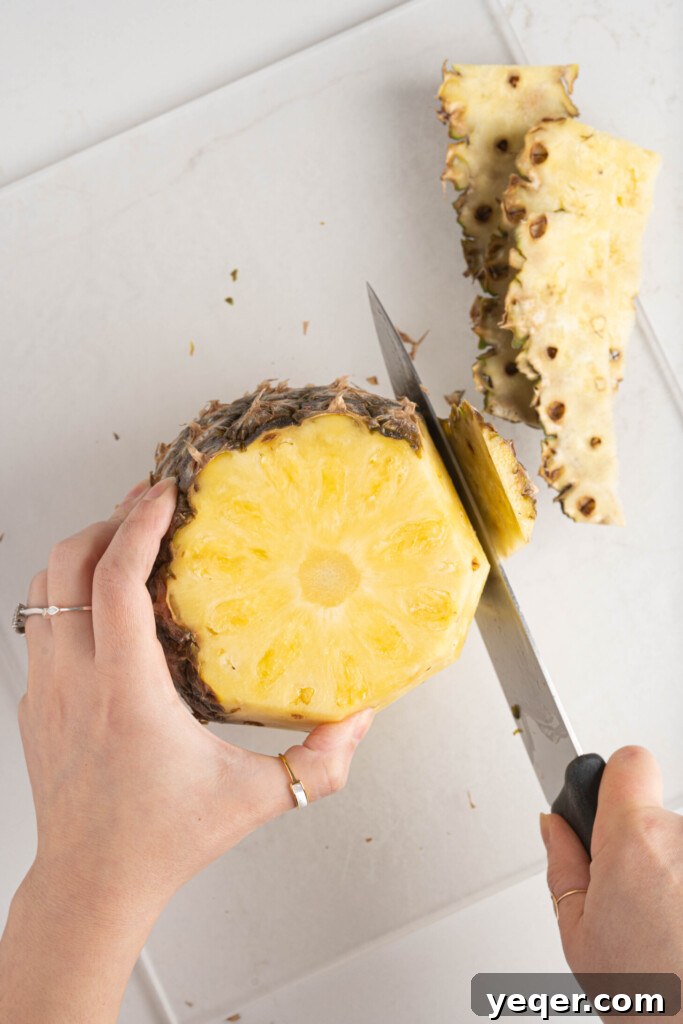
Step 1: Preparing and Peeling the Pineapple. Begin by placing your pineapple on a stable, sturdy cutting board. Using a sharp, heavy-duty knife, meticulously slice off both the crown (top) and the base (bottom) of the fruit. This creates two flat, stable surfaces, making the peeling process much safer and easier. Next, stand the pineapple upright on one of its flat ends. With your sharp knife, carefully slice downwards, following the natural curve of the pineapple, to remove the thick, spiky skin. Work in small, controlled sections all the way around the fruit. After the main skin is removed, you’ll notice small, brownish “eyes” embedded in the flesh. Use the tip of your knife or a small paring knife to meticulously trim these out, ensuring a perfectly smooth and edible surface. This step is crucial for both aesthetics and taste.
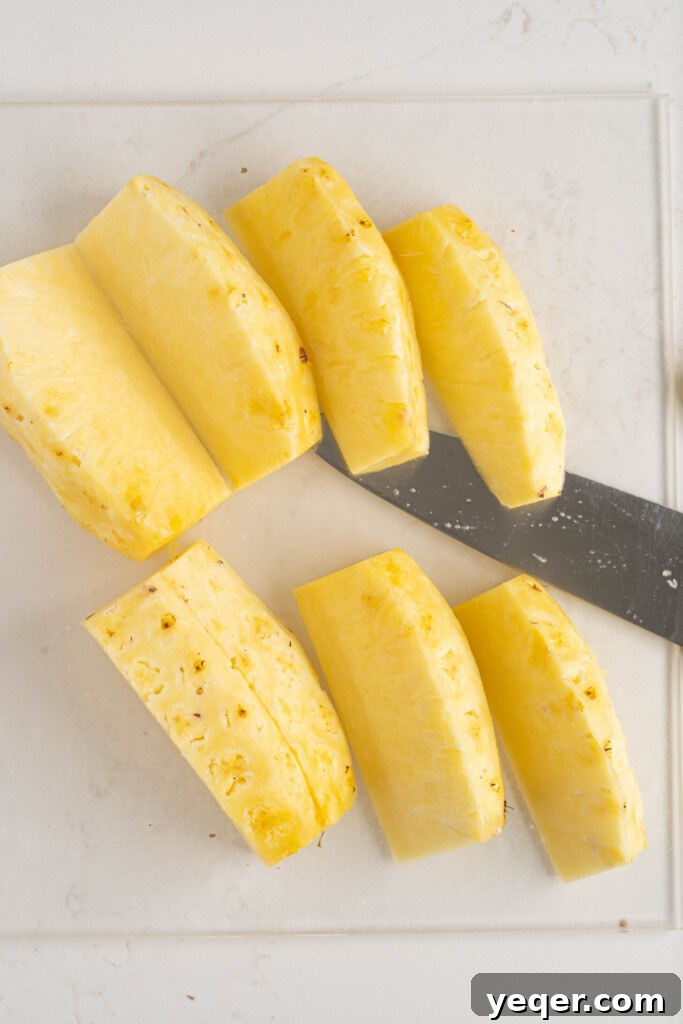
Step 2: Chopping the Pineapple into Blender-Ready Chunks. Once your pineapple is fully peeled and free of eyes, lay it on its side on the cutting board. First, slice the pineapple into quarters lengthwise. Then, take each quarter and slice it lengthwise again, effectively creating eight long, wedge-shaped pieces. Finally, chop these longer segments into smaller, bite-sized chunks. The goal here is to create pieces that are small enough to fit easily into your blender’s jar without overwhelming the blades. A common question arises about the core: do not worry about removing the fibrous center of the pineapple at this stage. While the core has a tougher texture when eaten whole, it blends perfectly well and its fibers will be efficiently strained out later in the process. Plus, the core contains valuable nutrients like bromelain, so keeping it in maximizes your juice’s health benefits.
Hint: The core of the pineapple is a nutritional powerhouse, rich in the enzyme bromelain, which boasts anti-inflammatory properties. When juicing, its fibrous nature is irrelevant as it gets strained out, allowing you to reap all its health benefits without affecting the juice’s smooth texture!
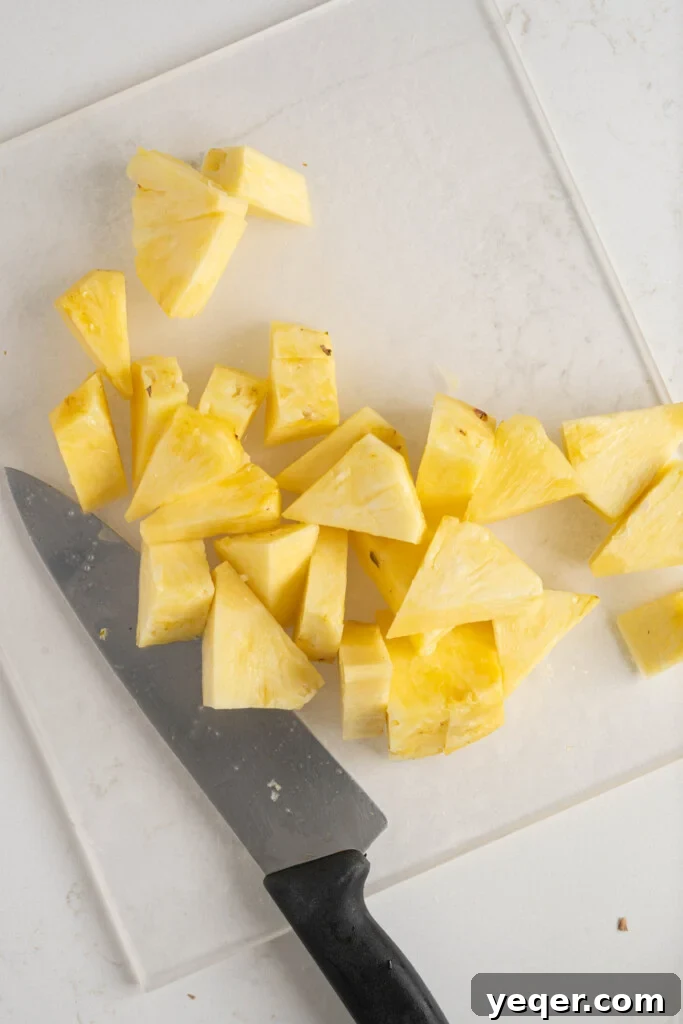
To summarize the chopping sequence for optimal blending and juice extraction: first, cut the fully peeled pineapple into four equal vertical sections. Next, take each of these quarters and divide them into two more vertical sections, resulting in eight long spears. Finally, chop these spears horizontally into small, uniform chunks. This systematic approach ensures that your blender can process the fruit efficiently and thoroughly.
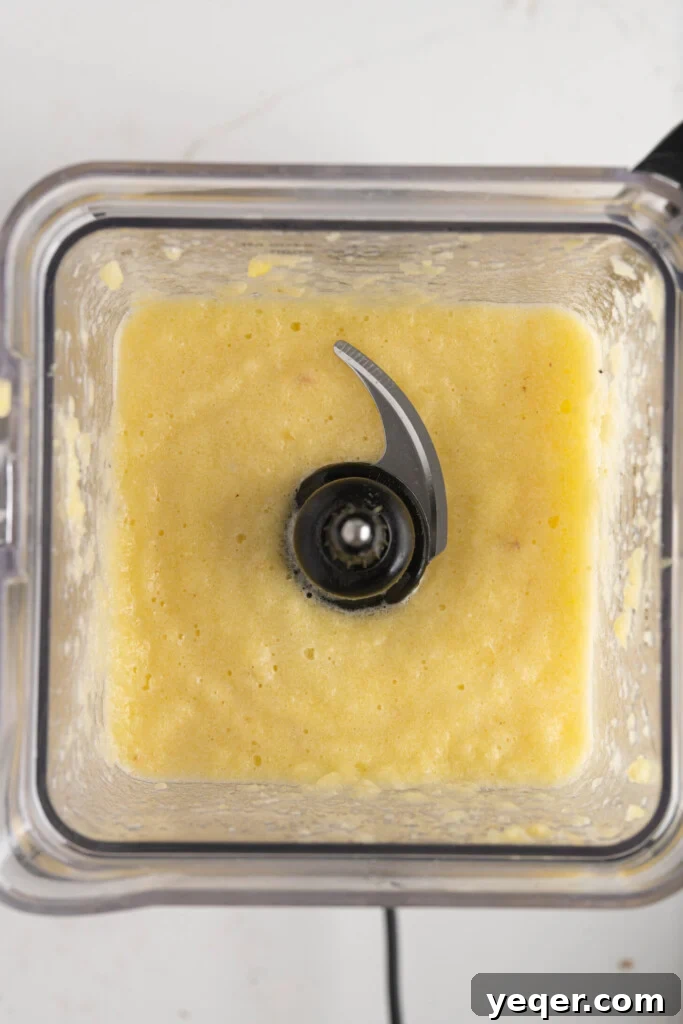
Step 3: Blending for a Silky Smooth Puree. Carefully transfer all of your chopped pineapple chunks into the pitcher of a high-quality, powerful blender. Secure the lid firmly. Begin blending on a low setting, gradually increasing the speed to high. Allow the blender to run until the pineapple has transformed into a completely liquid state, with absolutely no large chunks or visible fibrous pieces remaining. The resulting consistency should be smooth, homogeneous, and slightly frothy. If, after blending, you find the mixture to be too thick for your preference or if your blender is struggling, don’t hesitate to add a small splash of filtered water – starting with about 1/4 to 1/2 cup – to achieve your desired consistency. Blend briefly again to thoroughly incorporate the water.
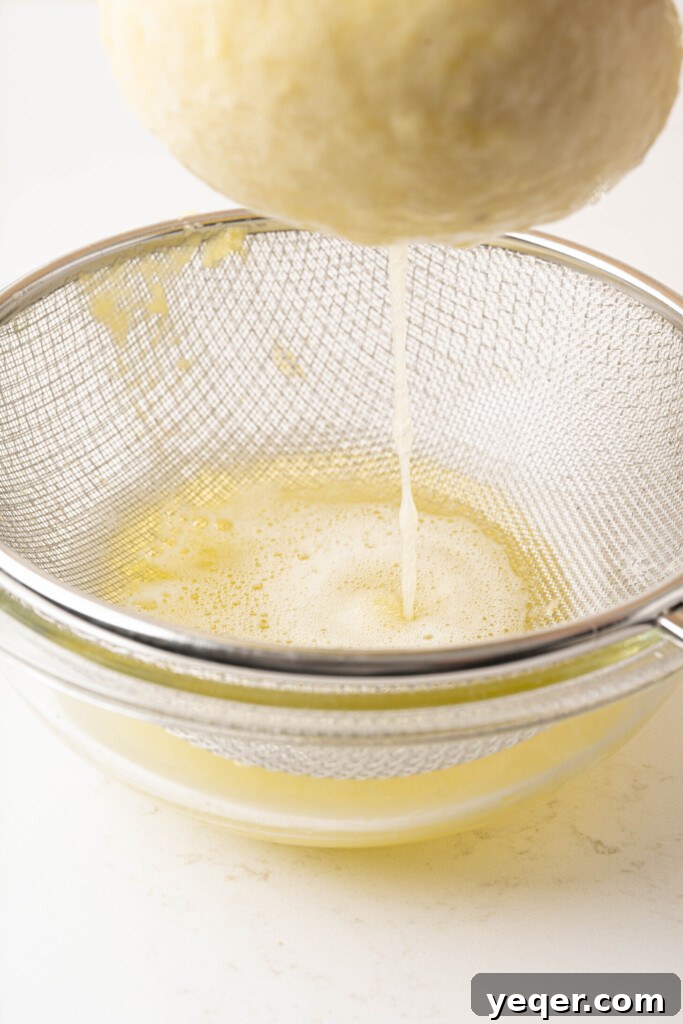
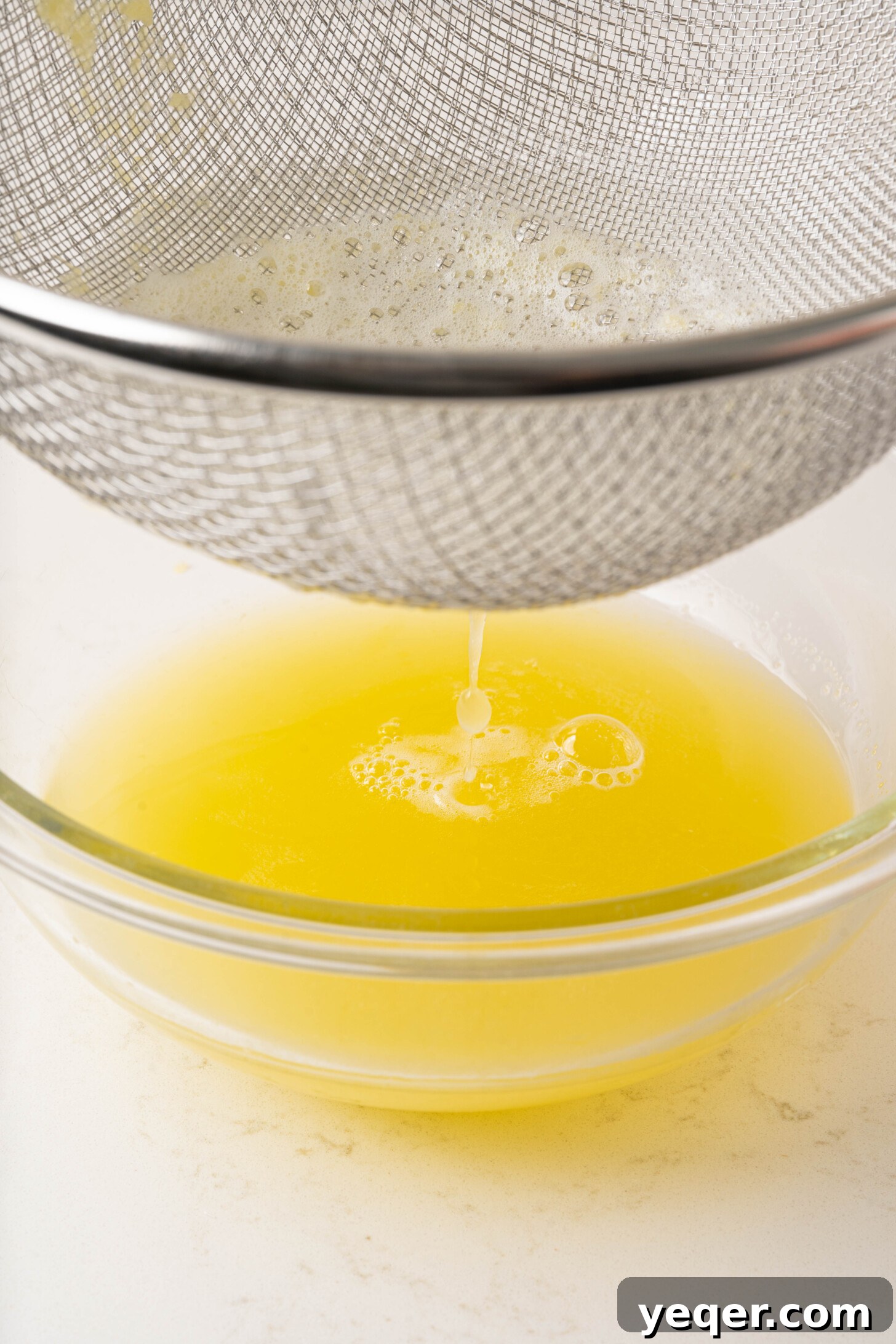
Step 4: Straining for the Ultimate Smoothness. This crucial step is what transforms your blended pineapple into a perfectly smooth, pulp-free juice. Prepare your straining setup by placing either a fine-mesh strainer (or a standard mesh strainer lined with a double layer of paper towels), a large piece of cheesecloth, or a dedicated nut milk bag over a large mixing bowl. Slowly and carefully pour the entire blended pineapple mixture into your chosen straining apparatus. If using cheesecloth or a nut milk bag, gather the edges to form a pouch and firmly squeeze out all the liquid until only a relatively dry pulp remains. If using a fine-mesh strainer, use the back of a sturdy spoon or a rubber spatula to press the pulp against the mesh, forcing the juice through. Continue this pressing and squeezing until you’ve extracted every possible drop of precious pineapple juice. Discard the remaining pulp (or save it for creative uses – see our tips below!). Your incredibly fresh, homemade pineapple juice is now perfectly ready to be savored! Serve chilled or over ice.
Creative Add-Ins and Flavor Customizations for Your Pineapple Juice
While the pure, unadulterated taste of fresh pineapple juice is a delight in itself, it also provides a fantastic base for culinary creativity. You can easily customize this recipe with subtle additions that complement and enhance the natural sweet-tart profile of the pineapple, without ever overpowering its star flavor. Here are some of my favorite ways to elevate your homemade juice and make it uniquely yours:
- Zesty Fresh Ginger: The pungent, warming notes of fresh ginger create an exquisite harmony with tropical pineapple. For a refreshing and slightly spicy kick, simply add a 1-inch knob of peeled fresh ginger directly to your blender along with the pineapple chunks before blending. It’s an invigorating combination that also offers additional health benefits.
- Aromatic Spices: A tiny dash of certain spices can surprisingly deepen and round out the juice’s flavor. Try a micro-pinch of freshly ground black pepper – it brightens the pineapple’s sweetness in an unexpected way! Turmeric powder not only imparts a beautiful golden hue but also adds a subtle earthy warmth and anti-inflammatory properties. For those who crave a little heat, a tiny whisper of cayenne pepper will give your juice a lively, spicy edge.
- Natural Sweeteners (Optional): Ripe pineapples are naturally abundant in sugars, making additional sweeteners often unnecessary. However, if your pineapple isn’t quite at peak ripeness or if you simply prefer a sweeter juice, you can enhance it with a teaspoon or two of natural sweeteners. Options include maple syrup, agave nectar, or a small amount of honey. Always start with a minimal amount, blend, and taste before adding more to achieve your desired sweetness level.
- Refreshing Herbs: For an extra layer of freshness and complexity, consider blending in a few sprigs of fresh mint or cilantro. These herbs can add a surprisingly vibrant and sophisticated note to your juice.
Beyond these simple enhancements, you can also transform this into a personalized juice blend by incorporating other fruits and even vegetables. Think about adding a sliced apple, a segment of orange, or a squeeze of lime for a citrusy boost. For a powerful nutrient infusion, blend in some fresh celery, carrots, cucumber, or a handful of spinach or kale. Just combine them with the pineapple and proceed with blending and straining as usual to create a unique, wholesome concoction with pineapple remaining as the delightful primary flavor.
Making Pineapple Juice with a Juicer: An Effortless Alternative
While this recipe prioritizes accessibility by utilizing a common household blender, those fortunate enough to own a dedicated juicer will find the process of making pineapple juice even more streamlined. Juicers excel at extracting juice efficiently and often produce a slightly clearer result with less manual straining.
If you do possess a juicer, the preparation is wonderfully straightforward: First, meticulously remove the tough outer skin from your pineapple, following the detailed instructions provided in Step 1 of our blender method. For most modern juicers, there’s no need to concern yourself with removing the central fibrous core, as the juicer’s mechanism will effectively separate it. Next, chop the peeled pineapple into pieces of a size appropriate to fit comfortably through the feed chute of your specific juicer model. Then, simply process the pineapple chunks through your juicer as you would any other fruit or vegetable, allowing the fresh, golden liquid to collect in a pitcher or glass. The juicer’s internal components will automatically discard the pulp, leaving you with a smooth, perfectly extracted pineapple juice ready for immediate enjoyment. It’s an incredibly efficient way to achieve pure, concentrated pineapple flavor.
The Incredible Health Benefits of Fresh Homemade Pineapple Juice
Beyond its irresistible taste, fresh homemade pineapple juice is a powerhouse of nutrition, offering a wide array of health benefits that make it a fantastic addition to your daily diet. Pineapples are naturally rich in essential vitamins, minerals, and unique enzymes that contribute to overall well-being:
- Vitamin C Champion: Pineapple is an outstanding source of Vitamin C, a potent antioxidant crucial for bolstering the immune system, stimulating collagen production for healthy skin, and protecting your body’s cells from damaging free radicals.
- Bromelain’s Anti-Inflammatory Power: This unique proteolytic enzyme, found abundantly in pineapple, is celebrated for its impressive anti-inflammatory properties. Bromelain can help reduce swelling and pain, aid in the recovery of muscles after intense exercise, and significantly improve digestion by breaking down proteins.
- Digestive Support: Thanks to bromelain, pineapple juice acts as a natural digestive aid, helping to soothe an upset stomach, alleviate bloating, and improve overall gut health. It can make heavier meals easier to process.
- Superior Hydration: Comprising mostly water, pineapple juice is an excellent way to stay hydrated, especially refreshing during hot weather or as a post-workout electrolyte replenishment.
- Manganese Rich: This often-overlooked trace mineral is vital for numerous bodily functions, including bone health, metabolism, and acting as a powerful antioxidant. Pineapple provides a substantial natural source of manganese.
- Antioxidant Boost: In addition to Vitamin C, pineapple contains various other antioxidants that actively combat oxidative stress in the body, which can help reduce the risk of chronic diseases and promote cellular health.
By making your own pineapple juice at home, you ensure you’re consuming a product that retains all these vital nutrients without the unnecessary added sugars, artificial colors, or chemical preservatives commonly found in commercial fruit juices. It’s a truly wholesome and delicious way to nourish your body.
Delicious Ways to Enjoy Your Versatile Homemade Pineapple Juice
Freshly prepared pineapple juice is a wonderfully versatile ingredient that goes far beyond just a simple drink. While it’s utterly delicious served chilled over ice, its vibrant flavor and natural acidity make it a superb component in a wide variety of beverages and culinary creations. Here are some inspiring ideas to help you make the most of your homemade pineapple elixir:
- Pure Refreshment: The simplest pleasure – pour your freshly made juice over a generous amount of ice. Garnish with a fresh pineapple wedge, a lime slice, or a sprig of mint for an elevated experience.
- Tropical Cocktails & Mocktails: Pineapple juice is a cornerstone of tropical mixology. Use it to create vibrant, vacation-inspired drinks.
- Smoothie Base Extraordinaire: Replace water or other milk with pineapple juice in your morning smoothies. It infuses them with natural sweetness and a brilliant tropical flavor that perfectly complements berries, bananas, spinach, and protein powders.
- Flavorful Marinades: Leverage the natural tenderizing power of bromelain by incorporating pineapple juice into your marinades for chicken, pork, or fish. It adds incredible flavor while ensuring your meat is incredibly tender and juicy.
- Luscious Desserts: Integrate it into homemade sorbets, refreshing popsicles, vibrant jellies, or even fruit salads to enhance their tropical flair. It’s also a fantastic addition to fruit tarts or glazes.
- Zesty Salsas & Dressings: A splash of pineapple juice can brilliantly brighten up a homemade fruit salsa, adding a sweet and tangy dimension that pairs wonderfully with grilled chicken or fish tacos. It also makes for a refreshing base in vinaigrettes.
- Frozen Delights: Freeze small portions of juice into ice cubes to chill other beverages without diluting their flavor. You can also blend it with other fruits for delicious homemade granitas or slushies.
For more inspiration on how to use your fantastic homemade pineapple juice, explore these popular cocktail and mocktail recipes from Salima’s Kitchen:
Essential Kitchen Tools for Making Perfect Pineapple Juice
To successfully create a batch of incredibly fresh homemade pineapple juice using the blender method, you’ll need a few fundamental kitchen tools. Having the right equipment makes the process smooth, efficient, and ensures a superior final product:
- High-Quality Blender: This is arguably the most crucial tool. A powerful blender with strong blades is essential for thoroughly pureeing the pineapple chunks into a smooth, lump-free consistency. This maximizes juice extraction and prevents any unappetizing fibrous bits from lingering. We highly recommend investing in a good quality blender for optimal results.
- Sharp Knife and Sturdy Cutting Board: For safe and efficient preparation, a large, sharp chef’s knife is ideal for tackling the tough skin and fibrous flesh of a pineapple. Pair it with a stable cutting board that won’t slip during use.
- Effective Straining Tool: This step is non-negotiable for achieving a smooth, pulp-free juice. Your choice of straining tool will determine the final texture. You have excellent options to choose from:
- A fine-mesh strainer: A common kitchen item that effectively catches most pulp. You’ll need to use the back of a spoon or spatula to press the pulp and extract the liquid.
- Cheesecloth: For the smoothest, pulp-free juice, layering several sheets of cheesecloth over a strainer or directly over a bowl is ideal. It allows you to firmly squeeze out every last drop of liquid.
- A nut milk bag: A highly effective and reusable alternative to cheesecloth, often more durable and easier to manage for squeezing.
- Large Mixing Bowl or Pitcher: You’ll need a container large enough to comfortably collect all the strained juice.
For achieving the absolute smoothest and most clarified pineapple juice, my personal preference is to employ a combination method: I typically line a fine-mesh strainer with a double layer of cheesecloth. This dual-layer approach ensures that virtually no pulp particles make it into the final product, resulting in a wonderfully clean and purely delicious pineapple juice.
Proper Storage for Your Fresh Homemade Pineapple Juice
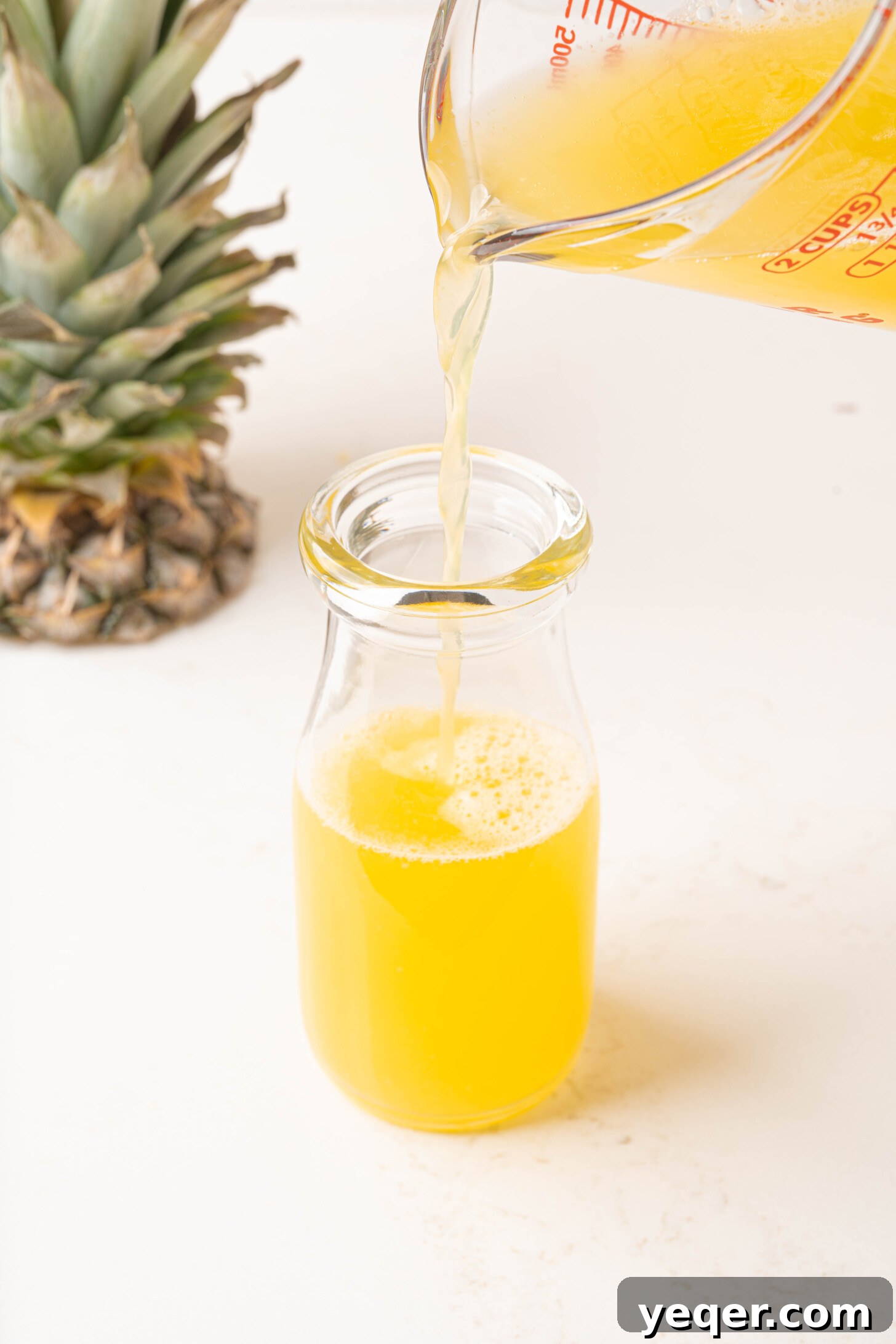
To fully experience the vibrant flavor, maximum nutritional value, and refreshing qualities of your homemade pineapple juice, it is always recommended to drink it fresh, ideally on the day it is made. However, if you’ve prepared a larger batch or have delicious leftovers, proper storage methods will help maintain its quality for a few days or even longer.
- Refrigeration for Short-Term: For immediate consumption, store any unused pineapple juice in a clean, airtight glass jar or bottle. Keep it in the refrigerator, where it will remain fresh and flavorful for up to 3-4 days. While it might still be safe to consume beyond this period, some of its peak nutritional benefits and vibrant taste will gradually diminish.
- Freezing for Extended Storage: Pineapple juice freezes exceptionally well, making it perfect for longer-term storage and meal prep. Pour any juice you don’t plan to use within 4-5 days into silicone cube molds, standard ice cube trays, or any freezer-safe containers. Once completely frozen solid, you can transfer the juice cubes into a larger freezer bag to save space. Frozen pineapple juice can be stored for up to 3 months. When ready to use, simply defrost the cubes in the refrigerator overnight, or add them directly to smoothies, cocktails, or other beverages to chill them without dilution.
Smart and Sustainable Uses for Leftover Pineapple Pulp
After straining your beautiful pineapple juice, don’t rush to discard the leftover fibrous pulp! This seemingly waste product is actually a valuable ingredient that can help you minimize food waste and add a nutritional boost to other recipes. Here are some clever ideas:
- Fiber-Rich Smoothie Booster: Add fresh or frozen pineapple pulp to your morning smoothies. It’s an excellent way to incorporate extra dietary fiber, vitamins, and a subtle pineapple flavor, contributing to a feeling of fullness and improved digestion.
- Moisture and Flavor for Baked Goods: Incorporate the pulp into your baking! It adds wonderful moisture, natural sweetness, and a lovely tropical flavor to muffins, quick breads, cakes, or even cookies. Just be sure to adjust liquid amounts in your recipe as needed.
- Flavoring for Ice Cubes: For a fun twist, mix a little pulp with water or a splash of juice and freeze it in ice cube trays. These flavored ice cubes are perfect for jazzing up sparkling water, iced tea, or even other juices.
- Compost Powerhouse: If culinary uses aren’t an option, pineapple pulp makes an excellent addition to your compost bin. It’s rich in organic matter that will enrich your garden soil beautifully.
Frequently Asked Questions About Homemade Pineapple Juice
- Q: Can I use frozen pineapple instead of fresh for this recipe?
- A: Absolutely, you can! While fresh pineapple generally offers the best flavor and texture, frozen pineapple chunks work well too. For best results, allow them to thaw slightly before blending, or be prepared to add a little more water if necessary to achieve a smooth consistency. The flavor might be slightly less intense than with perfectly ripe fresh fruit, but it will still be delicious and convenient.
- Q: Is it necessary to add water to the blender?
- A: Ripe pineapples are incredibly juicy, so you often won’t need to add much, if any, extra water. However, if your blender seems to struggle with the consistency, or if you simply prefer a thinner juice, adding a small splash of filtered water (starting with 1/4 to 1/2 cup per pineapple) can help achieve the desired texture. Always add it gradually and blend until you reach your preference.
- Q: Should I remove the pineapple core before blending?
- A: No, there’s no need to remove the core for juicing! The core contains a beneficial enzyme called bromelain and other nutrients. While it’s fibrous and tough to eat raw, it blends down effectively, and its fibers are completely removed during the straining process. Including the core actually maximizes the nutritional value of your homemade juice.
- Q: How can I make my pineapple juice sweeter without adding refined sugar?
- A: The primary way to ensure maximum sweetness is to choose a very ripe pineapple (refer to our “How to Choose a Perfectly Ripe Pineapple” section). Ripeness directly correlates with the natural sugar content. If you still desire more sweetness, you can blend in other naturally sweet fruits like a very ripe banana, a few pitted dates, or a small handful of grapes along with the pineapple before straining. These additions will naturally sweeten your juice without artificial additives.
- Q: Can I skip the straining step for a quicker process?
- A: You certainly can skip the straining step if you prefer a thicker, pulpier beverage. However, if you’re aiming for a traditional, clear, and smooth juice consistency, straining is highly recommended. Skipping this step will result in a drink that is more akin to a thin, chunky smoothie rather than a pure juice.
Enjoy,

Print Recipe
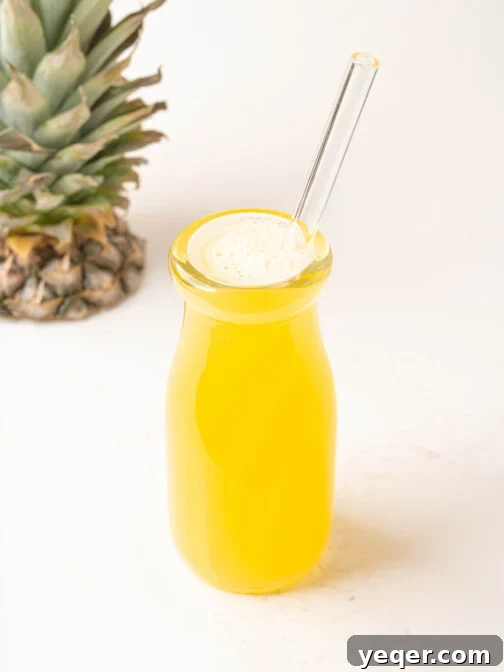
1 Ingredient Homemade Pineapple Juice
- Author: Salima Benkhalti
- Prep Time: 5 minutes
- Total Time: 15 minutes
- Yield: Approx. 2 cups (per 1 medium pineapple)
- Category: Drinks, Desserts
- Method: Juiced, Blended
- Cuisine: American, Tropical
- Diet: Vegan, Gluten-Free
Description
Learn how to make your own homemade pineapple juice using only fresh pineapple. This easy recipe comes together in under 30 minutes and the result is an ultra-fresh, nutrient-rich juice packed with natural flavor.
Ingredients
- 1 whole ripe pineapple
- (Optional) A splash of water for desired consistency
Instructions
- Peel the Pineapple. Start by slicing off the top and bottom of the pineapple with a knife. Next, stand the pineapple upright and remove the peel by slicing from top to bottom in small sections. Carefully trim any remaining eyes.
- Chop into Small Chunks. Don’t worry about removing the core. Chop the peeled pineapple into chunks small enough to fit easily into your blender.
- Blend. Place all pineapple chunks into a high-speed blender. Blend until the mixture is completely liquid and smooth, with no large pieces remaining. If the consistency is too thick, add a small splash of water.
- Strain Out Solids. Position your fine-mesh strainer, cheesecloth, or nut milk bag over a large bowl. Pour the blended pineapple into the strainer. Press or squeeze the pulp firmly to extract all the juice. Continue until all liquid is strained. Enjoy immediately or chill.
Notes
Consistency Tip: Feel free to add a splash of water to thin out the juice if it’s too thick for your liking. Add gradually until desired consistency is reached.
Recommended Straining Tools: For the smoothest juice, a fine mesh strainer, a large piece of cheesecloth (preferably doubled), or a nut milk bag are highly effective.
Making the Juice in a Juicer: If you own a juicer, simply peel the pineapple as instructed in step 1. Then, chop the peeled pineapple into pieces small enough to fit through your juicer’s feed chute. Process the pineapple as you would any other fruit or vegetable. No straining is needed after juicing.