
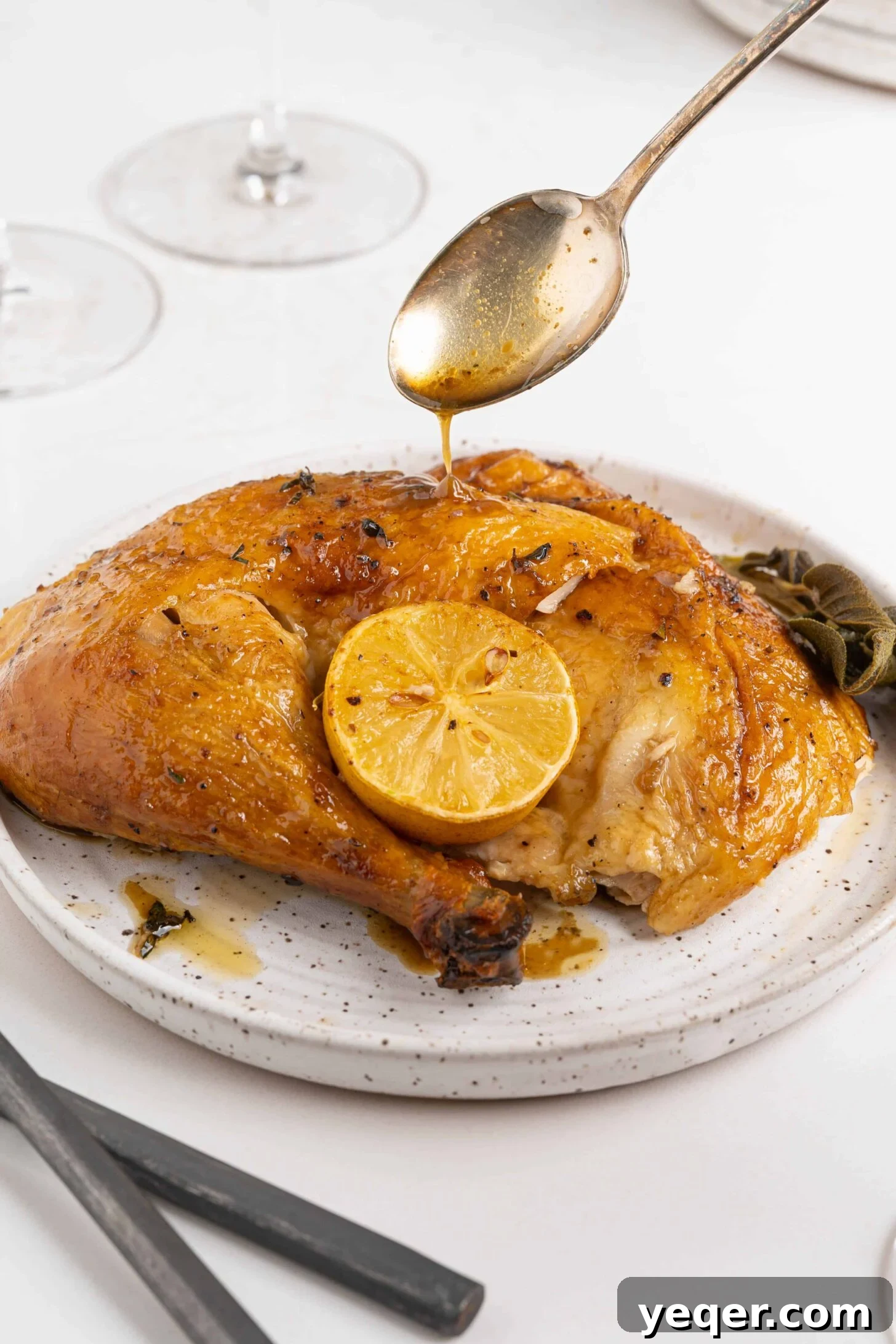
The Ultimate Guide to Perfectly Roasted Whole Chicken: Crispy Skin, Juicy Meat Every Time
Master the art of roasting a whole chicken with this foolproof recipe. Using just a few classic ingredients, you’ll achieve a super flavorful meal that’s delicious on its own, or easily customizable with your favorite dry spice rub, marinade, or roasted vegetables. This comprehensive guide ensures juicy meat, crispy skin, and an unforgettable dining experience.
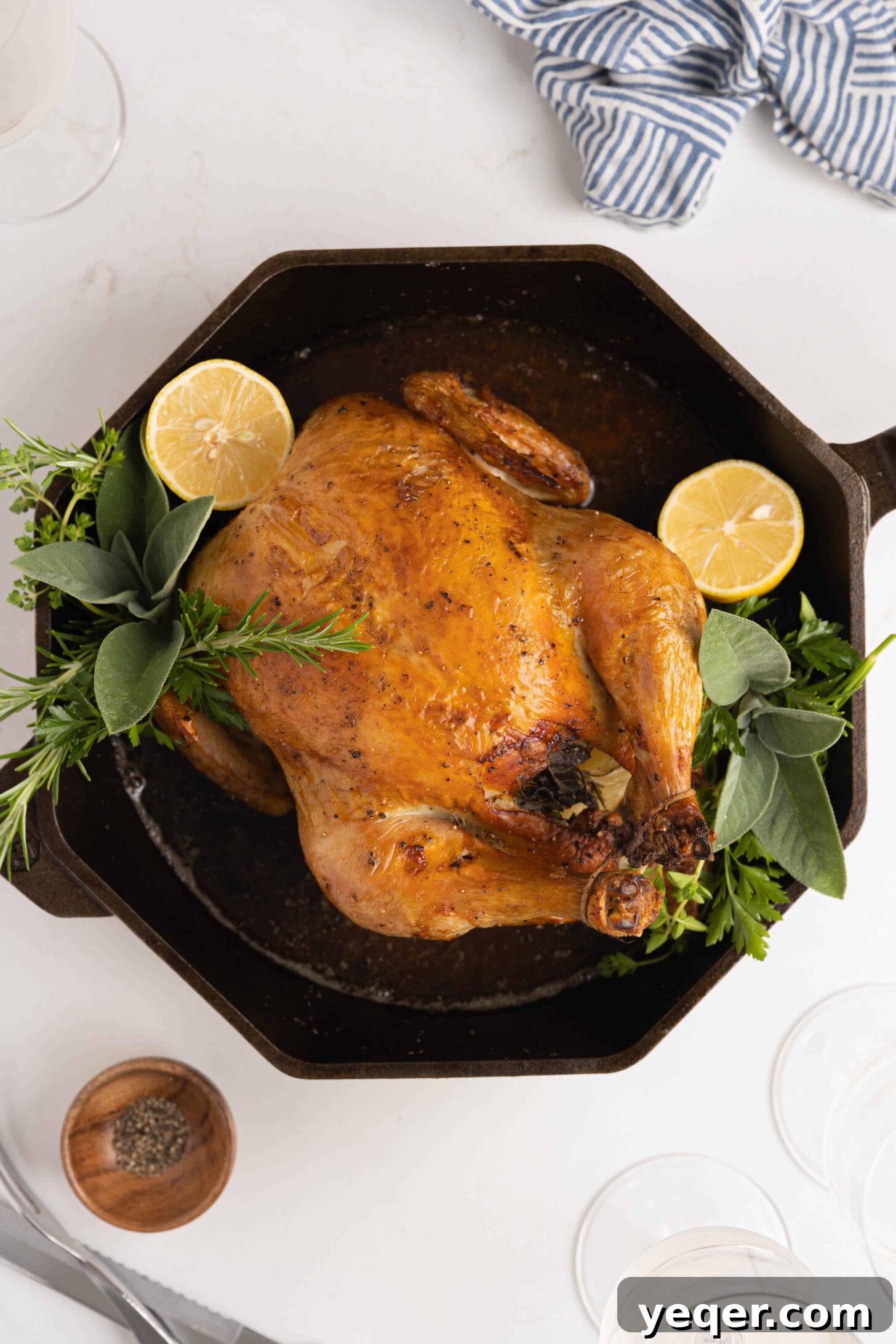
Once you’ve unlocked the secrets to roasting a whole chicken, you’ll find it becomes a staple in your culinary repertoire. It’s a dish that not only impresses but also offers incredible flavor and versatility for weeknight dinners or special occasions. Forget dry, bland chicken – with a few simple techniques and classic ingredients like rich butter, aromatic garlic, bright lemon, and fresh herbs, this recipe is 100% fool-proof, guaranteed to yield a delicious result every single time.
Beyond its deliciousness, roasting a whole chicken is surprisingly economical and provides fantastic leftovers, making it ideal for meal prep. Whether you’re a novice cook or a seasoned home chef, this guide will walk you through each step to ensure your roast chicken is nothing short of spectacular.
Why Roast a Whole Chicken? The Benefits of This Classic Dish
Roasting a whole chicken isn’t just about creating a meal; it’s an experience that offers numerous advantages. Firstly, it’s incredibly budget-friendly compared to buying individual cuts. You get a significant amount of high-quality protein for less. Secondly, a whole roasted chicken yields incredibly flavorful meat, as the bones and skin contribute to a deeper, richer taste during cooking. Thirdly, it’s a versatile canvas for flavors – from simple salt and pepper to complex marinades. Finally, the leftovers are a goldmine! From sandwiches to soups, a roasted chicken provides a foundation for multiple meals throughout the week.
Other Delicious Chicken Recipes to Explore
If you enjoy easy and delicious chicken recipes, you might also like to try these other flavorful options from Salima’s Kitchen:
- Moroccan Roasted Chicken: A vibrant dish with preserved lemons and briny olives.
- Chicken Tajine: A slow-cooked Moroccan stew bursting with spices.
- Puerto Rican Chicken Stew (Asopao de Pollo): A hearty and comforting rice stew.
Essential Ingredients for Your Perfect Roast
Crafting the perfect whole roasted chicken starts with quality ingredients. This recipe relies on a straightforward list that combines to create an irresistible aroma and taste. Here’s what you’ll need, along with a few tips for selecting the best:
- Whole Chicken: Choose a chicken between 3-5 pounds (1.4-2.3 kg) for optimal cooking time and juiciness. Ensure it’s fresh and ideally pasture-raised for the best flavor.
- Salt: A generous amount of coarse sea salt or kosher salt is crucial for seasoning the bird deeply and drawing out moisture for crispy skin.
- Olive Oil: Extra virgin olive oil adds flavor and helps achieve that desirable golden, crispy skin.
- Butter: Softened unsalted butter, brought to room temperature, is key for basting and infusing moisture under the skin.
- Pepper: Freshly ground black pepper complements the salt and adds a gentle warmth.
- Lemon: One lemon, sliced into quarters, provides acidity that tenderizes the meat and adds a bright, zesty aroma to the cavity.
- Fresh Herbs: A generous bunch of fresh herbs like rosemary, sage, thyme, oregano, or even cilantro, will infuse the chicken with incredible aromatic flavors. Use a mix of your favorites!
- Garlic: A whole head of garlic, cut in half horizontally, will roast beautifully inside the chicken, releasing its sweet, pungent flavors.
For precise quantities, please refer to the recipe card details further down.
Step-by-Step Roasting Instructions
Follow these simple steps to achieve a beautifully roasted chicken with golden-brown, crispy skin and incredibly tender, juicy meat. Each step is designed to maximize flavor and ensure an even cook.
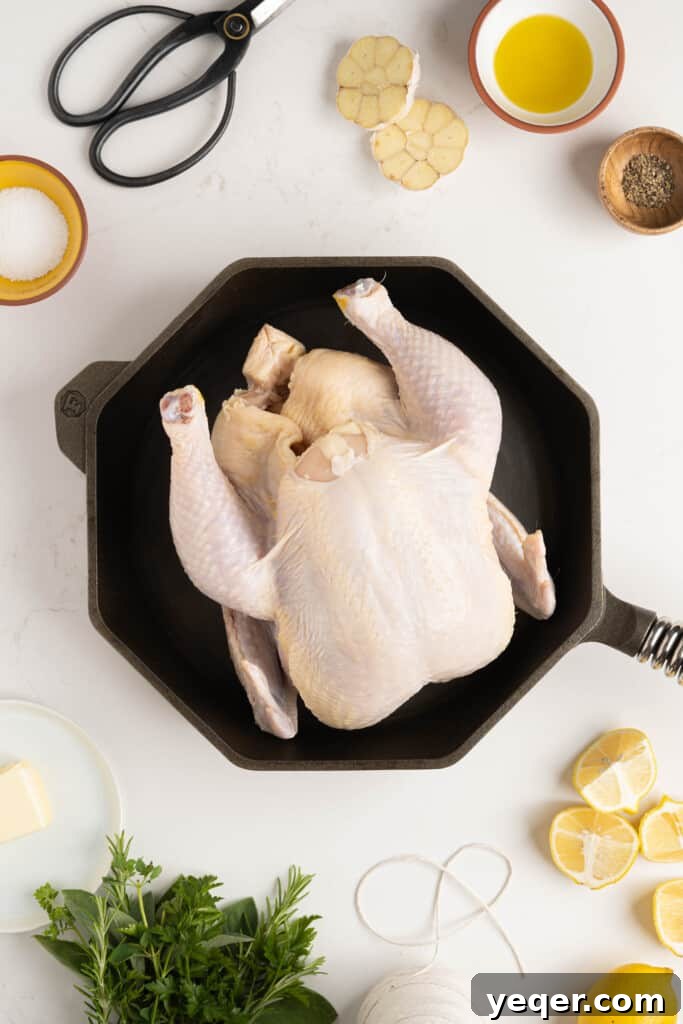
1. Prep the Chicken: The Foundation of Flavor
Begin by preheating your oven to a robust 400 degrees F (200 degrees C). This high temperature is essential for achieving that desirable crispy skin. Next, pat the whole chicken thoroughly dry with paper towels. This step is critical; removing excess moisture from the skin allows it to crisp up beautifully rather than steam. Place the dried chicken in a sturdy Dutch oven or a cast iron pan. Rub the entire chicken generously with salt, ensuring every crevice is covered. Then, slather it thoroughly with softened butter, working it under the skin over the breast area, and follow with a good coating of olive oil. The butter and oil create a protective barrier that helps conduct heat and achieve that perfect golden crust.
Hint: Don’t be shy with the seasoning! Make sure to cover the chicken completely with both salt and oil, including under the skin above the breast area and inside the cavity. This ensures flavor penetrates deeply and the skin becomes incredibly crispy.
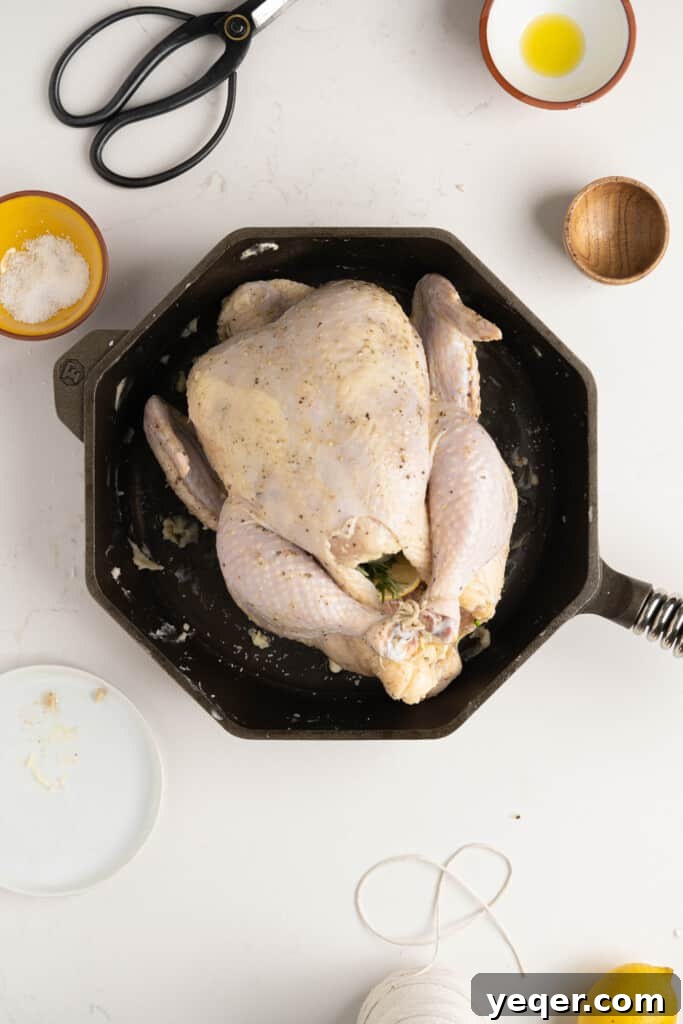
2. Stuff & Bake: Infusing Aromatics and Achieving Perfection
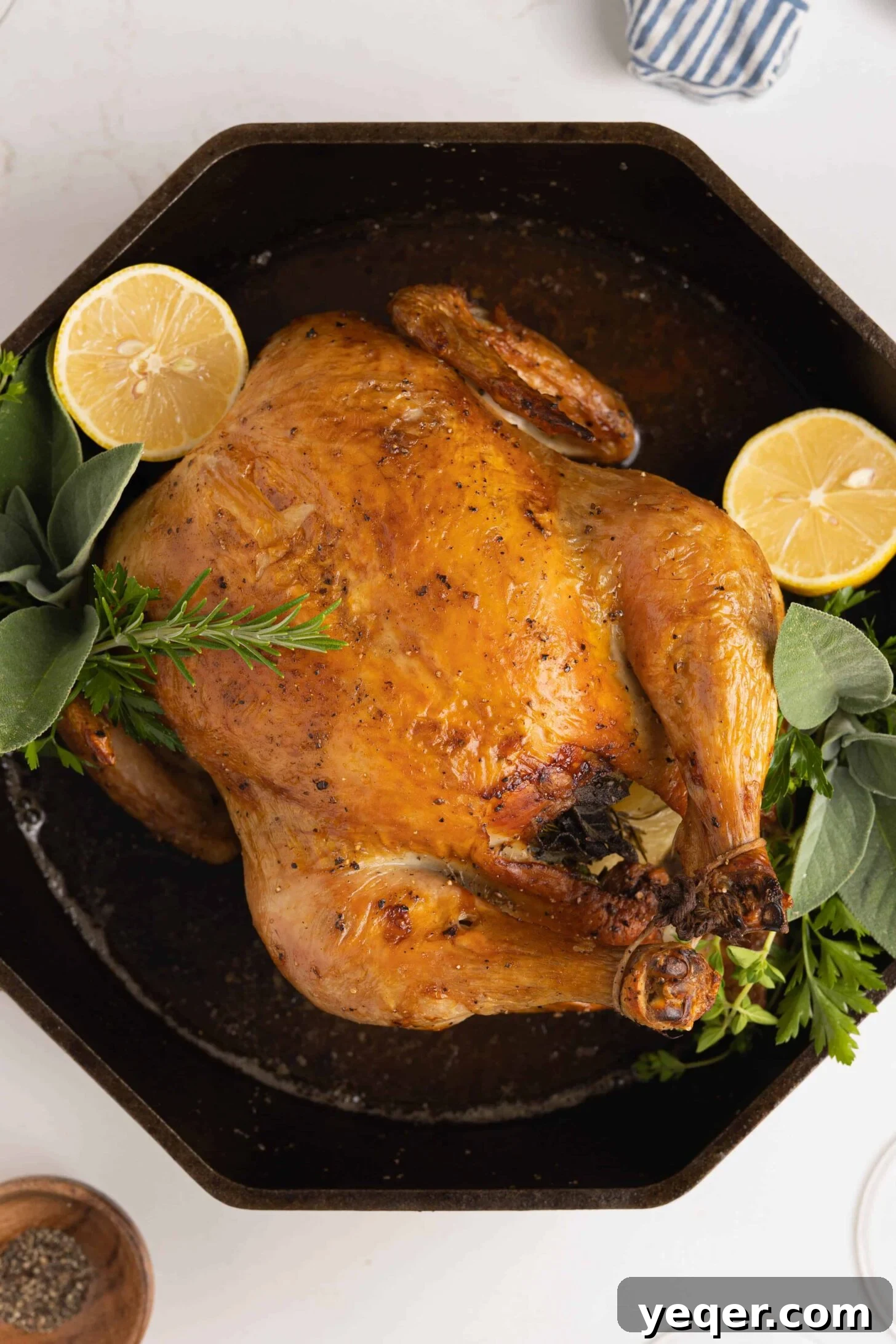
Once seasoned, sprinkle the chicken with freshly ground black pepper. Squeeze one of the lemon quarters over the chicken, allowing the juice to drip over the skin. Now, take the remaining lemon quarters, the fresh herbs, and the halved garlic head, and stuff them into the chicken’s cavity. This infuses the meat with incredible aroma and flavor from the inside out. For even cooking, use kitchen twine to tie the drumsticks together. This simple trick helps the legs cook at a similar rate to the breast, preventing dry white meat. Place the prepared chicken in the center of your preheated oven. Bake for approximately 60-90 minutes, or until an instant-read meat thermometer inserted into the thickest part of the thigh (avoiding the bone) reads 165 degrees F (74 degrees C). The juices should also run clear when the thigh is pierced.
3. Rest: The Crucial Step for Juiciness
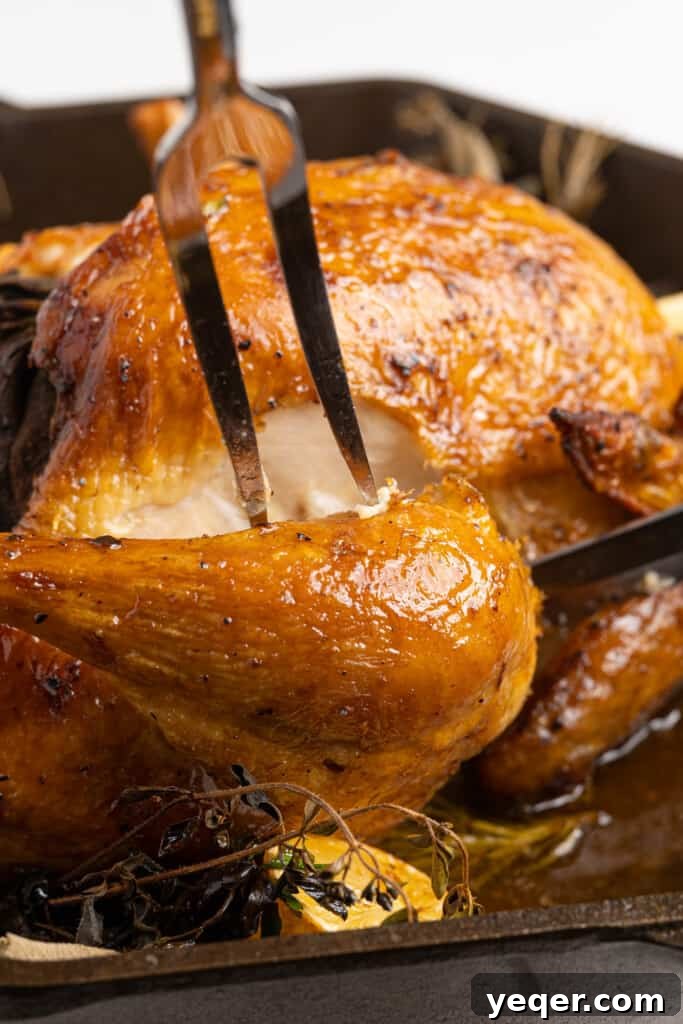
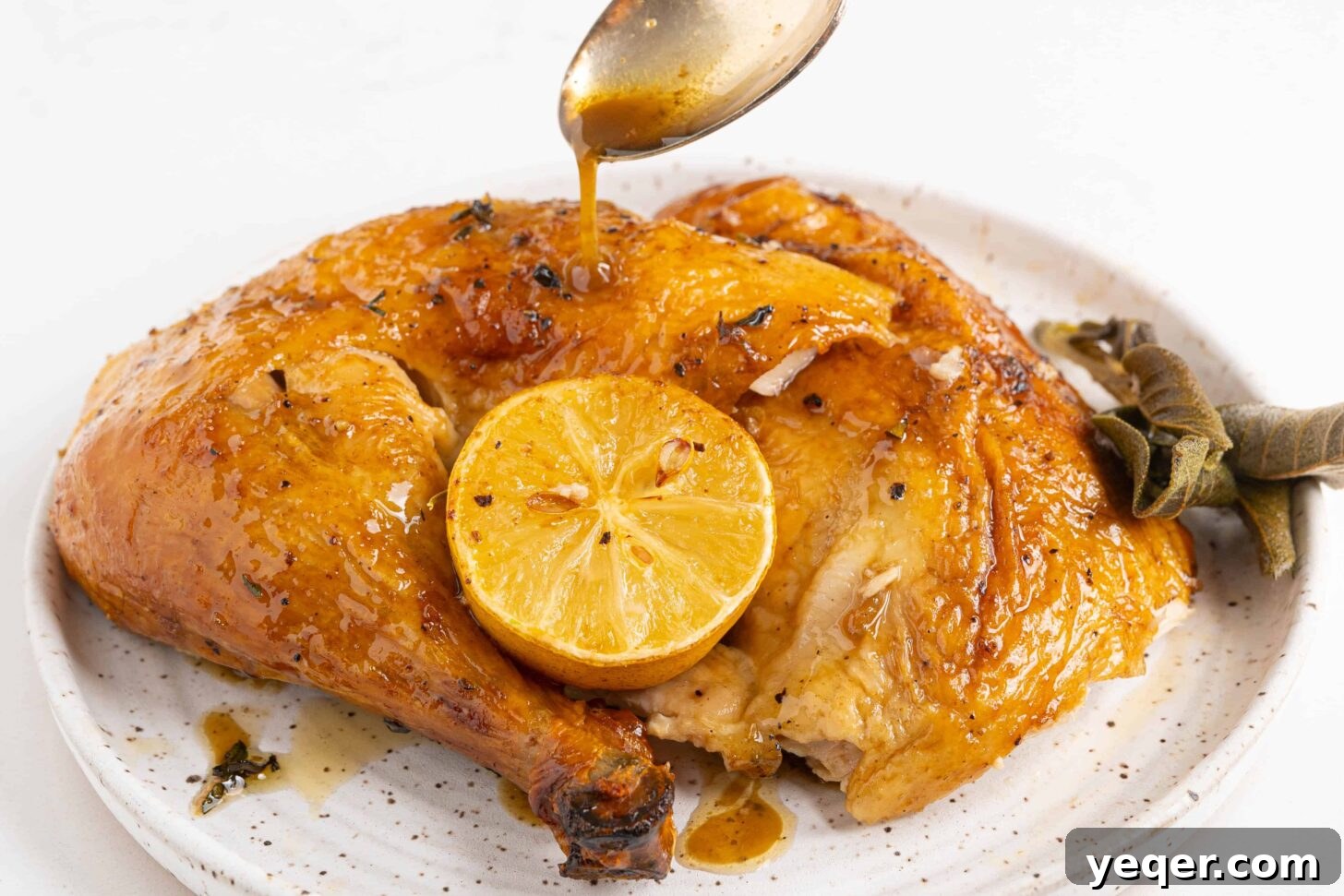
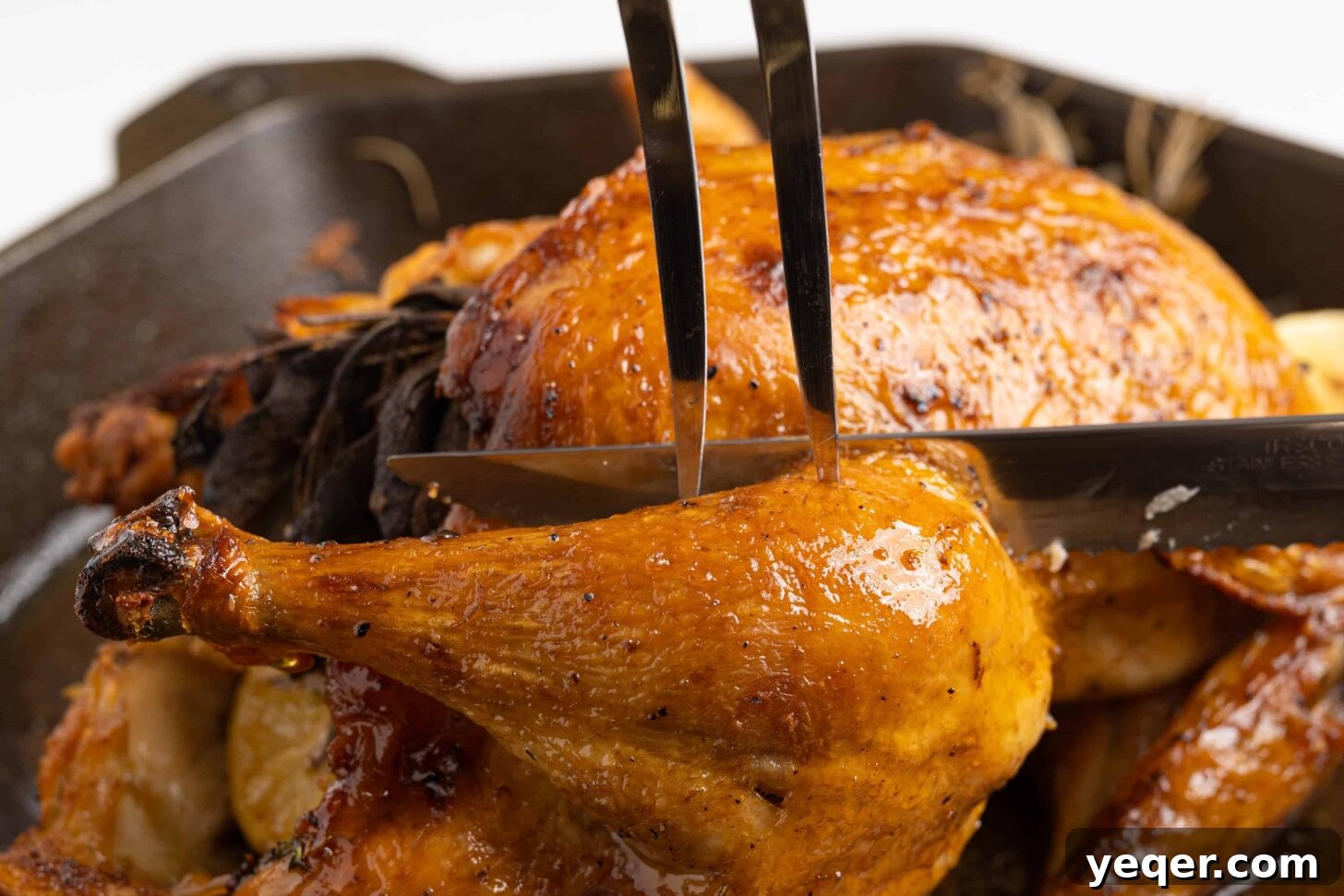
Once the chicken reaches the target internal temperature, remove it from the oven. This next step is perhaps the most crucial for ensuring succulent, juicy meat: resting. Loosely tent the chicken with foil and allow it to rest for at least 10-15 minutes before carving. This resting period allows the juices to redistribute throughout the meat, resulting in a much more tender and flavorful chicken. If you cut into it too soon, all those precious juices will run out onto your cutting board. After resting, slice and serve your perfectly roasted chicken with extra lemon wedges, a sprinkle of fresh herbs, and a generous amount of flaky sea salt to enhance the flavors.
Achieving Optimal Cooking: Times & Temperatures
Understanding the interplay between cooking time and temperature is key to a perfectly roasted chicken. Don’t just rely on time; always use a meat thermometer for accuracy.
- Cook Time: The total cooking time will vary depending on the weight and size of your whole chicken. Smaller chickens (around 3 lbs) might be ready in 60 minutes, while larger ones (5 lbs+) could take up to 90 minutes or slightly more. Always cook until the internal temperature is reached.
- Temperature: Roasting the chicken at a consistent 400 degrees F (204 degrees C) is the optimal temperature. This high heat initially sears the skin, helping it become wonderfully crispy, while simultaneously cooking the meat through to a tender finish. It’s time to remove your bird from the oven when an instant-read thermometer inserted into the thickest part of the thigh (without touching bone) reads 165 degrees F (74 degrees C). You can also tell it’s done if the juices run clear when you pierce the thigh with a knife.
Expert Tips for a Flawless Roast
Here are my top tips, refined over years of roasting, to help you achieve the most delicious and visually appealing whole roasted chicken:
- Pat Dry for Crispy Skin: This cannot be overstated. Excess moisture on the skin will steam the chicken, preventing it from browning and crisping. A thoroughly dry surface is the first step to that coveted crackling skin.
- Season Generously and Strategically: Don’t just season the outside. Rub salt, butter, and oil all over the bird, including inside the cavity, and crucially, *under the skin* above the breasts. This ensures the breast meat is flavorful and the skin above it gets extra crispy.
- Aromatics Inside: Stuffing the carcass with fresh herbs, garlic, and lemon isn’t just for show. These aromatics release their essential oils and flavors into the meat as it cooks, resulting in a more flavorful bird from the inside out.
- Tie the Drumsticks: Tying the drumsticks together with kitchen twine helps the chicken cook more evenly. It keeps the leg and thigh meat tucked in closer to the body, preventing them from overcooking before the breast meat is done.
- Don’t Skip the Rest: Allowing the chicken to rest for at least 10-15 minutes after roasting is non-negotiable. This allows the muscle fibers to relax and reabsorb their juices, guaranteeing incredibly tender and moist meat.
Transform Your Meal: Roasted Vegetables Underneath
One of the most appealing aspects of roasting a whole chicken is the opportunity to create a complete meal in one pan. By placing your favorite vegetables directly under the chicken before roasting, they absorb all the delicious drippings and fat, becoming incredibly flavorful and tender. This method adds depth to your vegetables and simplifies cleanup.
Here are some of the most popular and delicious vegetables to nestle under your chicken:
- Baby or Fingerling Potatoes: These small potatoes roast beautifully, becoming tender on the inside and slightly crisp on the outside, soaking up all the savory chicken juices.
- Roughly Chopped Celery and Carrots: Classic mirepoix vegetables add a foundational sweetness and aroma to the pan. They also help elevate the chicken slightly, promoting even browning.
- Pearl Onions with Root Veggies: Combine small pearl onions with other hardy root vegetables like parsnips or small chunks of sweet potato for a robust and satisfying side.
- Broccoli or Cauliflower Florets: For a greener option, toss broccoli or cauliflower florets with a little olive oil, salt, and pepper before placing them under the chicken for a tender, flavorful char.
- Bell Peppers and Zucchini: Add colorful bell peppers and zucchini for a lighter, Mediterranean-inspired twist.
Elevate Your Flavor: Marinades & Dry Rubs
While this classic roasted chicken recipe is fantastic on its own, sometimes you want to take the flavor to the next level. Incorporating a marinade or a dry rub can introduce exciting new dimensions to your meal. Here are some of my favorite flavor boosters you can use:
- Harissa: A few teaspoons of this spicy Moroccan hot sauce, mixed with a little olive oil and rubbed over the chicken, creates a delicious entree with a warm, smoky kick.
- Chermoula: This classic Moroccan marinade, typically made with herbs, garlic, lemon juice, and spices, is perfect for chicken. It imparts a fresh, tangy, and deeply aromatic flavor.
- Ras el Hanout: Try a few teaspoons of this complex North African dry rub, in addition to the salt and pepper. It offers a fragrant blend of spices that can range from sweet to pungent, adding incredible depth.
- Sazón Seasoning: This popular Puerto Rican spice mix, known for its vibrant color and savory flavor, truly sings when used with chicken, giving it a delightful Latin American flair.
- Adobo Seasoning: Check out this more neutral but incredibly delicious spice blend of alliums (like garlic and onion powder) and peppers. It’s a versatile and tasty addition to your whole roasted chicken, offering a savory baseline.
Essential Equipment for Roasting Success
Having the right tools can make all the difference in ensuring your roasted chicken is a triumph. While you don’t need a gourmet kitchen, these few items are highly recommended for the best results:
- Paper Towels: Essential for thoroughly patting the bird dry, which is the secret to achieving that wonderfully crispy skin we all crave.
- Kitchen Twine: This helps to neatly hold the drumsticks together, ensuring the meat cooks more evenly throughout the entire bird and prevents the leg meat from drying out.
- Meat Thermometer: An absolute essential for any serious cook. This ensures your chicken is cooked to a safe internal temperature of 165°F (74°C) without being overcooked and dry. Accuracy is key to food safety and deliciousness!
- Dutch Oven or Roasting Pan: A heavy-bottomed Dutch oven or a sturdy roasting pan provides excellent heat retention and distribution, which is crucial for even cooking and browning.
Maximizing Your Roast: Storage & Ideas for Leftovers
One of the greatest joys of roasting a whole chicken is the bounty of leftovers! Not only does it provide delicious meat for days, but the carcass can also be transformed into a rich, nourishing broth. Here’s how to make the most of your roasted chicken:
Storage:
Once cooled, carve the remaining chicken meat off the bone. Store the meat in an airtight container in the refrigerator for up to 3-4 days. For longer storage, cooked chicken meat can be frozen for up to 3 months. Make sure to label and date your containers.
Ideas for Leftovers:
The versatile cooked chicken meat can be used in countless ways:
- Sandwiches & Wraps: Shredded chicken is perfect for quick and satisfying sandwiches or wraps. Add some mayo, celery, and herbs for a classic chicken salad.
- Pizza Topping: Use diced or shredded chicken as a savory topping for homemade pizzas.
- Fillings: It makes an excellent filling for empanadillas, tacos, quesadillas, or even savory crepes.
- Salads: Toss leftover chicken into a fresh green salad or a hearty grain bowl for a protein-packed meal.
- Soups & Stews: Add shredded chicken to chicken noodle soup, a quick weeknight chili, or a creamy chicken stew.
- Snack: Simply enjoy cold chicken slices as a healthy and satisfying snack.
Homemade Chicken Broth:
Don’t discard the carcass and bones! They are the foundation for the most flavorful chicken broth you’ve ever had. Simply place the leftover carcass and any bones into a large stock pot. Add 4-5 cups of water, a splash of apple cider vinegar (this helps extract minerals from the bones), a roughly chopped onion, a couple of carrots, a few celery stalks, and any leftover herbs. Bring to a boil, then reduce heat and simmer gently for 4-8 hours (the longer, the better). Strain the broth, discard the solids, and store the golden liquid in the refrigerator for up to 5 days or freeze for several months. It’s perfect for soups, sauces, or simply sipping on its own.
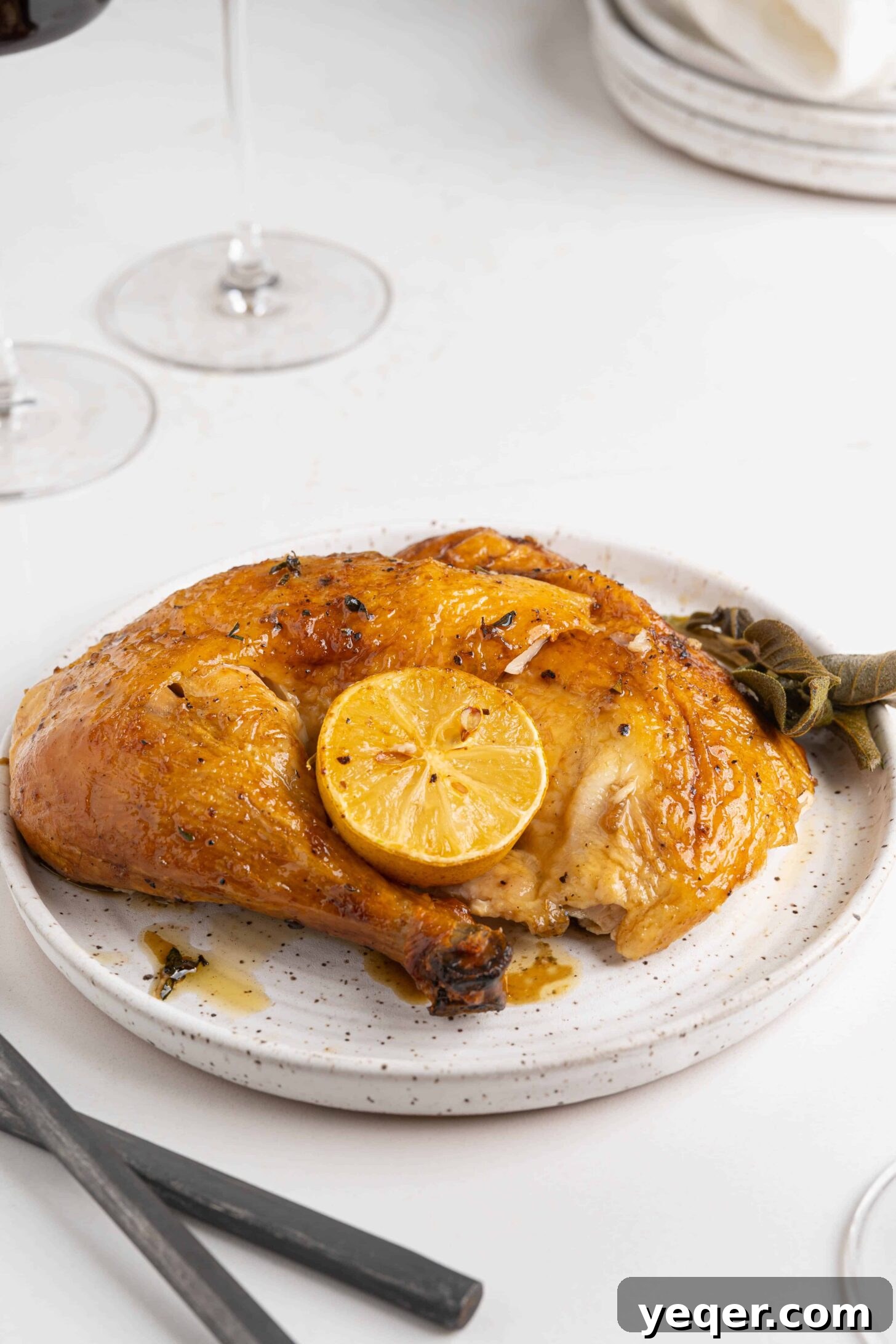
Perfect Pairings: What to Serve with Roasted Chicken
A beautifully roasted chicken is a magnificent centerpiece, and pairing it with the right sides can elevate your meal to a truly memorable experience. Here are some of my favorite salads and side dishes that perfectly complement the rich flavors of roasted chicken:
Watch the Roasting Process: Video Guide
Happy roasting, and enjoy the incredible flavors of your homemade masterpiece!

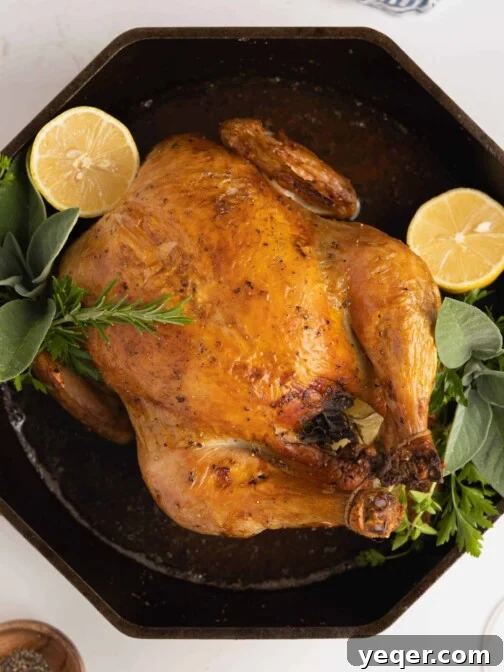
Whole Roasted Chicken
Learn how to make the perfect whole roasted chicken with a few classic ingredients. This recipe is super flavorful on its own, or can be customized with your favorite dry spice rub, marinade or roasted veggies.
- Author: Salima Benkhalti
- Prep Time: 15 minutes
- Cook Time: 90 minutes
- Total Time: 1 hour 45 minutes
- Yield: 8 servings
- Category: Entree, Dinner, Lunch, Main Dish
- Method: Roasted
- Cuisine: American, Moroccan
- Diet: Gluten Free
Print Recipe
Ingredients
- 1 whole chicken
- Salt, to taste
- 2 tbsp olive oil
- 3 tbsp butter, softened to room temperature
- 1 tsp pepper
- 1 lemon, sliced into quarters
- 1 bunch of fresh herbs (rosemary, sage, cilantro, oregano, etc.)
- 1 head garlic, cut in half
Instructions
- Prep the chicken. Preheat the oven to 400 degrees F (200 degrees C). Pat the chicken dry with paper towels. Place in a Dutch oven or cast iron pan and rub generously with salt before coating well with butter and then olive oil. Make sure to cover the chicken completely with both salt and oil, including under the skin above the breast area and inside the cavity.
- Stuff & bake. Season with pepper and squeeze one of the lemon quarters over the chicken. Stuff the cavity with lemon quarters, herbs, and garlic before wrapping the legs with twine to help them cook evenly. Bake in the center of a Dutch oven for 60-90 minutes or until the chicken reaches 165 degrees F (74 degrees C).
- Rest. Let the chicken rest for at least 10 minutes before slicing and serving with lemon wedges, fresh herbs, and lots of flaky salt.