Master the Art of Peeling Plantains: Your Essential 5-Minute Guide
Embark on a culinary journey with plantains by mastering the simple yet crucial skill of peeling them. This comprehensive, step-by-step guide is designed to make the process quick, easy, and entirely hassle-free, allowing you to unlock a world of delicious plantain recipes. Whether you’re working with firm green, vibrant yellow, or perfectly ripe brown plantains, all you need is a sharp knife and a few straightforward steps to get started. Say goodbye to the struggles of sticky peels and hello to effortless plantain preparation in just about 5 minutes!
What Exactly Are Plantains? The Tropical Fruit Explained
Often mistaken for large bananas, plantains are a distinct member of the banana family, though they are primarily consumed as a vegetable rather than a fruit. Native to Southeast Asia, plantains have become a staple in tropical and subtropical regions worldwide, especially in Latin American, Caribbean, African, and Asian cuisines. Unlike dessert bananas, plantains are starchier, lower in sugar, and almost always cooked before eating.
Their culinary versatility is truly remarkable, transforming from starchy and savory when green to increasingly sweet and tender as they ripen. This unique characteristic means that a single fruit can be the foundation for an incredible range of dishes, from crispy appetizers to hearty main courses and even sweet desserts. Understanding the nature of the plantain and its thick, fibrous peel is the first step to appreciating its full potential in your kitchen.
Why Peeling Plantains Is Essential for Culinary Success
If you’ve ever attempted to open a plantain, you’ve likely noticed its peel is significantly thicker and more rigid than that of a common banana. This isn’t just a minor difference; it’s a key characteristic that impacts how we prepare and consume plantains. Their skins are much sturdier and less pliable, making them challenging to peel by hand. Attempting to peel a plantain like a banana will often result in frustration, sticky sap, and potentially damaged fruit.
For the vast majority of recipes, including popular Puerto Rican dishes and other traditional preparations, the starchy, tough peel is not consumed. It’s essential to remove it properly to access the delicious, versatile fruit inside. Failing to peel them correctly can lead to wasting a portion of the plantain or struggling to integrate it into your desired recipe. Knowing the right technique ensures you utilize every edible part of the plantain effectively and enjoy its rich flavors and textures without hindrance. From savory tostones to sweet maduros or hearty mofongo, proper peeling is the gateway to these culinary delights.
Understanding Plantain Ripeness: Green, Yellow, and Brown
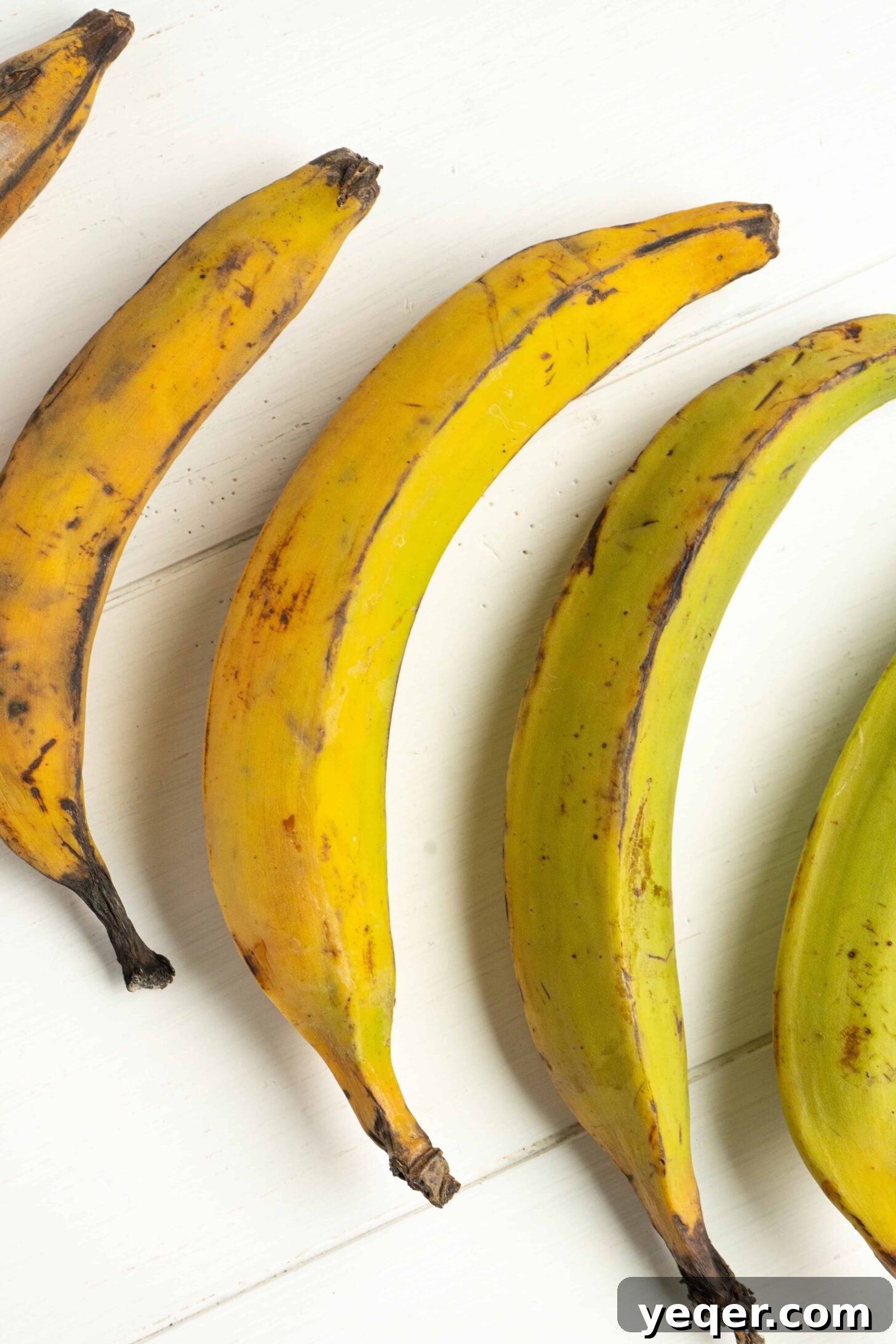
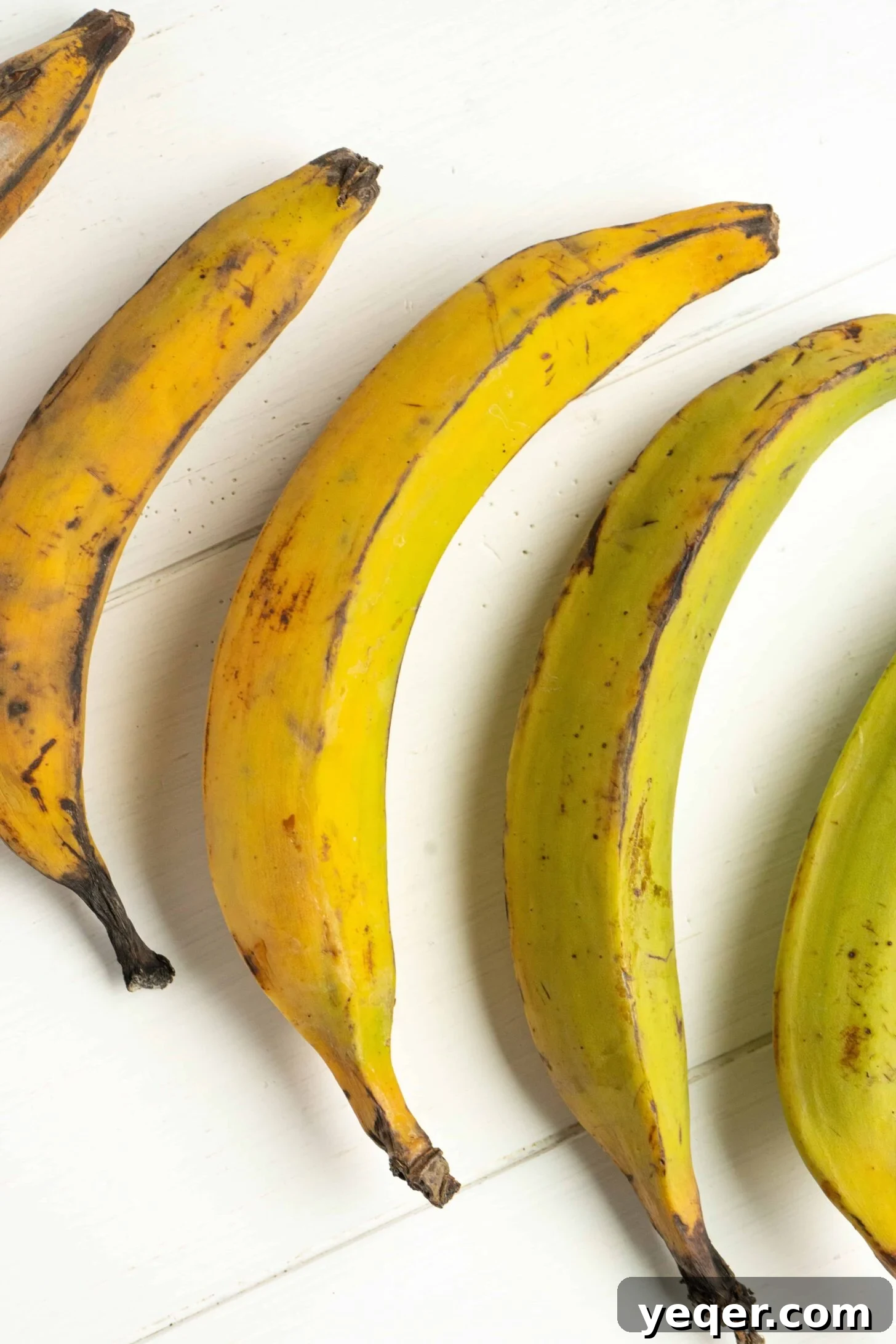
The culinary applications of a plantain are largely determined by its stage of ripeness. Each stage offers a unique flavor profile and texture, dictating its best use in cooking. Knowing how to identify and handle plantains at different ripeness levels is crucial for achieving perfect results in your recipes.
Green Plantains: The Savory Foundation
Green plantains are unripe, firm, and extremely starchy, with very low sugar content. Their flesh is white or pale yellow and very dense. They are the most challenging to peel due to their firm, unyielding skin and sticky sap. However, their starchy nature makes them perfect for savory dishes where a firm texture is desired. Think crispy tostones (twice-fried plantains), hearty mofongo, or thinly sliced plantain chips. When green, plantains behave much like a potato, absorbing flavors beautifully and providing a satisfying texture.
Yellow Plantains: Balanced Sweetness and Starch
As plantains ripen, their skins turn yellow, often with a few black spots beginning to appear. At this stage, they are still somewhat starchy but have started to develop a noticeable sweetness. The flesh becomes softer and more pliable, making them considerably easier to peel than green plantains. Yellow plantains are wonderfully versatile, suitable for both savory dishes that benefit from a hint of sweetness, or slightly sweet preparations. They can be fried, baked, or mashed, offering a delightful balance of starch and natural sugars.
Brown/Black Plantains (Maduros): Naturally Sweet Delights
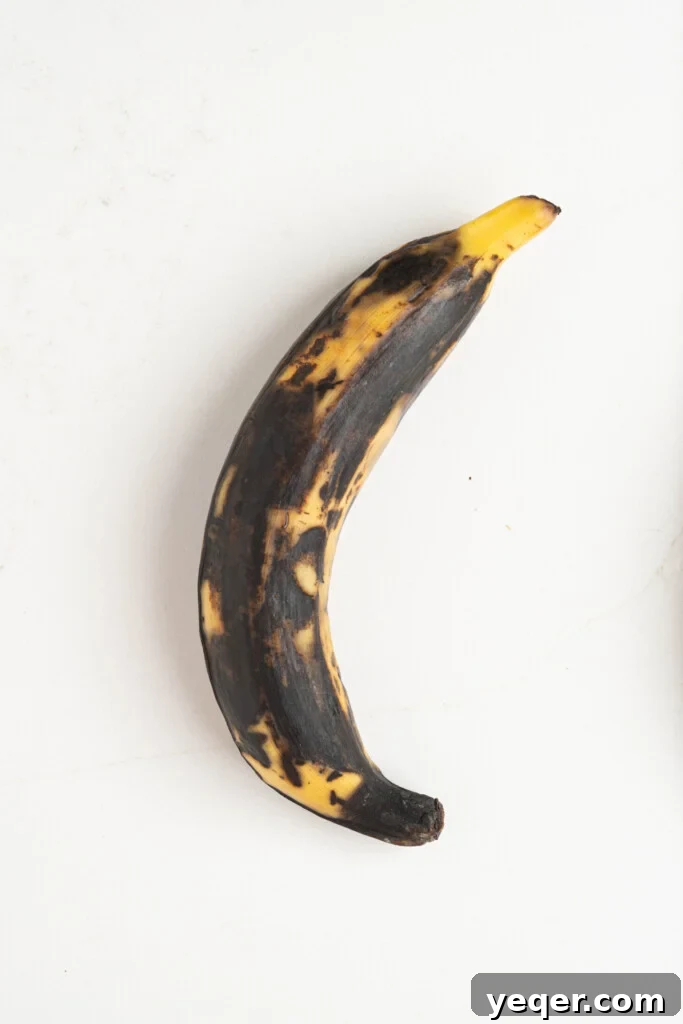
Fully ripe plantains have skins that are predominantly black, or very dark brown, and often appear soft to the touch. This is the stage where the starch has converted significantly into sugar, resulting in a wonderfully sweet and tender fruit. The flesh is soft, golden-yellow, and incredibly easy to peel, sometimes even by hand. These ‘maduros’ (sweet plantains) are ideal for dessert-like dishes such as fried sweet plantains (Plátanos Maduros), baked plantain lasagna (Pastelón), or sweet plantain cups (Piononos). Their rich, caramelized flavor makes them a true treat.
Essential Tools for Peeling Plantains Safely and Efficiently
Peeling plantains doesn’t require a plethora of specialized gadgets, but having the right basic equipment will make the task much safer, quicker, and more efficient. The key is a sharp, reliable knife and a stable surface.
- Sharp Knife: This is by far the most crucial tool. A sharp chef’s knife or a sturdy paring knife will slice through the thick plantain peel with ease and precision. A dull knife is not only ineffective but also dangerous, as it requires more force, increasing the risk of slips and cuts. Ensure your knife is honed and ready before you begin.
- Cutting Board: A stable cutting board provides a safe, non-slip surface for preparing your plantains. This is essential for preventing the plantain from rolling and for protecting your countertops.
- Optional – Paper Towels or Clean Cloth: Especially when working with green plantains, their sap can be quite sticky. Having paper towels or a damp cloth nearby can help with gripping the plantain and cleaning any sap from your hands or knife.
With these simple tools, you’ll be well-equipped to tackle any plantain, regardless of its ripeness, and get it ready for your favorite recipes.
Step-by-Step Guide: How to Effortlessly Peel Any Plantain
Time needed: 5 minutes.
Discover how to peel a plantain in just 5 minutes! This step-by-step guide makes the process quick and easy, allowing you to enjoy your favorite plantain recipes hassle-free. Whether they’re brown, yellow or green, with a knife and a few super simple steps!
- Rinse and Dry Your Plantain.
Begin by thoroughly rinsing your plantain under cool water to remove any dirt, debris, or lingering stickers. Gently pat it dry with a clean cloth or paper towel. This ensures a clean surface for handling and is particularly important if you plan on exploring recipes that utilize the peel.
- Trim Off the Top and Bottom Ends.
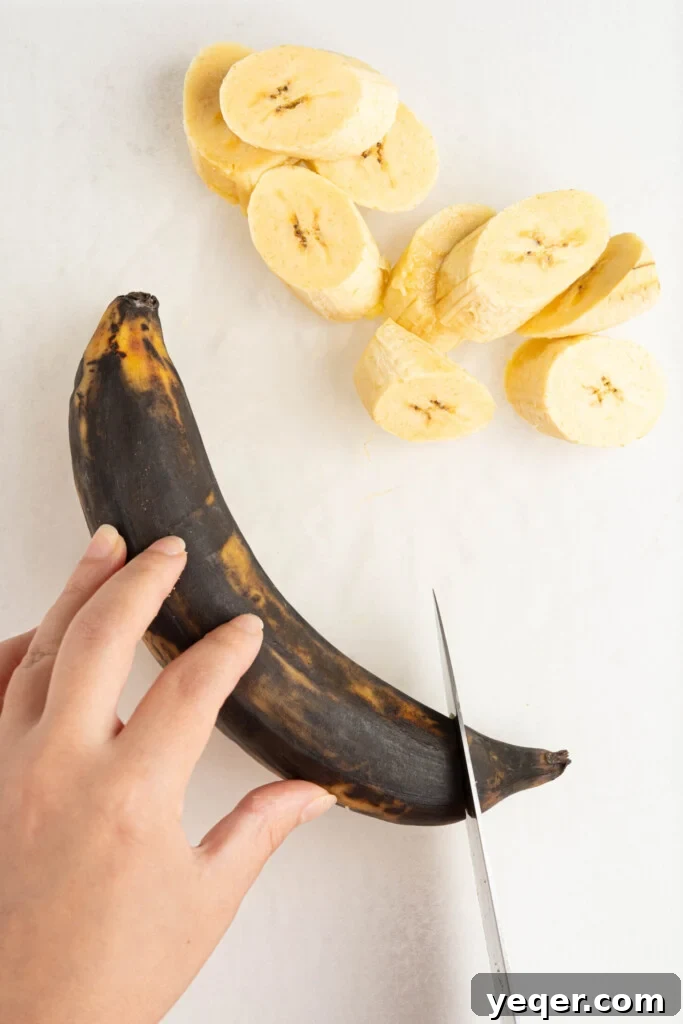
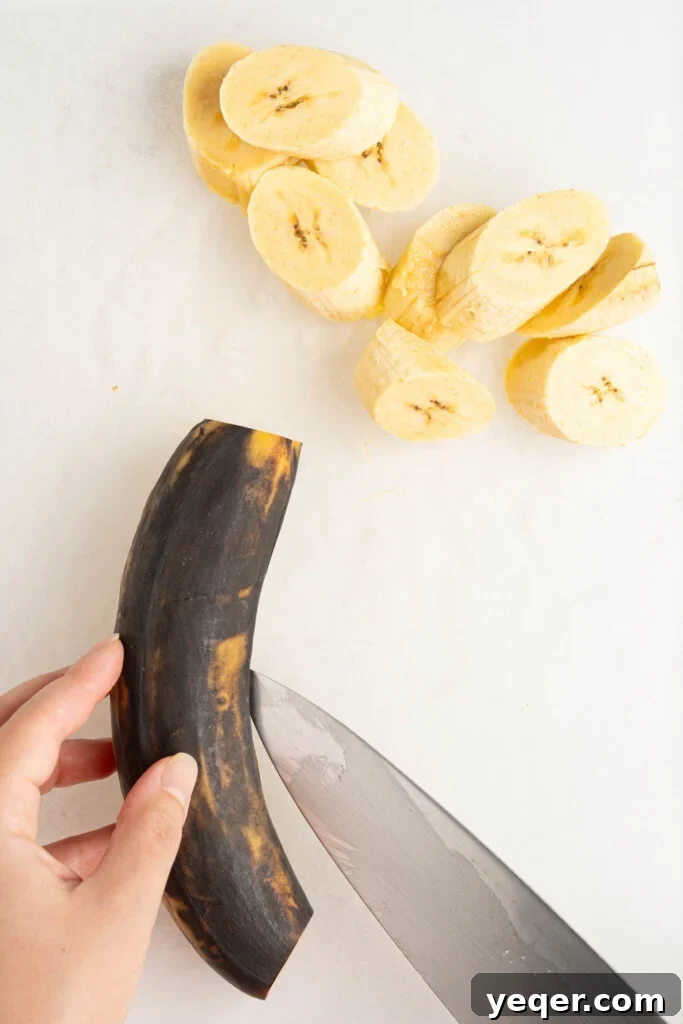
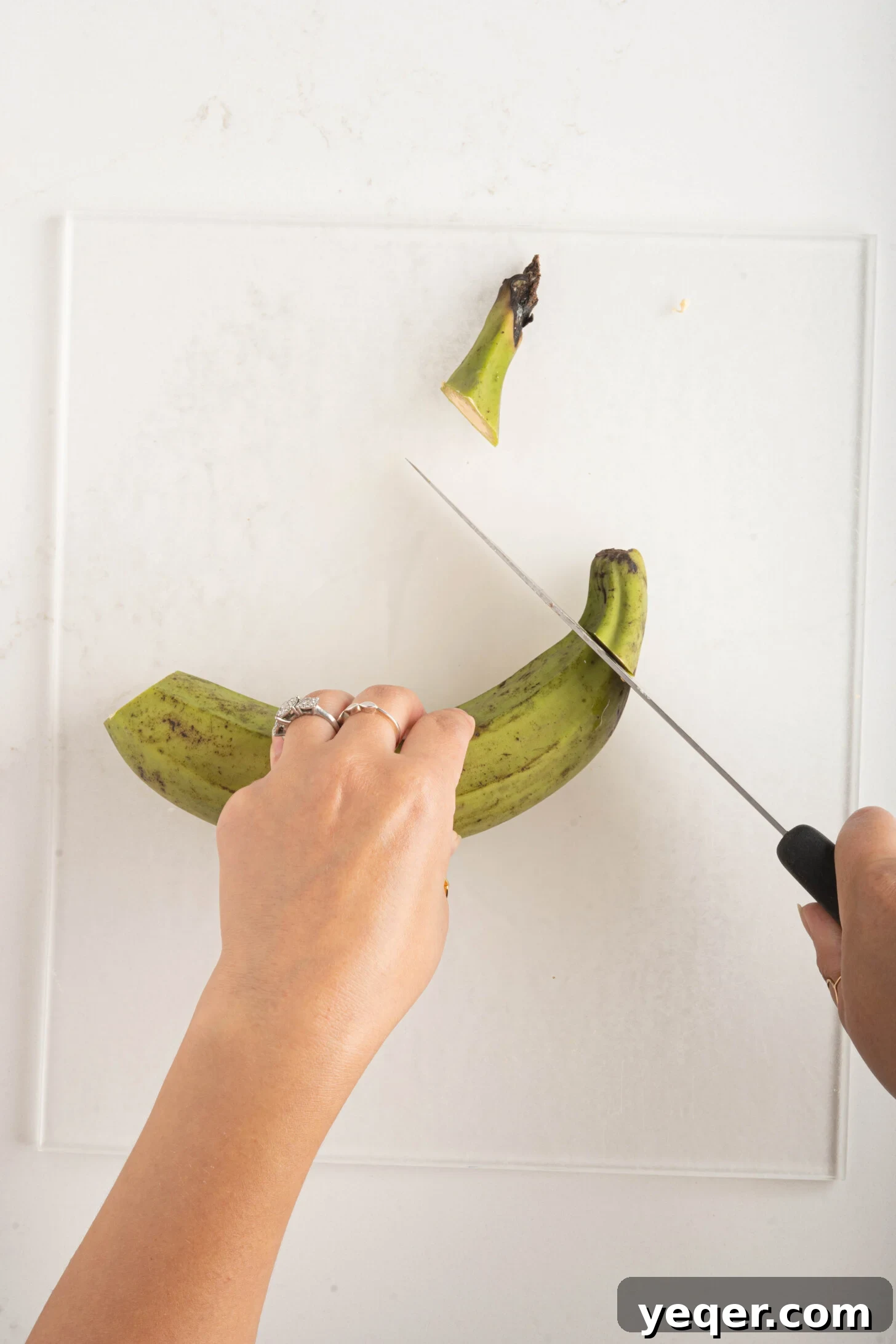
Place the plantain on your cutting board. Using a sharp knife, carefully slice off about a quarter to half an inch from both the stem end and the tip. This makes it easier to start the peeling process and prevents any tough, woody parts from interfering.
- Slice Along the Peel, Lengthwise.
With the plantain still on the cutting board, carefully insert your knife into the peel. Aim to cut just deep enough to penetrate the skin without cutting into the interior fruit. Guide the knife along the length of the plantain to create a shallow, continuous slit from one trimmed end to the other. For very firm green plantains, you might find it helpful to make a second, parallel slit on the opposite side to make peeling easier.
- Pull Back the Peel.
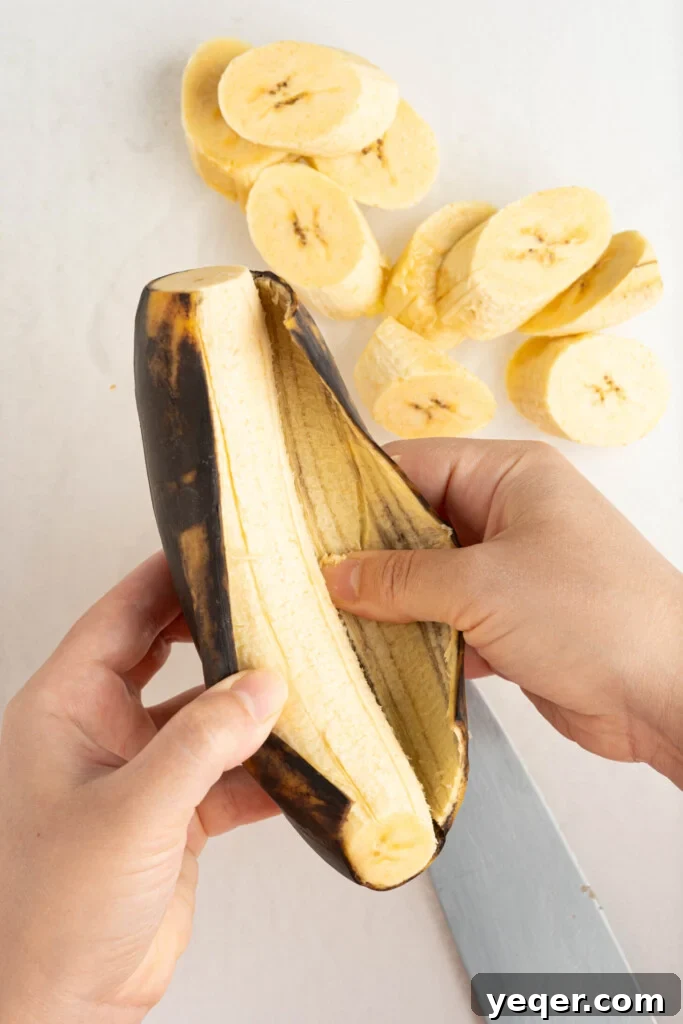
Once the peel is scored, use your thumbnail, the tip of your knife, or even the edge of a spoon to gently lift an edge of the peel from one of the slits. Once you have a good grip, pull back the strip of peel. Continue this process, pulling away strips of peel until the entire plantain is exposed. Be aware that green plantains will offer more resistance and may require a bit more effort compared to softer, riper yellow or brown plantains.
Note: Green plantains usually require a bit more muscle and sometimes the aid of the knife tip to separate the peel from the fruit than their softer brown and yellow counterparts. Don’t be afraid to apply a little more pressure!
Unleash Your Culinary Creativity: Recipes Featuring Peeled Plantains
Once you’ve mastered the art of peeling plantains, a world of flavorful dishes awaits! Plantains are incredibly versatile, forming the backbone of countless savory and sweet recipes across various cuisines, particularly in the Caribbean and Latin America. Here are some of my absolute favorite ways to enjoy this incredible tropical fruit, categorized by its ripeness level.
Savory Plantain Dishes (Green & Yellow Plantains)
Green and slightly yellow plantains are perfect for savory preparations, offering a starchy, potato-like texture that absorbs flavors beautifully. They are the cornerstone of many hearty meals and delightful snacks:
These twice-fried green plantain slices are a quintessential side dish or appetizer, known for their irresistible crispiness and savory flavor. Perfect with garlic sauce!
A true classic! Green plantains are fried, then mashed with garlic, pork cracklings (chicharrón), and olive oil to create a flavorful, hearty mound often served with broth or a main dish.
These savory fritters feature a masa (dough) made from grated green plantains and yautía, filled with seasoned ground meat and deep-fried to golden perfection.
A beloved Dominican breakfast or dinner staple, Mangu consists of boiled green plantains mashed with butter or olive oil, often served with fried eggs, salami, and cheese.
A fantastic alternative to potato fries! Cut green plantains into sticks, fry until golden, and season for a quick and flavorful snack or side dish.
Originating from Chicago, this unique sandwich uses flattened, fried green plantains as “bread” to hold juicy steak, cheese, lettuce, and tomato – a true flavor explosion!
For a healthier snack, thinly slice green plantains and bake them until crispy. They’re a delicious alternative to potato chips and perfect for dipping.
Sweet Plantain Delights (Yellow & Brown Plantains)
When plantains ripen to yellow with black spots or turn completely brown, their sweetness shines, making them ideal for indulgent, dessert-like dishes:
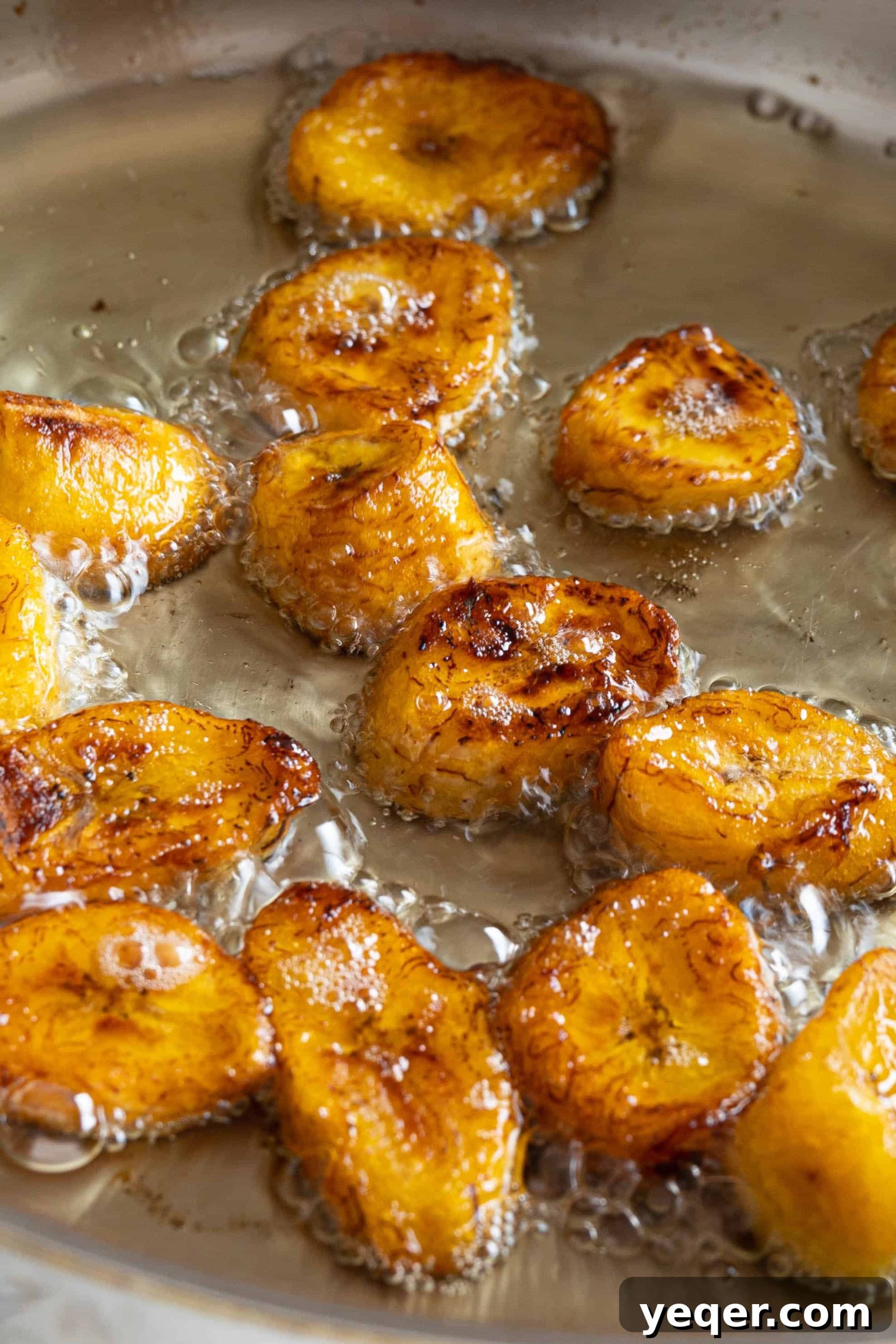
A beloved side dish, these ripe plantains are sliced and fried until beautifully caramelized and tender, offering a naturally sweet counterpoint to savory meals.
Often called “plantain lasagna,” Pastelón layers sweet, ripe plantain slices with seasoned ground beef and cheese, then bakes it to a comforting, golden perfection.
These delightful fried cups are made from ripe plantains, filled with savory picadillo (ground meat mixture), and often topped with an egg wash before frying or baking.
Sustainable Cooking: Creative Uses for Plantain Peels
While most traditional recipes focus on the flesh of the plantain, the peels don’t necessarily have to go to waste! With a little creativity, plantain peels can be transformed into surprisingly delicious and nutrient-rich additions to your meals. They are a fantastic way to reduce food waste and explore new textures and flavors.
I’ve personally experimented with plantain peels in a stir-fry, and the results were quite intriguing. The peels, when prepared correctly, can take on a texture similar to certain vegetables or even pulled meats. They are a good source of fiber and various vitamins and minerals.
Here are some innovative and tasty ideas for utilizing plantain peels, promoting a low-waste kitchen:
- Plantain Peel Stir Fry: Thinly slice boiled plantain peels and toss them into your favorite stir-fry. They absorb flavors well and add a unique texture.
- Plantain Peel Pulled ‘Pork’ or ‘Carnitas’: Boil green plantain peels until fork-tender, then shred them. Their stringy texture makes them an excellent vegan substitute for pulled pork or carnitas in tacos, sandwiches, or bowls.
- Crispy Fried Plantain Peels: After boiling and seasoning, quickly fry or air-fry thin strips of plantain peel until crispy for an unusual and addictive snack.
- Plantain Peel ‘Bacon’: With the right marinade and cooking method, plantain peels can be seasoned and baked or fried to resemble smoky, crispy vegan bacon strips.
The key to using plantain peels effectively is usually a preliminary boil until they are fork-tender. After boiling, they can be shredded, chopped, or sliced and then seasoned and cooked according to your chosen recipe. Don’t be afraid to experiment and discover your own favorite ways to enjoy this often-overlooked part of the plantain!
Ripening and Storage Secrets: Keep Your Plantains Perfect
Working with plantains often means dealing with their unique ripening process and ensuring they are at the perfect stage for your intended recipe. Managing their ripeness and knowing how to store them effectively can save you a lot of culinary frustration, especially if you don’t live in an area where they are readily available at all stages of ripeness.
Accelerating Ripening: Nature’s Way
Like bananas, plantains ripen naturally over time. However, their ripening process can be slow, especially if they are very green. Many home cooks try various tricks to speed up ripening, from placing them in brown paper bags to baking them in a low oven. From my personal experience, and living in a region like Washington state where plantains can be hard to source at specific ripeness levels, I’ve found that many of these “quick tricks” often disappoint.
Leaving them on the counter in a brown paper bag might work marginally, but it’s not a magical solution. Baking them at a low temperature, peels and all, often softens them but doesn’t genuinely replicate the flavor development that comes with natural ripening. The starches don’t convert to sugars in the same way, leaving you with a softer but still starchy plantain.
The best tool to ripen plantains? A few days on the counter in a warm & humid climate, allowing nature to take its course.
The most reliable method remains patience and allowing the plantains to ripen naturally on the countertop. A warm, humid environment will encourage faster ripening. Placing them in a fruit bowl with other ripe fruits like apples can also slightly accelerate the process due to the ethylene gas produced.
Slowing Down Ripening: Preserve Green Goodness
Conversely, if you’ve bought green plantains and wish to keep them green for a later date (perhaps for tostones or mofongo), preserving their unripe state is surprisingly easy: just pop them in the fridge! The cool temperatures of the refrigerator significantly slow down the ripening process, helping them stay green and firm for an extended period, often up to a week or more. Once they start to turn yellow or brown, however, refrigeration won’t stop the process effectively.
Storing Peeled Plantains
If you’ve peeled your plantains but aren’t ready to cook them immediately, you can prevent them from browning by storing them in cold water. Submerge the peeled plantains in a bowl of water (you can add a squeeze of lemon juice to the water for extra protection) and refrigerate. This can keep them fresh for up to 1-2 days.
Conclusion: Embrace the Versatility of Plantains
Learning how to peel a plantain is a fundamental skill that opens the door to a diverse and incredibly flavorful culinary world. From the crisp, savory notes of green plantains to the sweet, tender embrace of ripe maduros, this tropical fruit offers unparalleled versatility in the kitchen. Don’t let the initial challenge of its thick skin deter you; with a sharp knife and a few simple steps, you’ll be preparing plantains like a seasoned chef in no time.
I hope this guide has demystified the process and inspired you to explore the endless possibilities that plantains bring to your table. Whether you’re whipping up a batch of traditional tostones, indulging in a sweet pastelón, or experimenting with creative plantain peel recipes, you’re in for a treat. Embrace the journey, savor the flavors, and enjoy the rich culinary heritage that plantains represent!
Buen Provecho,