
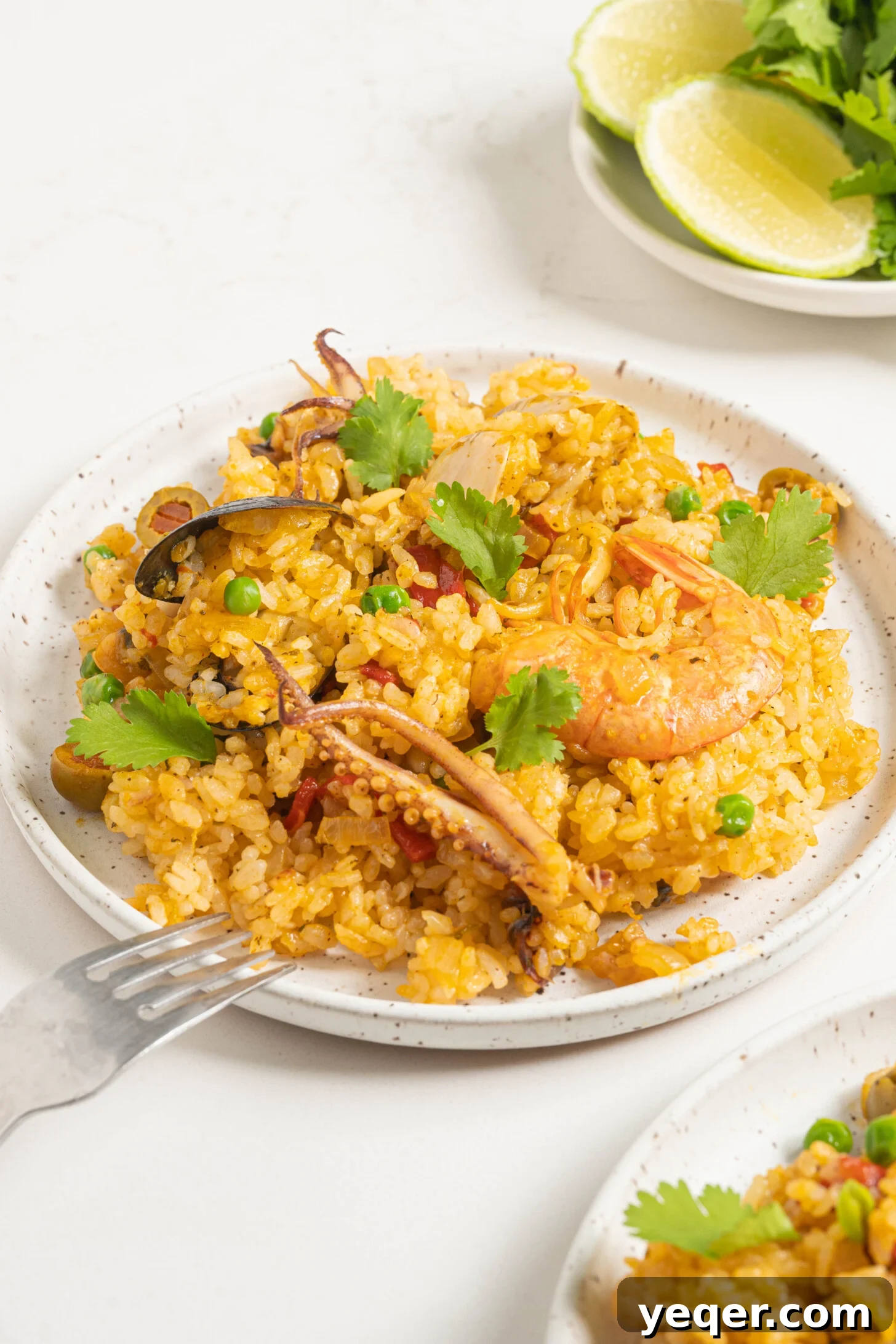
Welcome to the vibrant world of Puerto Rican cuisine, where flavors dance and culinary traditions shine. Today, we’re diving into a cherished one-pot wonder: Arroz con Mariscos, or Puerto Rican Seafood Rice. This dish is a true celebration of the island’s rich culinary heritage, offering a less complicated yet equally captivating experience compared to its Spanish cousin, Paella. Brimming with a delightful blend of fresh or frozen seafood, aromatic sofrito, vibrant peppers, and a perfectly seasoned rice base, it promises an incredibly comforting and satisfying meal with surprisingly minimal effort. Prepare to be enchanted by a dish that transforms simple ingredients into an extraordinary feast for your senses.
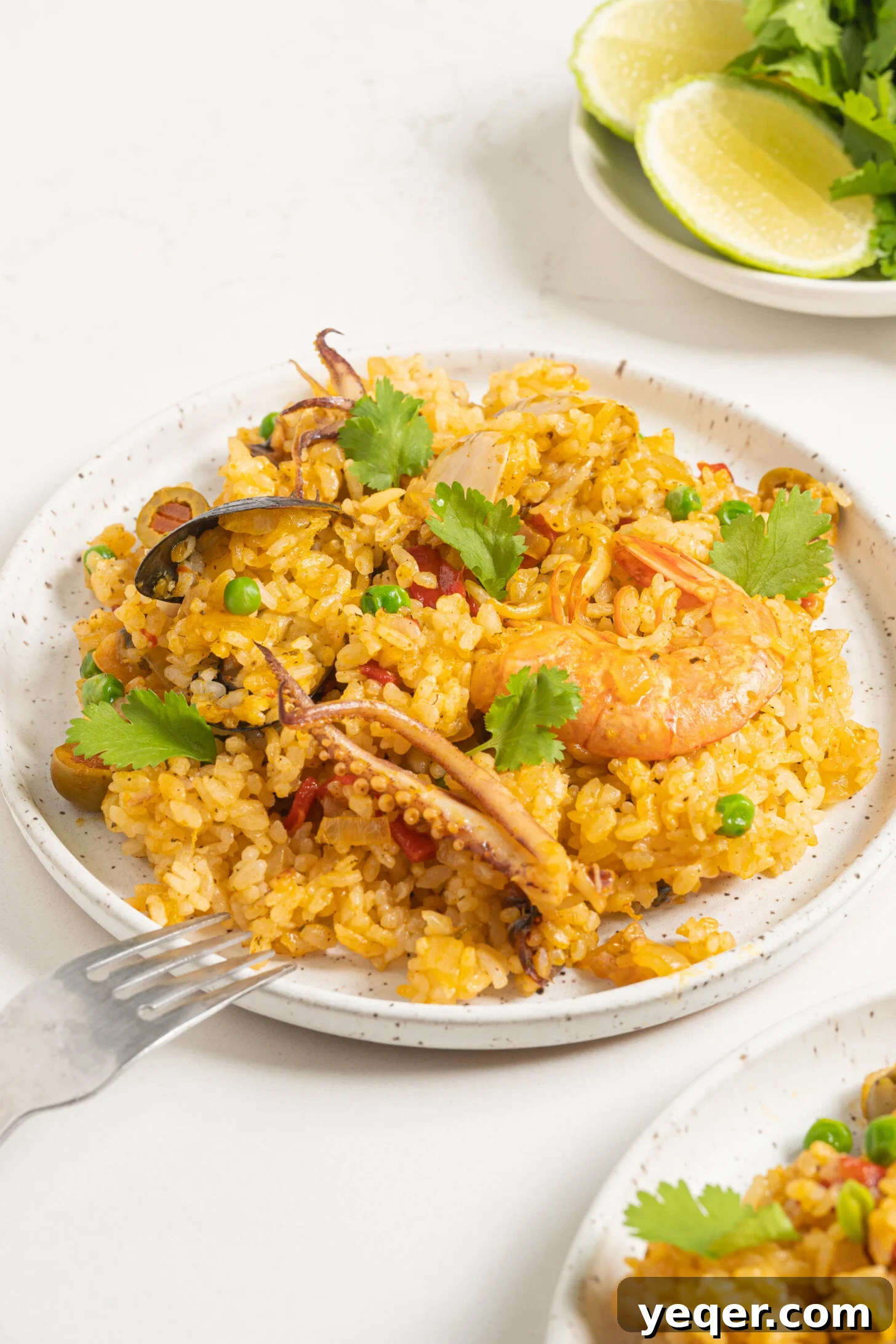
Arroz con Mariscos isn’t just a meal; it’s an experience that brings the warmth and hospitality of Puerto Rico directly to your dinner table. It’s a testament to how humble ingredients can be elevated into something truly spectacular. Unlike its more demanding cousin, Spanish Paella, which often requires specific pans and a watchful eye for that coveted socarrat (crispy rice bottom), Arroz con Mariscos embraces a more relaxed approach. This makes it an ideal choice for both seasoned home cooks and culinary novices alike, proving that extraordinary flavor doesn’t have to come with an extraordinary amount of fuss.
This Puerto Rican seafood rice stands out as one of those weeknight culinary triumphs that feels almost too good to be true. It’s comforting, hearty, and packed with flavor, yet demands very little of your precious time. Imagine a dish that boasts all the intricate flavors and visually appealing components of a gourmet creation, typically reserved for special guests or grand celebrations, but is incredibly easy to prepare. That’s the magic of Arroz con Mariscos – making an elaborate-tasting meal accessible even on the busiest of Mondays.
The beauty of this recipe lies in its simplicity and the depth of flavor it achieves with minimal fuss. It’s a true one-pot wonder, simplifying cleanup and maximizing enjoyment. Every spoonful delivers a harmonious blend of tender seafood, perfectly cooked rice, and a rich, savory base infused with traditional Puerto Rican spices. Seafood lovers will find themselves reaching for seconds, savoring the succulent shrimp, plump mussels, and tender calamari that dot the flavorful rice.
To elevate this already magnificent dish, consider a generous drizzle of a bright and zesty cilantro lime sauce. This addition introduces an extra layer of moisture and a tangy freshness that beautifully complements the richness of the seafood and rice, offering an incredibly saucy and delicious finish that will leave you craving more.
Essential Ingredients for Your Arroz con Mariscos Adventure
Crafting the perfect Arroz con Mariscos begins with a thoughtfully curated selection of ingredients. While the full list with precise quantities can be found in the recipe card below, here’s a detailed look at the key components that bring this dish to life, along with tips for selection and preparation.
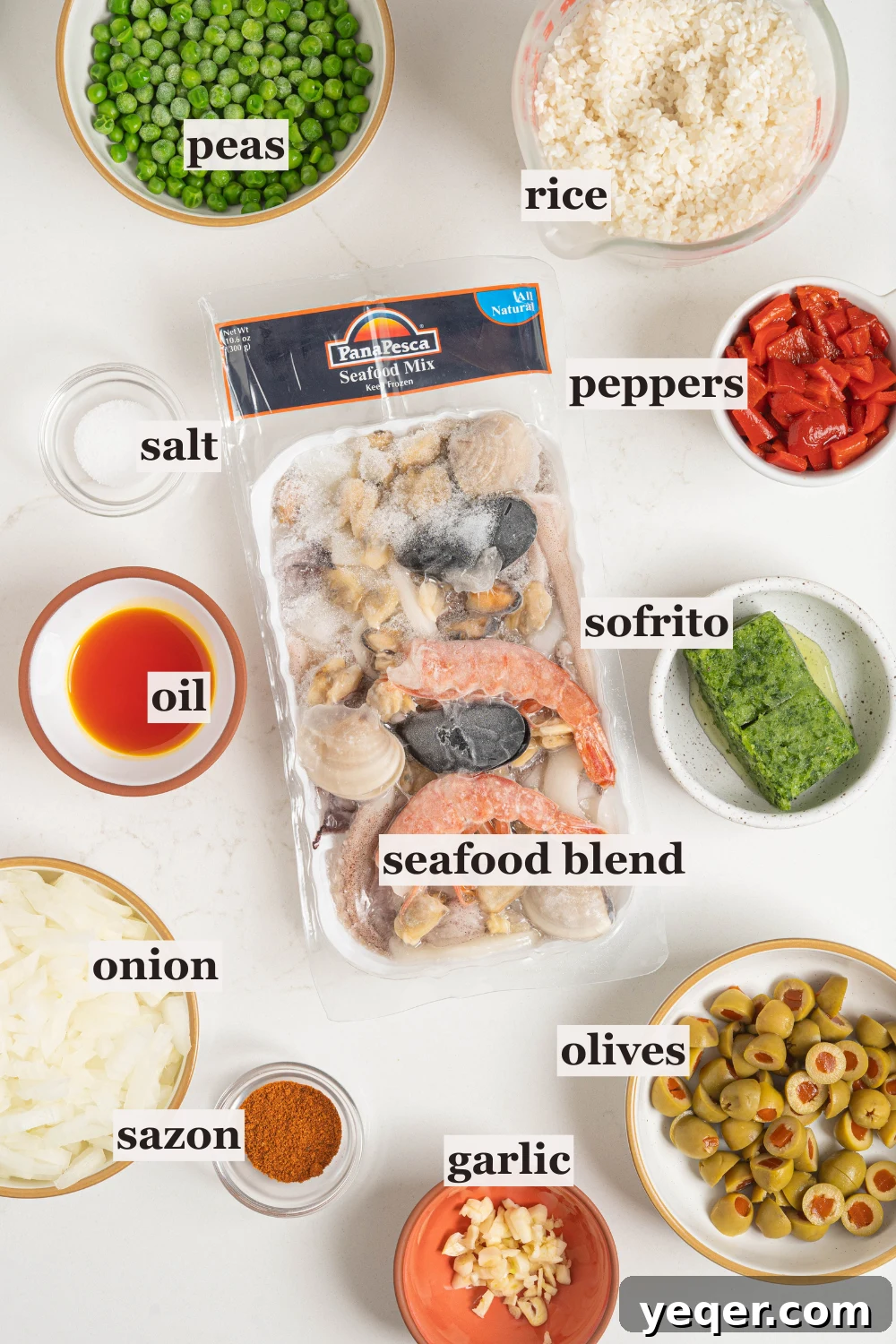
The Foundation – Rice: The star of any “arroz” dish is, of course, the rice. For Arroz con Mariscos, a short to medium-grain white rice is preferred. Its starch content allows it to absorb the flavorful broth beautifully, resulting in a creamy texture without becoming mushy. Rinsing the rice before cooking is crucial to remove excess starch, which prevents clumping and ensures each grain is distinct yet tender.
The Heart – Seafood Mix: This dish truly shines with a diverse medley of seafood. A pre-packaged frozen seafood mix is a convenient option, often containing shrimp, calamari, mussels, and clams. If you prefer fresh, consider a combination of these, ensuring they are properly cleaned and prepped. More on choosing between fresh and frozen below.
The Flavor Builders – Aromatics & Spices:
- Olive Oil or Achiote Oil: The cooking begins with a good quality olive oil. For an authentic Puerto Rican touch and a beautiful golden hue, consider using achiote oil, infused with annatto seeds.
- Yellow Onion: Diced yellow onion forms the sweet and savory base, softening and caramelizing to release its rich flavors.
- Garlic: Freshly minced garlic is indispensable, adding a pungent, aromatic depth.
- Peppers: A mix of diced peppers, whether fresh bell peppers for sweetness and crunch, fire-roasted for smokiness, or pimento/piquillo peppers for their vibrant color and mild flavor, contributes significantly to the overall profile.
- Sofrito: The soul of Puerto Rican cooking! This aromatic blend of culantro, peppers, onions, garlic, and herbs is non-negotiable for authentic flavor. You can find pre-made sofrito in most Latin markets or easily make your own from scratch.
- Sazón Seasoning: Another Puerto Rican staple, sazón seasoning typically contains coriander, annatto, cumin, garlic powder, and oregano, providing a distinctive earthy and savory taste, along with its signature reddish-orange color.
- Salt: Essential for balancing and enhancing all the other flavors. Adjust to your preference.
The Enhancers – Olives & Peas:
- Olives: Spanish olives (such as manzanilla or pimiento-stuffed green olives) add a briny, savory counterpoint to the richness of the seafood.
- Frozen Peas: Stirred in at the end, frozen peas add a pop of vibrant green color and a delicate sweetness, complementing the dish beautifully.
Optional Garnishes: Freshly minced cilantro and a squeeze of lime juice brighten the dish, adding a burst of freshness and acidity just before serving. These are highly recommended for the full experience!
Crafting Your Arroz con Mariscos: A Detailed Guide
Follow these comprehensive steps to create a truly unforgettable Puerto Rican Seafood Rice. Each stage is designed to build layers of flavor, ensuring a perfectly cooked and incredibly delicious outcome.
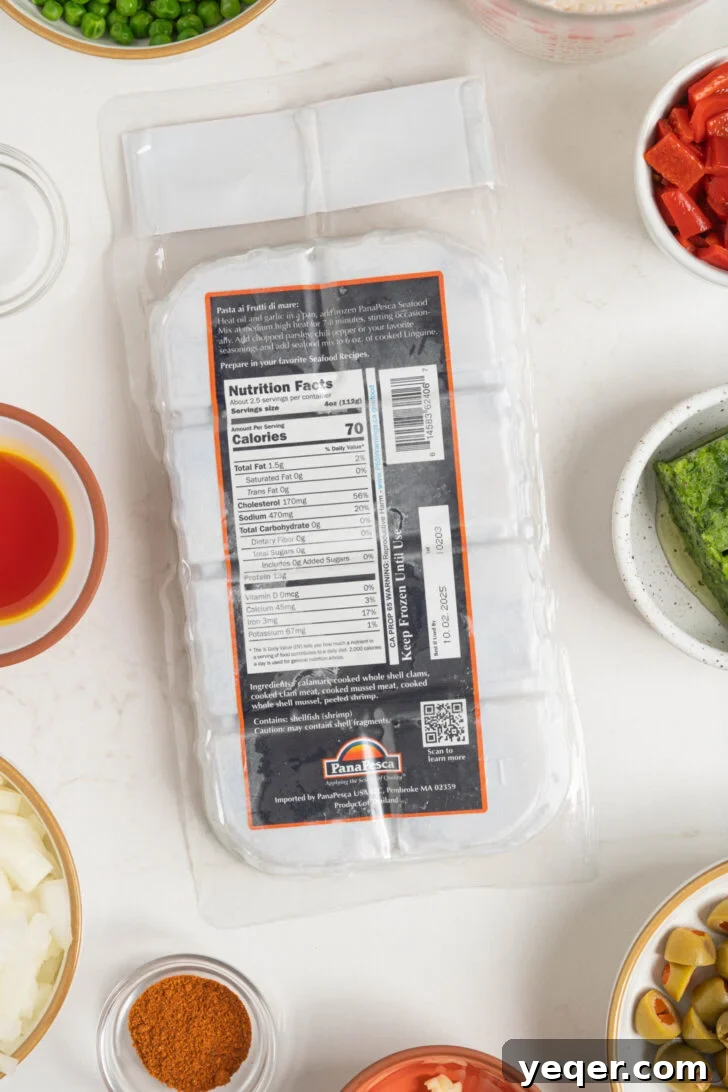

Fresh Seafood vs. Frozen: Which is Best for Arroz con Mariscos?
The debate between fresh and frozen seafood is a long-standing one, especially when crafting a dish as beloved as Arroz con Mariscos. Growing up, I experienced the joy of visiting local seafood markets with my dad, meticulously selecting plump clams, tender mussels, and pristine scallops for our paellas, clam chowders, or cioppinos. The quality was undeniable, and the difference in the final taste was always perceptible.
However, modern advancements in food technology have significantly narrowed this gap. I’ve since learned that, in many circumstances, high-quality frozen seafood can not only be a perfectly acceptable alternative but can sometimes even surpass the freshness of what’s labeled “fresh” at a typical grocery store. Here’s why embracing frozen seafood can be a smart choice for your Puerto Rican seafood rice:
- Peak Freshness Locked In: Most commercially frozen seafood is flash-frozen almost immediately after being caught. This rapid freezing process locks in its peak freshness, flavor, and nutritional value, often preserving these qualities better than seafood that has been transported fresh over long distances and displayed for days.
- Convenience and Flexibility: Frozen seafood offers unparalleled convenience. You can purchase a bag of mixed seafood and store it in your freezer, ready to be used whenever the craving for Arroz con Mariscos strikes. This flexibility in timing means you can plan your meals without the pressure of needing to cook seafood on the same day of purchase, without compromising on quality.
- Cost-Effectiveness: Generally, buying frozen seafood is more economical than purchasing fresh counterparts. This makes it a budget-friendly option without sacrificing the deliciousness of your dish, allowing you to enjoy seafood more often.
- Reduced Waste: With frozen seafood, you can use only what you need, reducing food waste compared to fresh seafood, which has a shorter shelf life.
Ultimately, don’t feel hesitant about incorporating and enjoying frozen seafood in your cooking! Both fresh and high-quality frozen seafood will yield a beautifully delicious Arroz con Mariscos. I often find excellent frozen seafood mixes at the same local shops where I used to buy fresh, but you can also find fantastic options in the freezer aisle of most grocery stores. Just ensure you select a reputable brand and check the ingredients for any unnecessary additives.
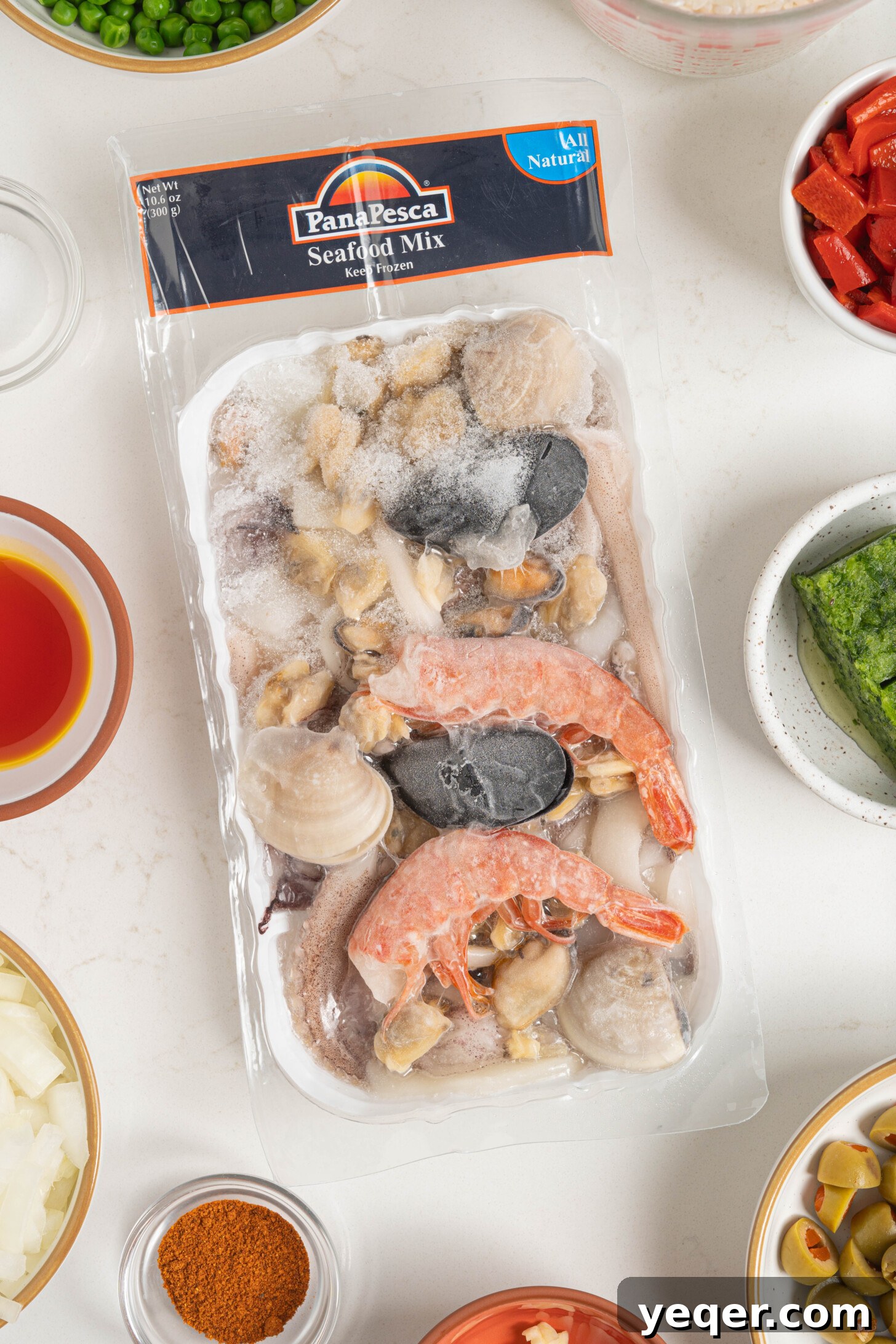
Choosing Your Perfect Seafood Mix for Arroz con Mariscos
The beauty of Arroz con Mariscos lies in its versatility, allowing you to customize the seafood blend to your personal preferences. While a classic mix enhances the experience, feel free to adapt it to your taste and what’s available. I like to adhere to a more traditional “paella seafood mix” profile, as it offers a fantastic balance of textures and flavors.
This traditional blend typically features a delightful combination of succulent shrimp, tender scallops, briny mussels, sweet clams, and chewy calamari (squid). Each component brings its unique contribution to the dish, creating a complex and satisfying seafood symphony.
However, if there’s any particular type of seafood you don’t enjoy, don’t hesitate to omit it. The recipe is forgiving! For instance, if you’re not a fan of mussels, simply increase the quantity of shrimp or scallops. You also have the flexibility to choose between shell-on or shell-off seafood for most varieties. Shell-on mussels and clams add a beautiful rustic appeal and infuse the rice with more briny flavor, while shell-off shrimp and scallops offer convenience and ease of eating.
When selecting your seafood, whether fresh or frozen, look for:
- Shrimp: Medium to large size, deveined. Raw shrimp will cook quickly in the rice.
- Scallops: Bay or sea scallops, ensuring they are “dry” scallops (not treated with sodium tripolyphosphate, which can make them watery).
- Mussels & Clams: If fresh, ensure they are alive (shells tightly closed or close when tapped). Discard any that are open or cracked. If frozen, they should be pre-cleaned and ready to cook.
- Calamari: Often found in rings and tentacles. It adds a lovely texture, but be careful not to overcook, as it can become rubbery.
Experiment with different combinations to find your ideal Arroz con Mariscos. The goal is a rich, flavorful dish that perfectly satisfies your seafood cravings.
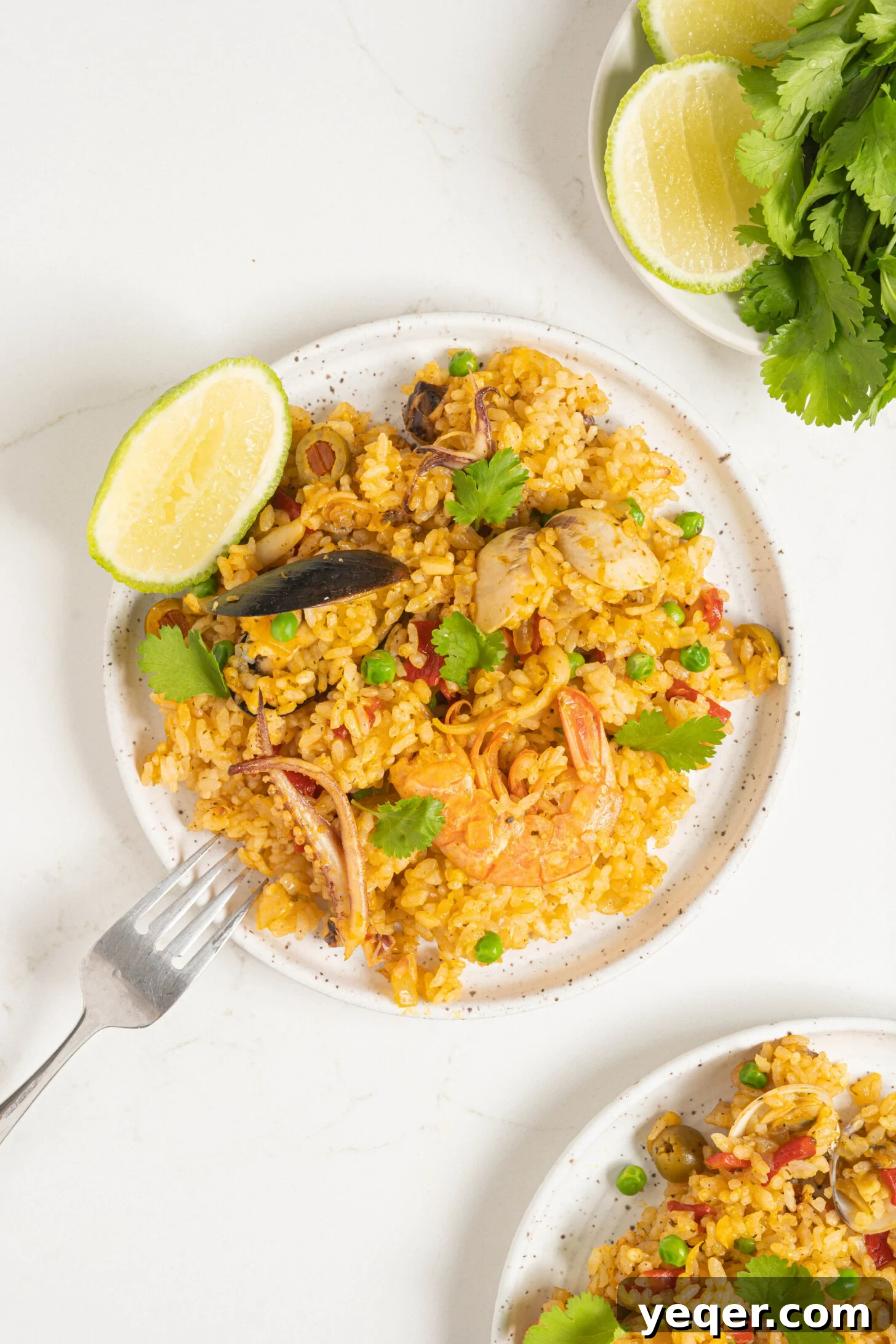
Mastering Arroz con Mariscos: Expert Tips for a Perfect Dish
Achieving the perfect Arroz con Mariscos is surprisingly straightforward, but a few key tips can elevate your dish from good to unforgettable. Keep these pointers in mind as you embark on your culinary journey:
- Seafood Preparation is Key: Whether you choose fresh or frozen seafood, adequate preparation is vital. If using frozen seafood mix, always consult the package directions regarding thawing. Some mixes require several hours to thaw properly, while others can go straight into the pot. Planning ahead ensures your seafood is ready when you are, preventing delays and ensuring even cooking.
- Embrace Puerto Rican Staples: The authentic flavor of Arroz con Mariscos largely comes from two foundational Puerto Rican ingredients: Sofrito and Sazón. Sofrito, a fragrant aromatic base, and Sazón, a vibrant seasoning blend, are readily available in most Latin food aisles. However, for the freshest and most robust flavors, consider making your own in a few simple steps. The difference is truly remarkable!
- Don’t Overcook the Seafood: Seafood cooks quickly, especially delicate items like shrimp and scallops. The cooking time for the rice is often sufficient to cook the seafood through. Overcooking can lead to rubbery shrimp and tough calamari. Monitor your dish towards the end of the cooking process to ensure the seafood remains tender and juicy.
- Discard Unopened Shellfish: If your recipe includes mussels or clams, it’s critical to discard any that do not open during the cooking process. Unopened shellfish may have been dead before cooking and are not safe to eat.
- Adjust Seasoning to Taste: Always taste your rice before serving. The amount of salt and sazón can be adjusted to your preference. A final squeeze of lime juice and a sprinkle of fresh cilantro at the end can brighten all the flavors beautifully.
- Use the Right Pot: A heavy-bottomed pot, such as a traditional caldero or a Dutch oven, is ideal for cooking rice dishes. It distributes heat evenly, preventing sticking and ensuring the rice cooks uniformly.
By following these tips, you’ll be well on your way to creating a delicious and authentic Arroz con Mariscos that will impress everyone at your table.
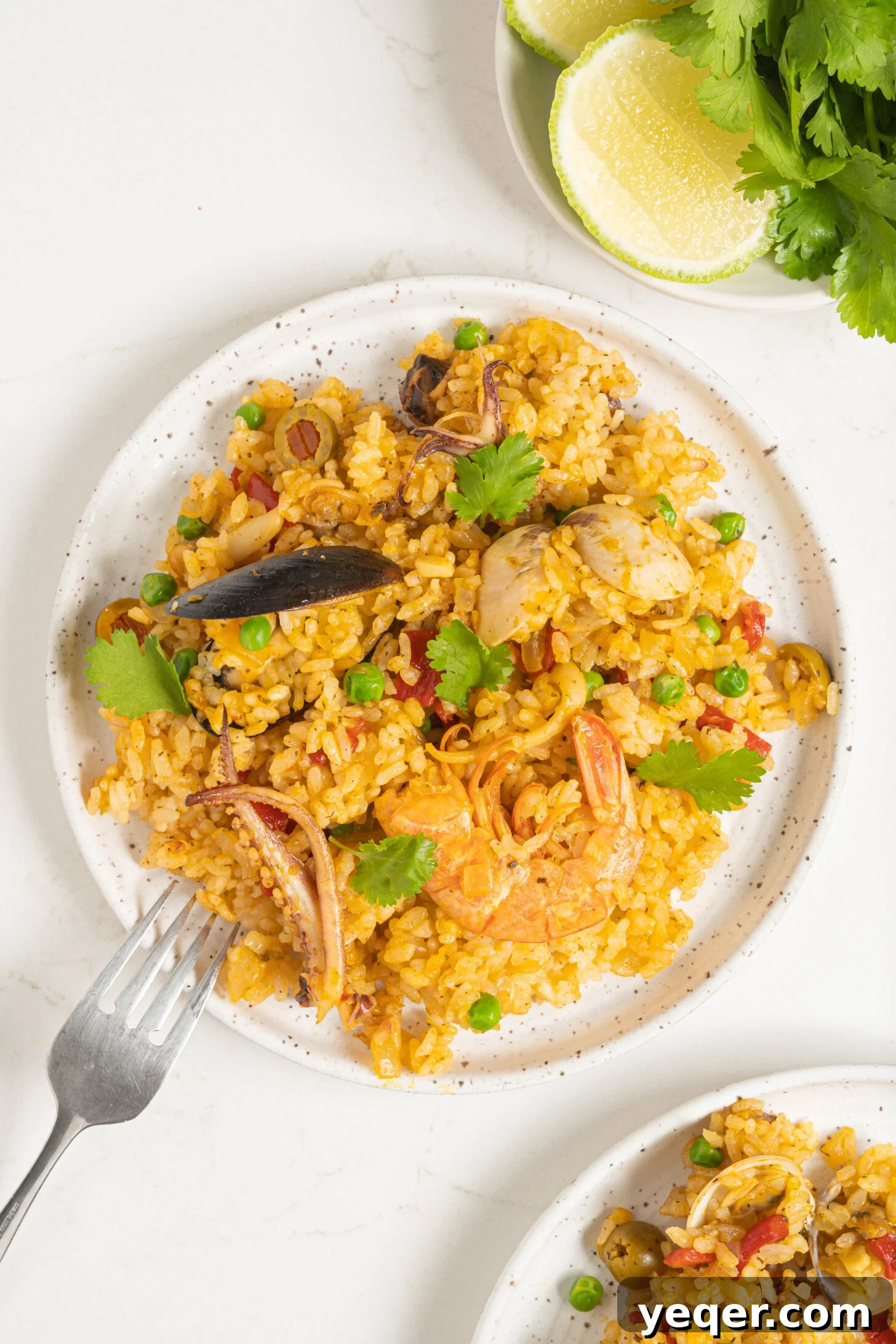
Serving Suggestions for Your Seafood Rice Feast
Arroz con Mariscos is a hearty and complete meal on its own, packed with protein and carbohydrates. However, pairing it with a few simple sides can elevate the dining experience and offer a balanced complement to its rich flavors. Here are some suggestions:
- Fresh Salad: A crisp, light green salad with a simple vinaigrette (perhaps a cilantro-lime dressing) provides a refreshing contrast to the warmth and richness of the rice.
- Tostones or Maduros: Fried plantains, either savory tostones (green plantains, double-fried) or sweet maduros (ripe plantains), are classic Caribbean sides that pair wonderfully with any rice dish.
- Avocado Slices: Creamy avocado slices offer a cool, smooth texture that complements the seafood rice beautifully.
- Crusty Bread: A good loaf of crusty bread is perfect for soaking up any extra flavorful juices from the rice.
- Pique (Hot Sauce): For those who enjoy a little heat, a dash of homemade Puerto Rican pique or your favorite hot sauce can add a zesty kick.
Storage and Reheating Tips
If you find yourself with leftovers (which is rare with this delicious dish!), proper storage and reheating will ensure you can enjoy Arroz con Mariscos again.
- Storage: Allow the rice to cool completely before transferring it to an airtight container. Store it in the refrigerator for up to 3-4 days.
- Reheating: For best results, reheat individual portions in a microwave or on the stovetop over low heat. If reheating on the stovetop, add a splash of water or broth to prevent it from drying out, stirring gently until heated through. Be cautious not to overcook the seafood when reheating.
Frequently Asked Questions (FAQ)
Here are answers to some common questions about Arroz con Mariscos:
Q: Can I use brown rice instead of white rice?
A: While traditional Arroz con Mariscos is made with white rice, you can experiment with brown rice. Keep in mind that brown rice requires more liquid and a longer cooking time, which might affect the texture and cooking of the seafood. Adjust your liquid and cooking times accordingly.
Q: What if I don’t have a caldero?
A: A heavy-bottomed Dutch oven or any large pot with a tight-fitting lid will work perfectly fine. The key is to use a pot that distributes heat evenly to prevent the rice from sticking or burning.
Q: Can I add vegetables other than peas?
A: Absolutely! While peas are traditional, you can certainly add other quick-cooking vegetables like diced carrots, corn, or green beans. Add them in the last 5-10 minutes of simmering to ensure they cook through without becoming mushy.
Q: Is Arroz con Mariscos naturally gluten-free?
A: Yes, this recipe is naturally gluten-free, provided you ensure that your sazón seasoning and sofrito do not contain any hidden gluten-containing ingredients. Always check labels if you have strict dietary requirements.
Explore More Puerto Rican Rice Delights
The culinary landscape of Puerto Rico is rich with incredible rice dishes, each offering its own unique flavor profile and story. If you’ve enjoyed the vibrant flavors of Arroz con Mariscos, we invite you to explore other beloved staples of Puerto Rican cuisine:
Buen Provecho, and happy cooking!

Print
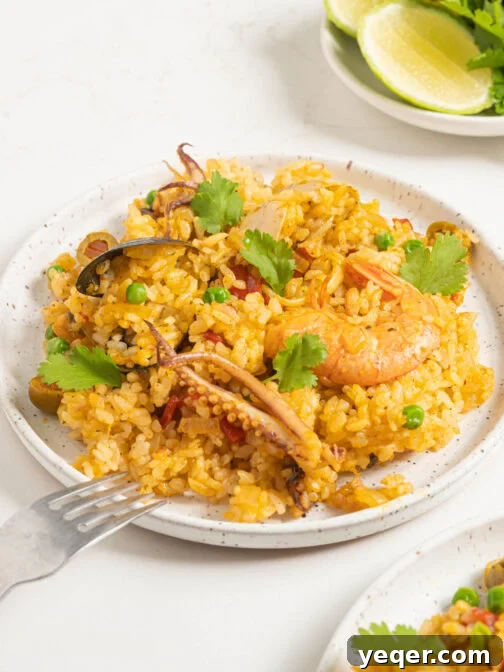
Arroz Con Mariscos (Puerto Rican Seafood Rice)
5 Stars 4 Stars 3 Stars 2 Stars 1 Star
No reviews
Author: Salima Benkhalti
Prep Time: 30 minutes
Cook Time: 30 minutes
Total Time: 1 hour
Yield: 4 servings 1x
Category: Entree, Dinner, Lunch
Method: Stovetop
Cuisine: Puerto Rican, Latin, Spanish
Diet: Gluten Free
Description
This Puerto Rican style seafood rice (Arroz con Mariscos) is a fabulously delicious, less complicated version of Spanish Paella. Loaded with a blend of seafood, onion, pepper, and a flavorful rice base, it’s incredibly cozy with minimal effort required, perfect for any night of the week.
Ingredients
Units
Scale
- 1 package frozen seafood mix, or a combination of your favorite fresh seafood (see note)*
- 1 tbsp olive oil or achiote oil
- 1 yellow onion, diced
- 1/2 cup peppers (could be fresh bell, fire roasted, pimento, piquillo, etc.), diced
- 2 cloves garlic, minced
- 1/3 cup sofrito
- 2 tsp sazon seasoning
- 1 tsp salt
- 2 cups short to medium grain white rice, rinsed
- 2 cups water
- 1/2 cup frozen (or fresh) peas
- optional: cilantro and lime to garnish
Instructions
- Prep the seafood mix. Thaw the seafood mix if directed to in package directions so that it will be ready to go when you’re ready to start the rice. The mix I’m using can be cooked from frozen. Ensure any fresh shellfish are cleaned and any shrimp are deveined.
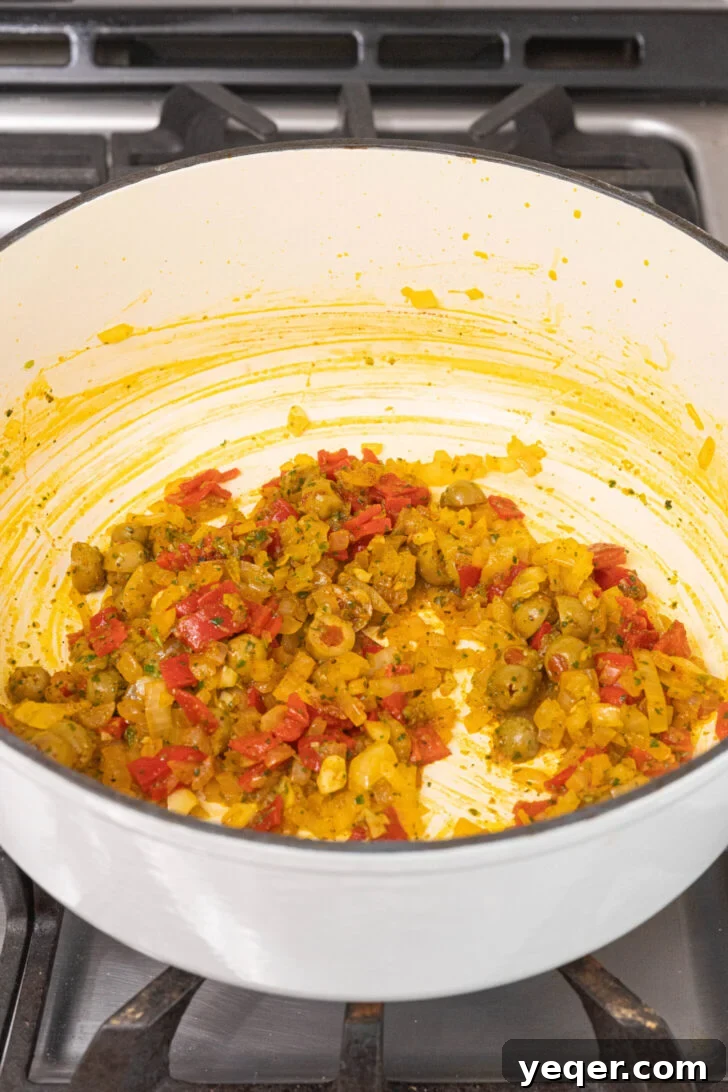
- Sauté the veggies, sofrito, sazon, and salt. In a caldero or dutch oven, heat the olive or achiote oil over medium-high heat. Add the diced yellow onion and cook until translucent, about 3-5 minutes. Then, add the minced garlic and sofrito, cooking for an additional 1-2 minutes until fragrant. Finally, toss in the diced peppers, olives, sazon seasoning, and salt, mixing well to combine. Cook until all ingredients are fragrant, typically 2-3 minutes.
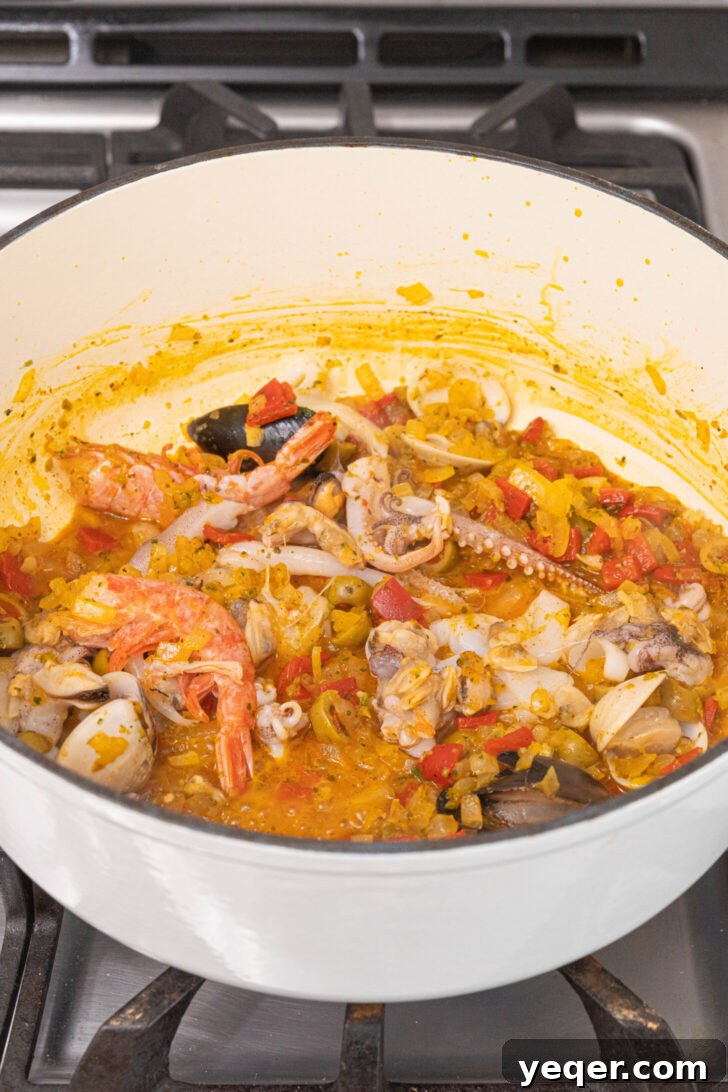
- Add seafood mix. Drain any remaining liquid from the prepared seafood mix, if applicable. Add the seafood into the pot and stir gently to incorporate everything together. Cook for a few minutes over medium-high heat, just to begin cooking the seafood and meld flavors.
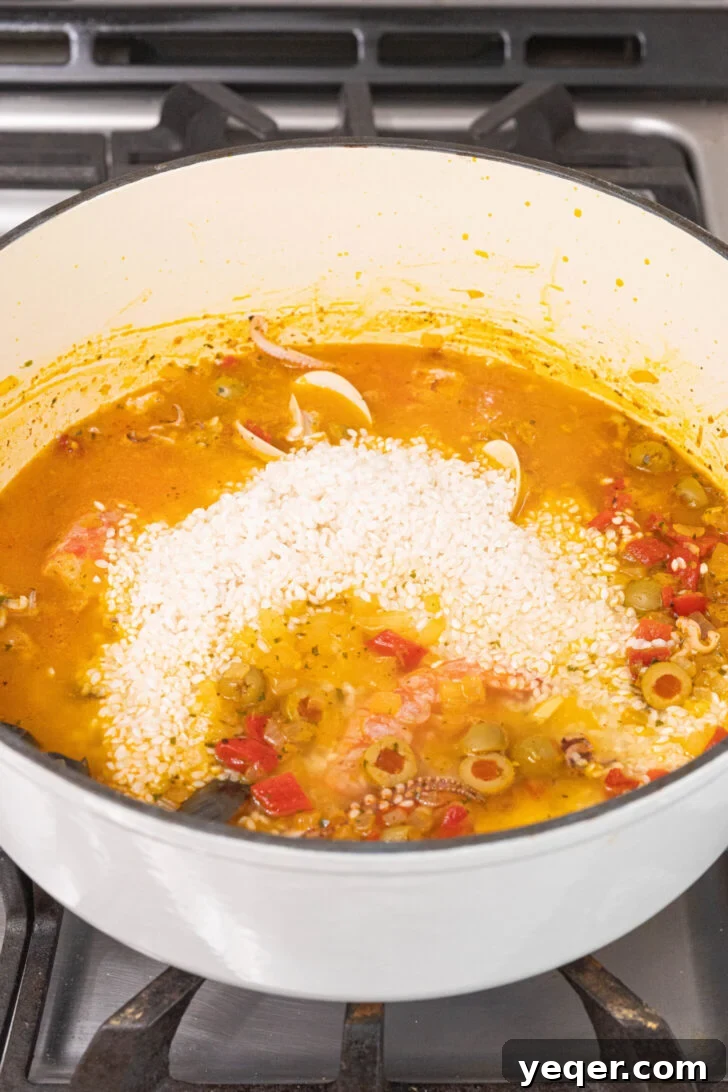
- Add rice and water. Stir in the rinsed white rice and pour in the water. Bring the liquid to a rapid boil and continue to boil vigorously for a few minutes, stirring every so often to prevent sticking and ensure even heat distribution.
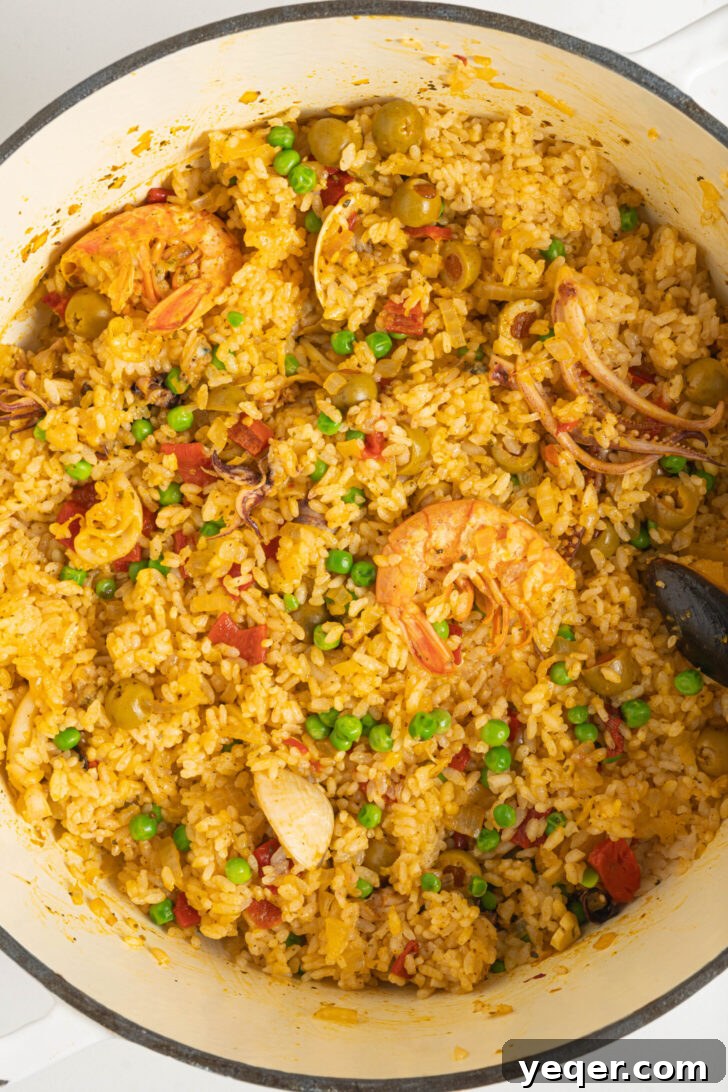
- Cook the rice and seafood on low. Once boiling, reduce the heat to low, cover the pot with a tight-fitting lid, and allow it to simmer. Cook for 15-25 minutes, or until the rice is tender and fully cooked. If using mussels or clams, they should have opened during this time; discard any that remain closed.
- Fluff in peas and serve. Remove the pot from the heat. Gently fluff the frozen peas into the hot rice; the residual heat will warm them through. Taste and adjust with any additional salt or pepper to your preference. Serve immediately, garnished with minced cilantro and a squeeze of fresh lime juice, if desired, for a burst of freshness.
Notes
- Frozen seafood mix can be substituted for ¼ – ½ lb of each: shrimp (peeled and deveined), mussels (scrubbed), squid (cleaned and sliced), and clams (scrubbed). Note that you may need to prep the fresh seafood (slice, clean, devein, etc.) depending on the kind you buy, so factor in this extra preparation time.
- For a richer flavor, you can substitute a portion of the water with seafood or chicken broth.