
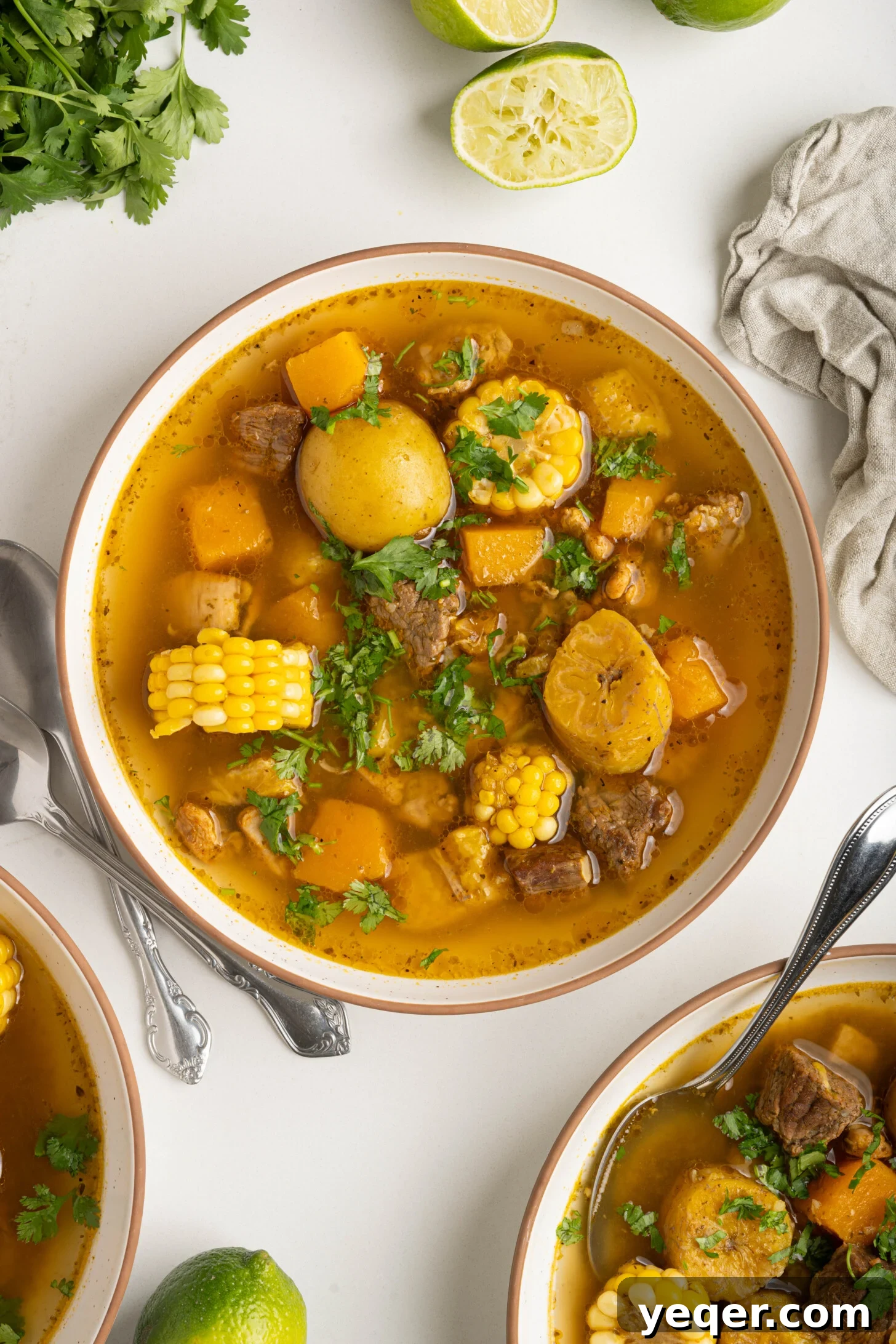
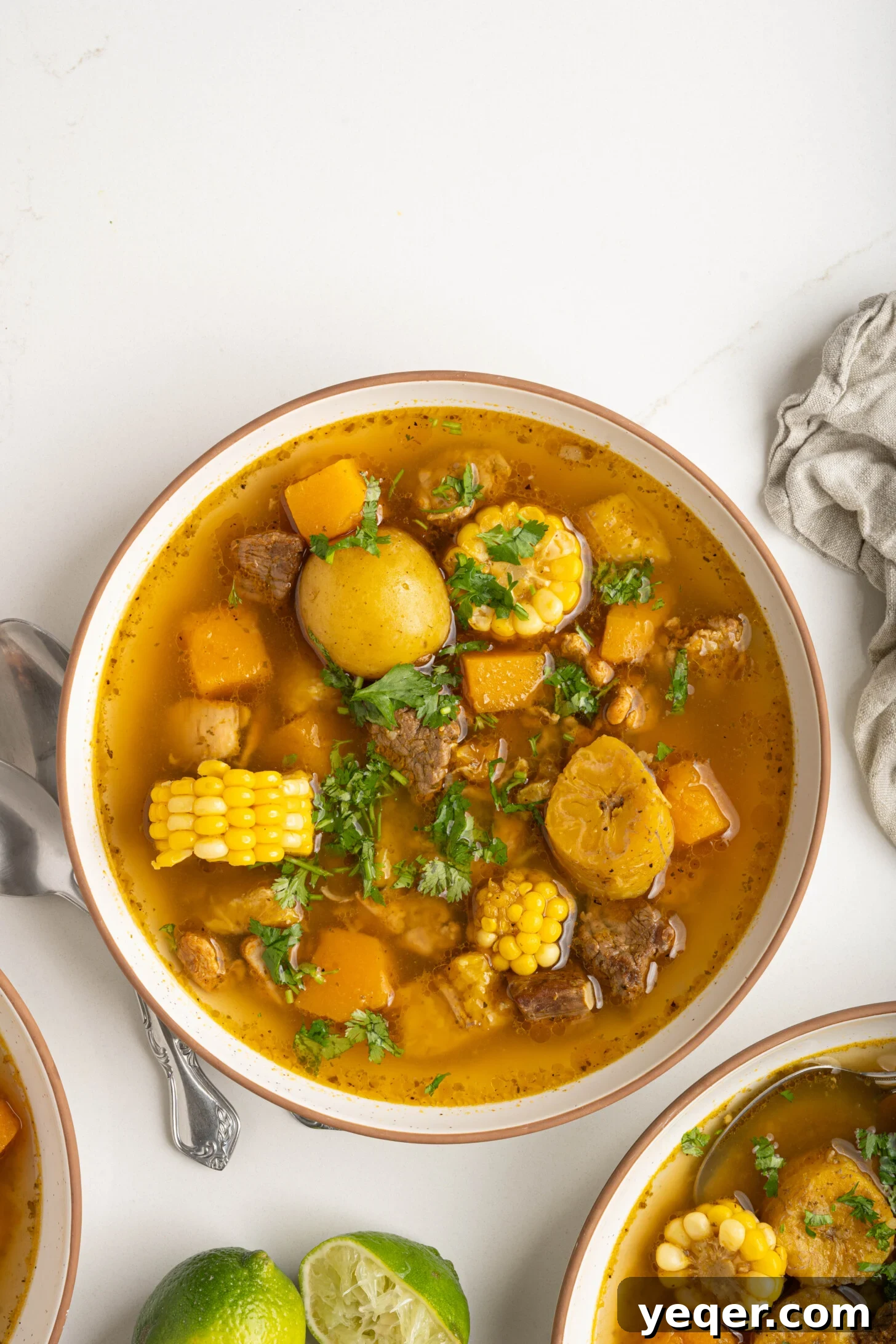
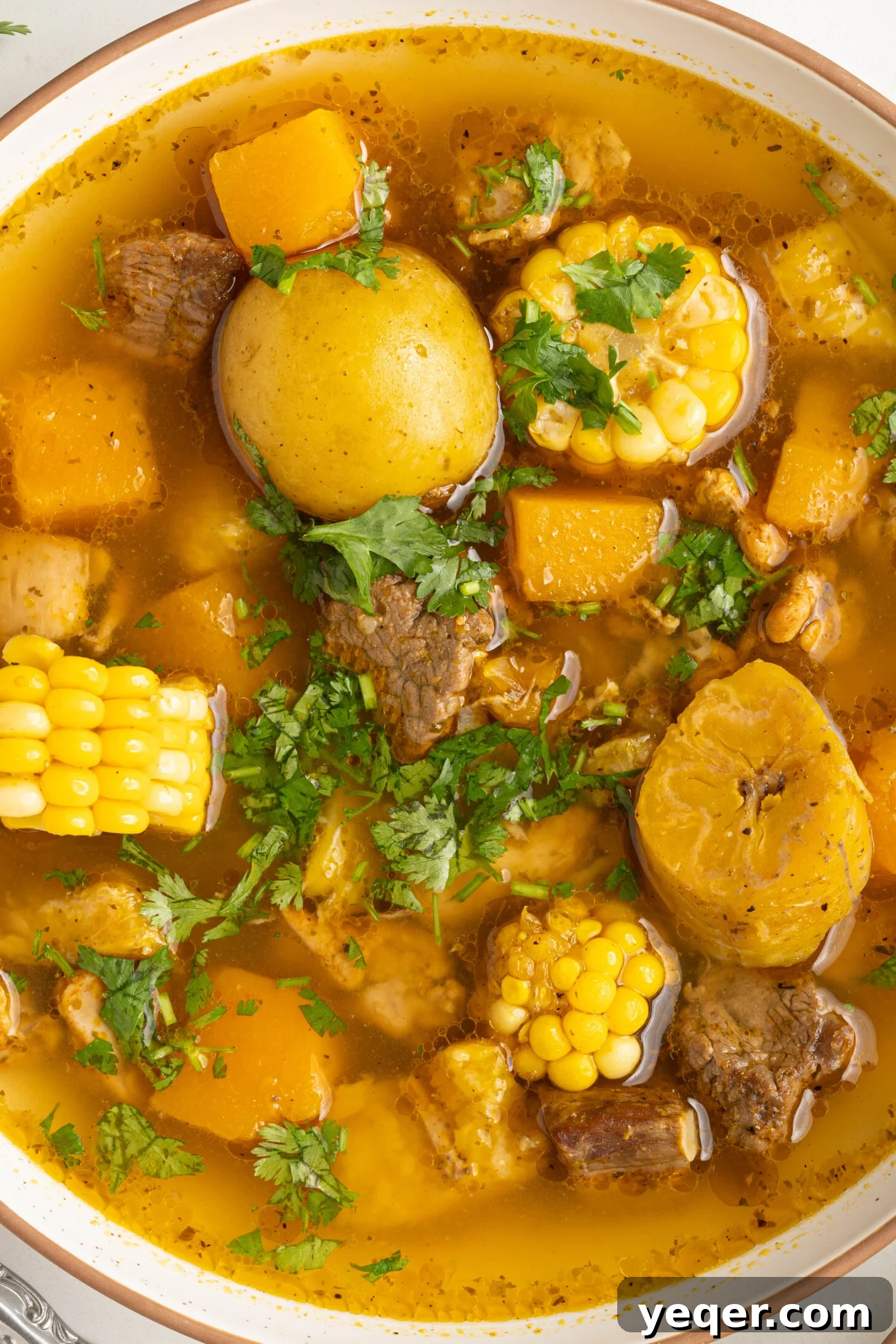
Sancocho is a revered and deeply comforting stew with rich origins stretching across the Caribbean and Latin America. Celebrated for its profound flavors, it harmoniously blends tender stewed meats – typically beef and chicken – with a vibrant assortment of root vegetables and corn. This particular recipe, an authentic Puerto Rican Sancocho, exemplifies culinary excellence, bursting with the distinctive zest of homemade sofrito, the savory depth of sazon, and the aromatic punch of adobo seasoning. Complementing these foundational flavors is a bounty of fresh, hearty vegetables, including the unique texture of green plantain, the earthy sweetness of yams, classic potatoes, and a touch of wholesome squash.
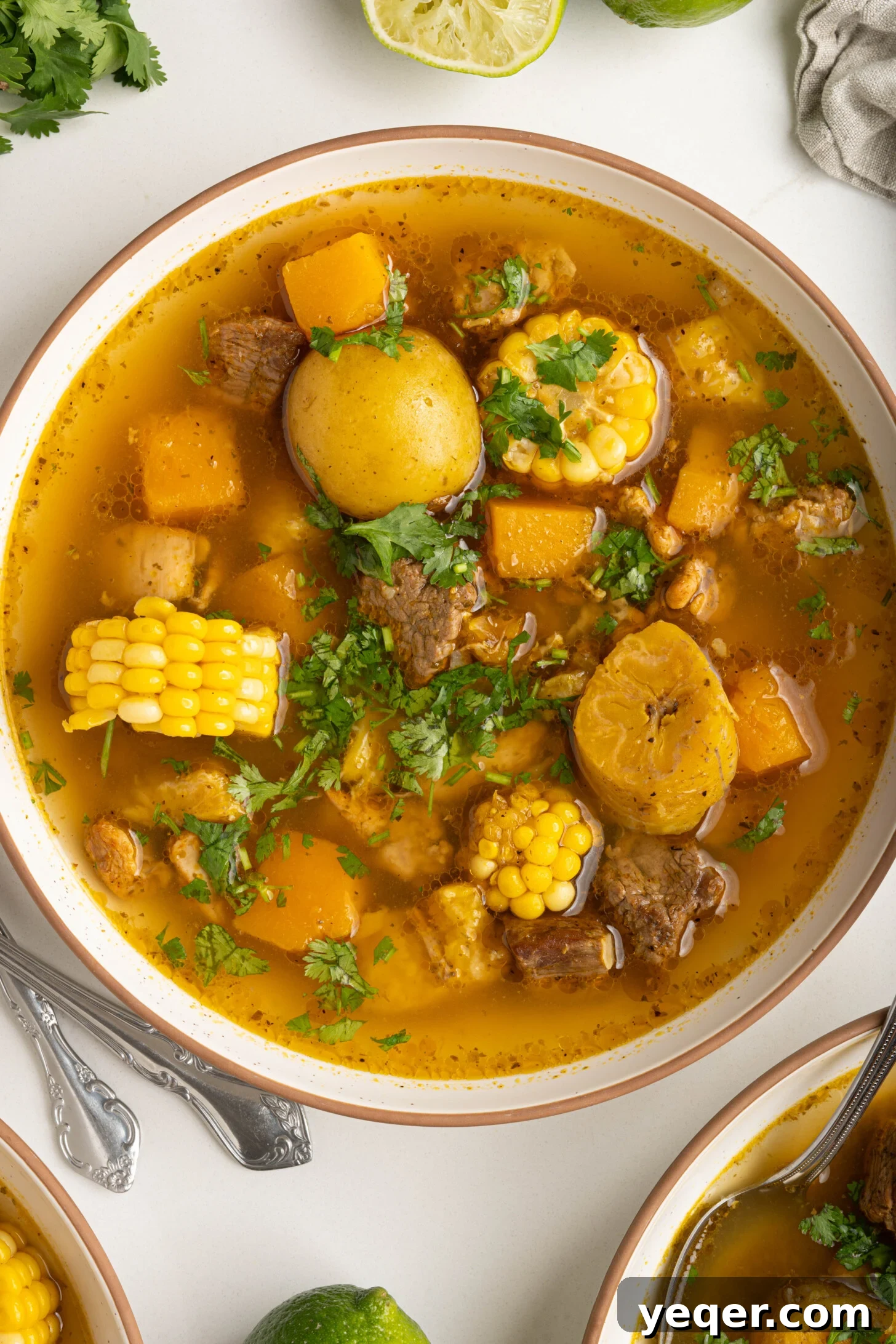
Sancocho: A Culinary Journey Through the Heart of Caribbean Comfort Food
If you’re a connoisseur of the vibrant and traditional flavors found in Puerto Rican recipes, prepare to embark on a culinary love affair with this incredibly cozy and robust Sancocho stew. More than just a meal, Sancocho is an experience – a hearty embrace in a bowl, perfect for warming the soul on any day.
This magnificent stew is meticulously crafted with a deeply rich and savory broth, a generous combination of succulent chicken and tender beef, and an array of hearty stewed vegetables that soak up every essence of the warming island spices. Its popularity transcends borders, making it a beloved staple across the entire Caribbean and Latin American regions. Just like other treasured dishes such as Asopao de Pollo (Puerto Rican Chicken and Rice Stew) and Carne Guisada (Puerto Rican Beef Stew), Sancocho holds a special place in the hearts and homes of many.
Growing up, Sancocho was a frequent highlight at our family table. I vividly remember enjoying each spoonful, always with a squeeze of fresh lime juice and a sprinkle of vibrant cilantro, a simple yet transformative addition that brightens the entire dish. The battles over the last bowl were legendary, a testament to just how cherished and irresistible this stew truly is. It’s a dish that embodies tradition, family, and the undeniable magic of Puerto Rican home cooking.
What Makes Sancocho So Special?
Sancocho is not merely a soup; it’s a celebration of diverse ingredients coming together to create a symphony of textures and tastes. Its defining characteristic is the generous inclusion of “viandas” – a term referring to the various starchy root vegetables and tubers prominent in Caribbean cuisine. These roots, along with the tender meats, slowly simmer to create a thick, flavorful broth that is both nourishing and profoundly satisfying. The unique combination of flavors from indigenous seasonings and fresh produce truly sets Sancocho apart, making it a culinary cornerstone of the region.
While this recipe focuses on the beloved Puerto Rican style, it’s worth noting that Sancocho boasts numerous regional variations. From the hearty Dominican Sancocho with its seven meats to the Colombian Ajiaco (which sometimes shares similarities) or the Venezuelan Sancocho, each country and even each family has its own cherished rendition. This speaks volumes about the dish’s universal appeal and its adaptability, while always retaining its comforting essence.
Essential Ingredients for an Authentic Sancocho
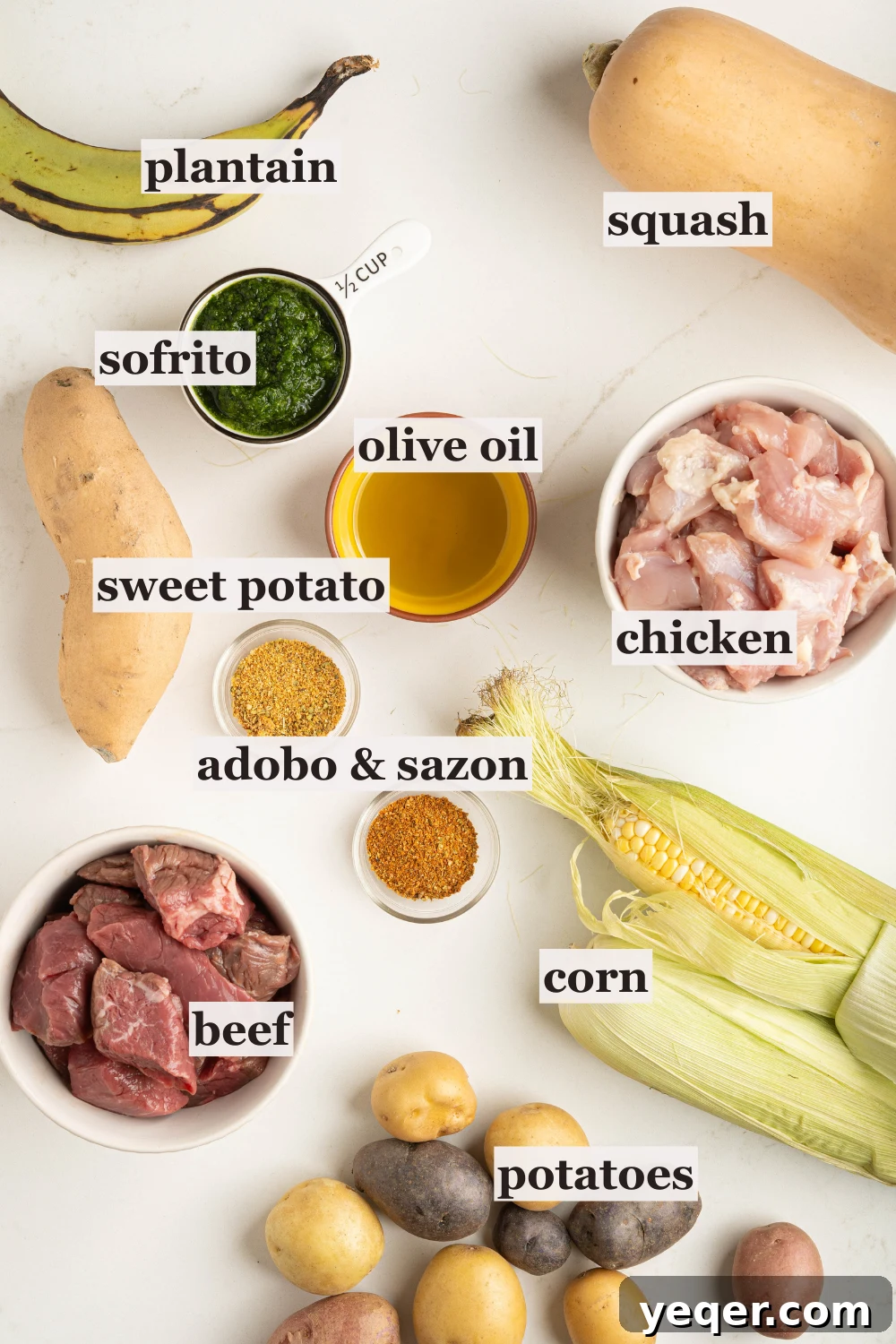
Crafting the perfect Sancocho begins with selecting the right ingredients. Each component plays a vital role in building the layers of flavor and texture that define this iconic stew.
The Hearty Meats: Beef and Chicken
- Beef Stew Meat: Opt for cuts like chuck roast, which are ideal for slow simmering. When cut into 2-inch cubes, they become incredibly tender and flavorful, releasing rich beefy notes into the broth. The slow cooking breaks down the connective tissues, resulting in melt-in-your-mouth beef.
- Chicken: A mix of chicken thighs and breasts, cut into bite-sized pieces, adds another layer of flavor and texture. Thighs contribute richness and moisture, while breasts offer lean protein. The combination ensures a balanced meat profile in the stew.
The Flavor Base: Sofrito, Sazon, and Adobo
- Sofrito: This aromatic powerhouse is the soul of Puerto Rican cuisine. A blend of peppers, onions, garlic, cilantro, and culantro, sofrito provides a fresh, vibrant, and deeply savory foundation for the stew. It’s best when homemade, but a good quality store-bought version can also work.
- Sazon Seasoning: A popular Latin American seasoning blend, sazon (often with achiote or annatto) imparts a beautiful golden color and a savory, earthy flavor profile that is essential to Sancocho.
- Adobo Seasoning: This all-purpose blend of garlic, oregano, black pepper, and turmeric (or other spices) enhances the savory notes of the meats and vegetables, adding depth and complexity.
- Olive Oil: Used for browning the meats and sautéing, it helps to build the initial layers of flavor.
The Root Vegetables (Viandas) and Other Produce
The “viandas” are what give Sancocho its characteristic heartiness and unique texture. Their slow cooking releases starches, naturally thickening the broth.
- Corn on the Cob: Cut into 1-inch rounds, corn adds a touch of sweetness and a delightful crunch that contrasts with the softer vegetables.
- Green Plantain: Unripe plantains are a Sancocho essential. Peeled and cut into 1-inch rounds, they become tender and slightly starchy, contributing to the stew’s body and a subtle, earthy flavor distinct from sweet plantains.
- Yam or Sweet Potato: These add natural sweetness and a creamy texture when cooked down. They break down slightly, enriching the broth.
- Baby Potatoes: Small potatoes cook quickly and add a familiar, comforting starchiness. Their skin can be left on for extra texture and nutrients.
- Squash: Varieties like butternut, calabaza, or kabocha squash, peeled and cubed, contribute a mellow sweetness and a smooth, tender consistency that can slightly thicken the stew as it breaks down.
The Liquid Foundation and Garnishes
- Water or Broth: While water works, using chicken or beef broth will undoubtedly deepen the overall flavor of your Sancocho, adding more savory notes from the start.
- Salt & Pepper: Essential for seasoning to taste, ensuring all the flavors are balanced and vibrant.
- Optional Garnishes: Fresh cilantro adds a burst of freshness, lime juice provides a bright, acidic counterpoint, and a splash of pique hot sauce (Puerto Rican hot sauce) introduces a delightful kick, enhancing the stew’s complexity.
By thoughtfully combining these ingredients, you’re not just making a stew; you’re crafting a meal that tells a story of Caribbean culinary tradition and passion.
Crafting Your Sancocho: A Step-by-Step Guide
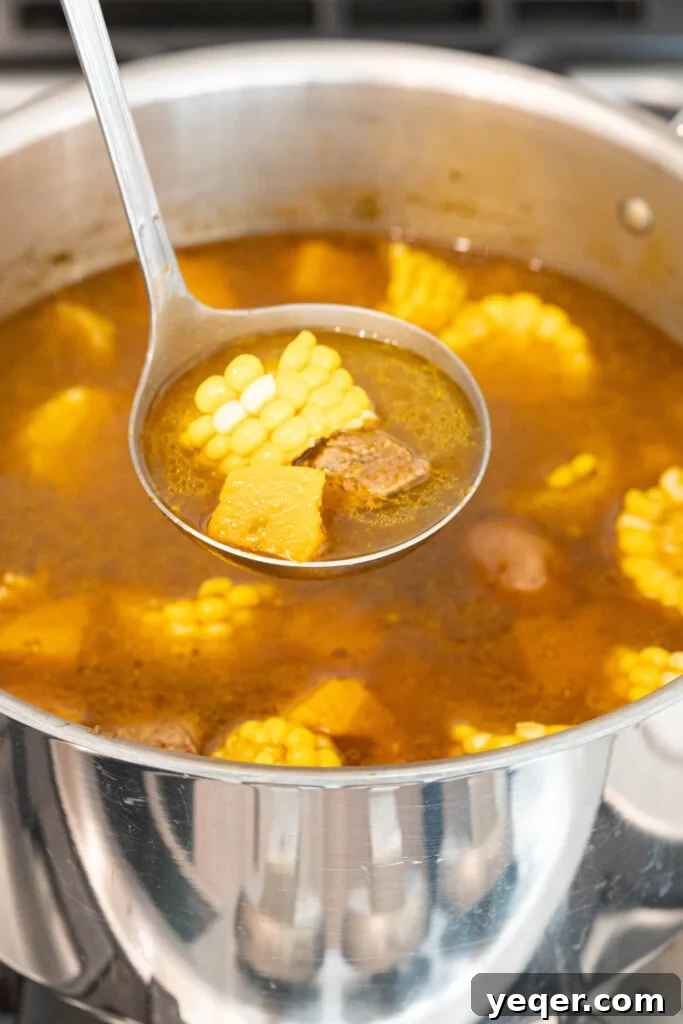
Tips for Making the Best Puerto Rican Sancocho
- Quality Ingredients are Key: Always start with fresh, high-quality meats and vegetables. This will significantly impact the final flavor.
- Don’t Skip the Sofrito: Fresh or frozen homemade sofrito truly makes a difference. Its aromatic base is essential for an authentic Puerto Rican Sancocho.
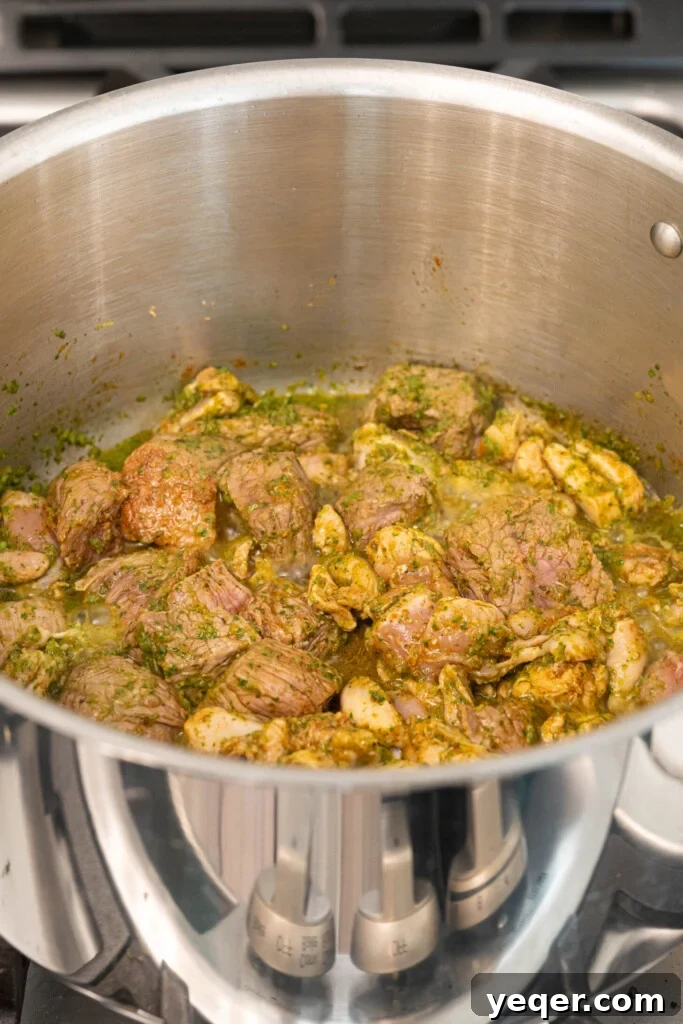
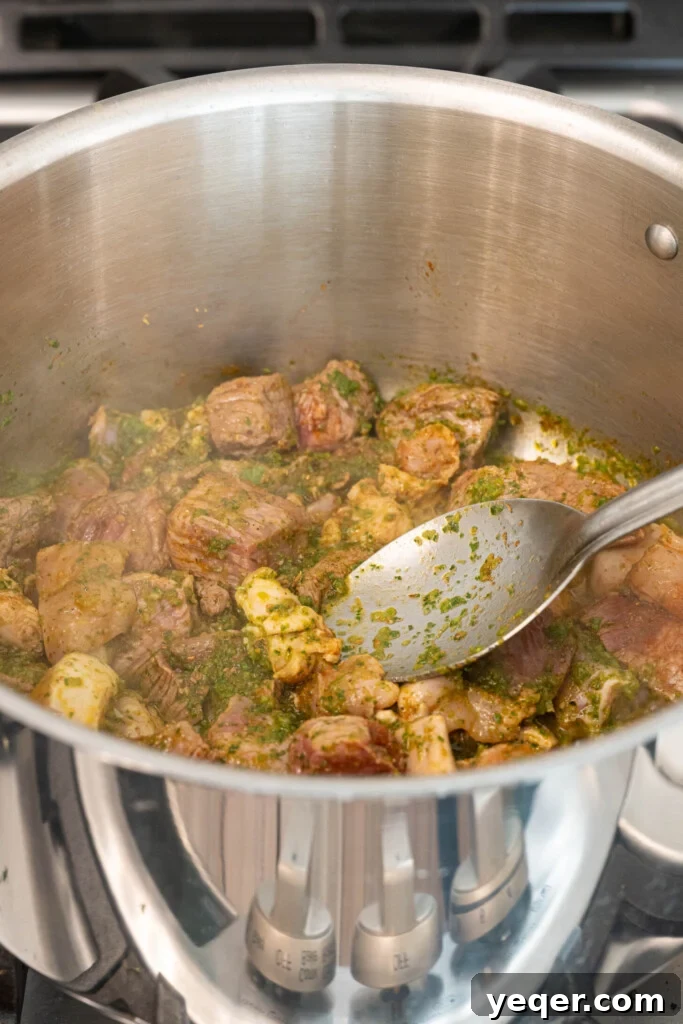
- Sear the Meat Properly: Browning the beef and chicken before simmering creates a deeper, more robust flavor base for the stew. Don’t rush this step.
- Layer Your Flavors: Add seasonings and sofrito early to allow their flavors to meld and develop fully with the meats.
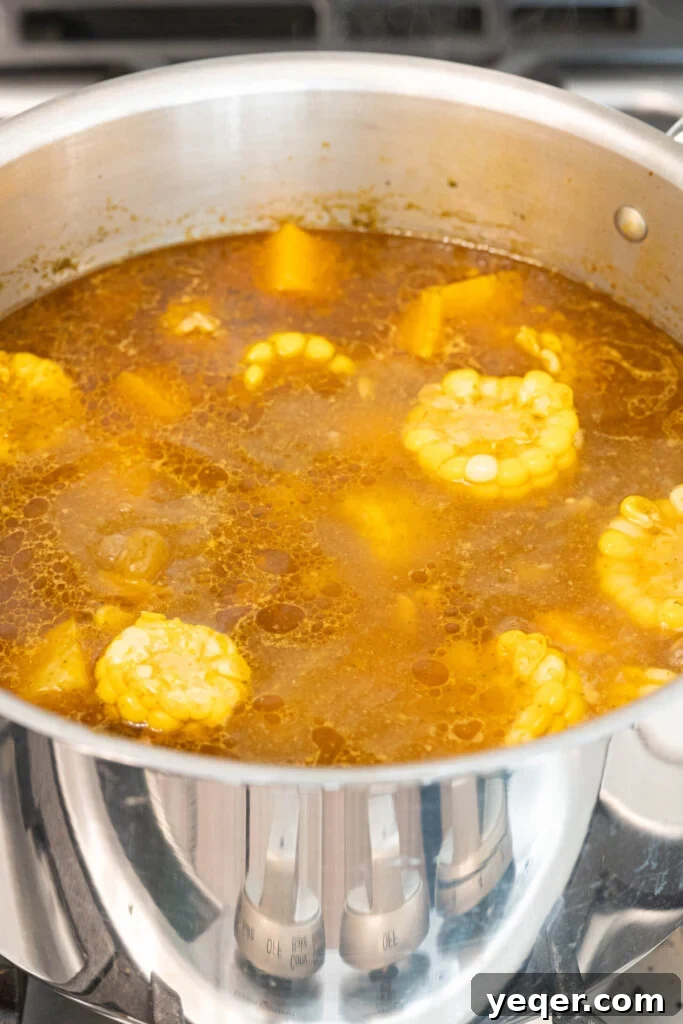
- Slow Simmer is Essential: Sancocho is not a dish to be rushed. The long, slow simmer is crucial for tenderizing the meats and root vegetables and for developing a rich, complex broth.
- Taste and Adjust: Always taste your Sancocho before serving and adjust salt, pepper, and other seasonings as needed. The flavors will deepen as it cooks.
- Embrace the Viandas: The variety of root vegetables is characteristic of Sancocho. Don’t be afraid to experiment with other starchy vegetables like yuca (cassava) or malanga if you can find them.
Variations and Substitutions
Sancocho is incredibly versatile, allowing for numerous variations to suit your taste or what you have on hand:
- Meats: While beef and chicken are classic, you can add or substitute pork ribs, smoked ham hocks, or even chorizo for additional layers of flavor. Some versions use up to seven types of meat!
- Root Vegetables: Feel free to swap out some of the specified viandas for others popular in Caribbean cuisine, such as yuca (cassava), malanga (taro), or batata (Caribbean sweet potato). Just ensure they are cut into similar sizes for even cooking.
- Broth: For an even richer stew, consider using homemade bone broth instead of store-bought or water.
- Spices: While sazon and adobo are foundational, you can personalize with a pinch of oregano, bay leaves, or even a touch of cumin for a slightly different aromatic profile.
- Additions: Some cooks like to add small dumplings (domplings) or tiny plantain balls (bolitas de platano) to their Sancocho for extra texture and heartiness.
Storage and Reheating
Sancocho often tastes even better the next day as the flavors continue to meld. Store leftover Sancocho in an airtight container in the refrigerator for up to 3-4 days. To reheat, gently warm on the stovetop over medium-low heat until heated through, stirring occasionally. You may need to add a splash of water or broth to loosen it up if it has thickened too much.
Serving Suggestions for Sancocho
Sancocho is a meal in itself, but it truly shines when served with traditional accompaniments:
- White Rice: Fluffy white rice is the quintessential pairing, perfect for soaking up the rich broth.
- Mofongo: A side of mashed fried plantain (mofongo) adds another layer of authentic Caribbean flavor and texture.
- Tostones: Crispy fried green plantain slices (tostones) provide a wonderful crunchy contrast to the stew.
- Avocado: Sliced fresh avocado can add a creamy, cooling element to balance the rich flavors.
- Arepas or Pan de Agua: Fresh bread is always a good idea for dipping into the flavorful broth.
Featured Review
This is my second time to make this amazing recipe, suggested by a Puerto Rican friend. This time, I couldn’t get plantains so I opted to put more variety in the other vegetables and added colorful carrots, extra sweet potatoes, and delicata squash. I also had the red sofrito – first time I made this I had green. This time, I used baby corn instead of corn on the cob, and my broth base was from a chicken I had cooked overnight for my dog (really!). Absolutely heavenly. This recipe is going to stay in rotation for me from now on. The blend of flavors is deep and rich and satisfying, especially perfect for cold weather.
Carolyn
Explore More Latin Soups & Stews
Buen Provecho,

Print Recipe
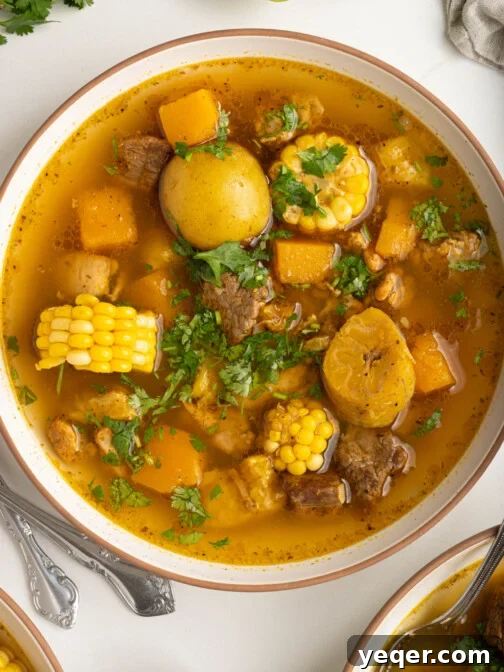
Stewed Sancocho (Puerto Rican Beef & Root Veggie Stew)
5 from 7 reviews
- Author: Salima Benkhalti
- Prep Time: 30 minutes
- Cook Time: 1 hour
- Total Time: 1 hour 30 minutes
- Yield: 6 servings 1x
- Category: Soup, Stew, Main Dish, Entree
- Method: Stewed
- Cuisine: Puerto Rican, Caribbean, Latin
- Diet: Gluten Free
Description
Sancocho is a soup with origins in the Caribbean, known for its rich flavors thanks to a blend of stewed beef, chicken, root veggies, and corn. This Puerto Rican version is loaded with flavor thanks to sofrito, sazon, and adobo seasoning, plus lots of fresh veggies like green plantain, yams, potatoes, and squash.
Ingredients
- 2 tbsp olive oil
- 1 lb beef stew meat, cut into 2 inch cubes
- 1 lb chicken (can be thighs or breasts), cut into bite sized pieces
- 2 tsp sazon seasoning
- 2 tsp adobo seasoning
- 1/2 cup sofrito
- 2 ears of corn, cut into 1 inch rounds
- 1 green plantain, peeled and cut into 1 inch rounds
- 1 yam or sweet potato, cut into 1 inch chunks
- 1 cup baby potatoes
- 1 cup squash (can be butternut, calabaza, or kabocha) peeled and cut into 1 inch cubes
- 8 cups water or broth
- salt & pepper to taste
- optional: cilantro, lime juice, and/or pique to garnish
Instructions
- Cook the meat. Heat the olive oil over medium heat in a pot before adding beef, chicken, seasonings & sofrito. Brown the meat, mixing every couple minutes to cook evenly.
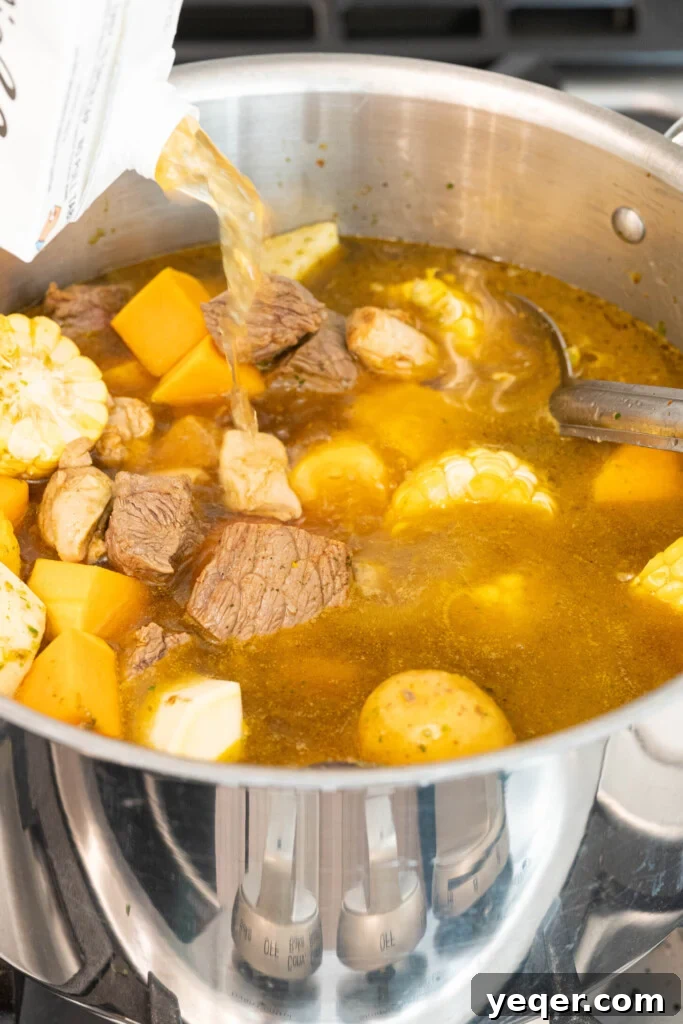
- Add the vegetables & broth. Add the vegetables to the pot, mix gently to coat with the seasonings before adding the water or broth.
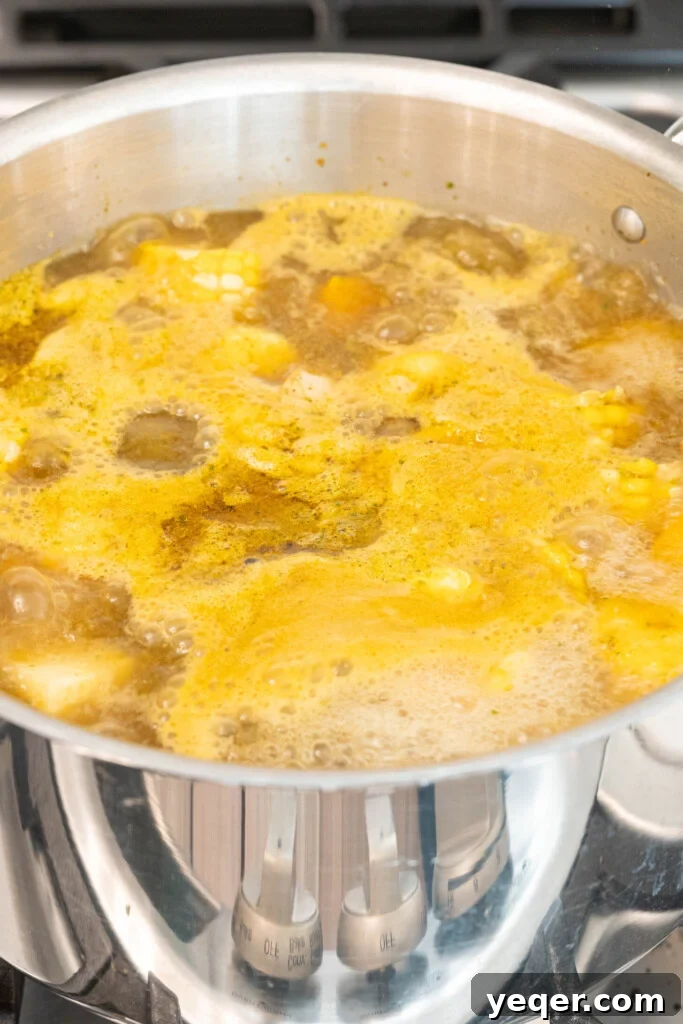
- Cook the veggies. Bring the liquid to a boil before covering, lowering & simmering for 30 minutes. Uncover and continue to simmer until the vegetables & beef are cooked through, about 20 minutes.
- Blend and season. Optional: Blend a few cups of the broth with some of the squash and plantains in a small blender for a thick broth. Taste the broth and season as needed with salt & pepper.
- Serve. Enjoy with a bowl of rice, mofongo, or tostones on the side. Garnish with cilantro, lime juice, and/or pique.
Equipment
Buy Now →
Buy Now →
Buy Now →
Buy Now →