
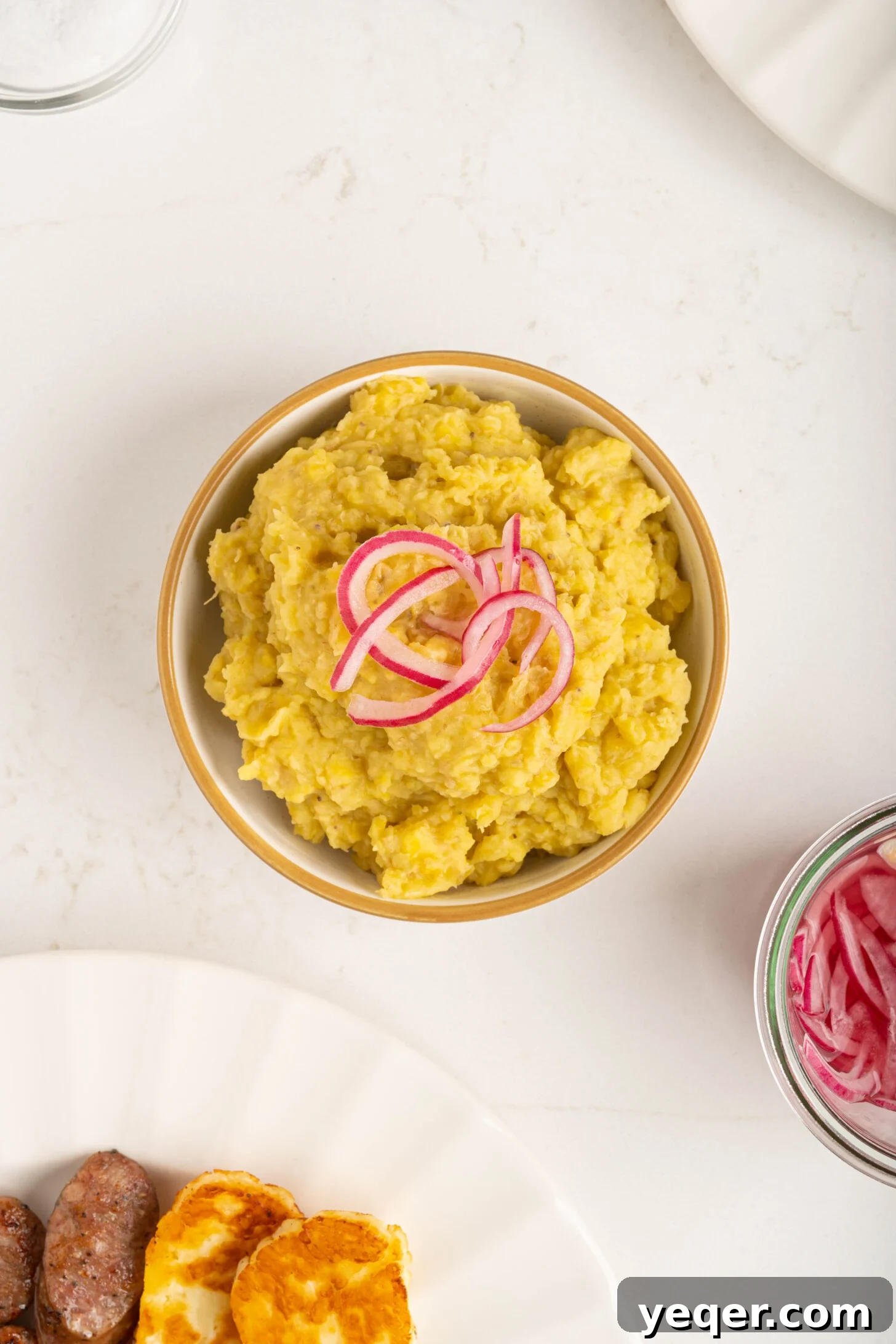
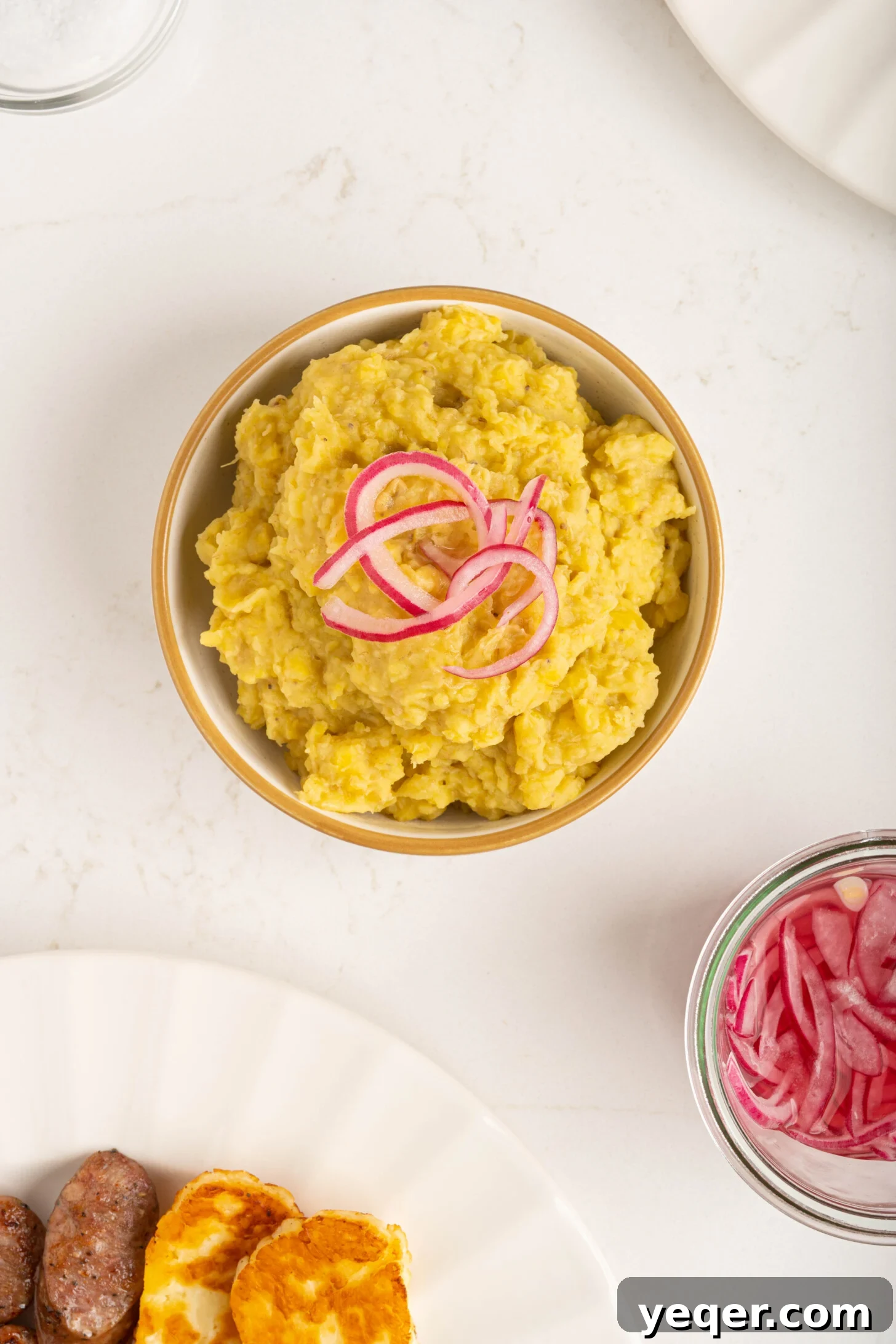
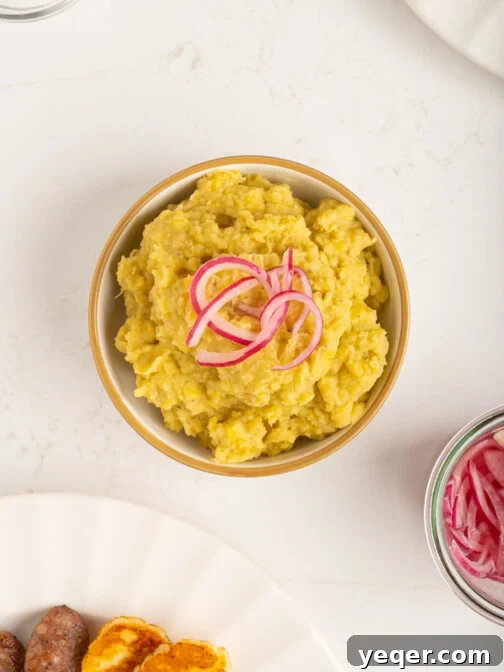
Mangu is a beloved traditional Dominican dish, a culinary cornerstone that brings warmth and flavor to any table. At its heart, it’s a simple yet incredibly satisfying preparation of boiled and expertly mashed green plantains. This delightful meal often graces Dominican breakfast tables, traditionally served alongside fried eggs, savory cheese, and succulent sausage, all crowned with a vibrant topping of tangy pickled red onions. What makes Mangu truly special is its accessibility; it can be prepared in a mere 30 minutes, making it an ideal choice for a quick yet hearty meal.
Discovering Mangu: The Heart of Dominican Breakfast
For those unfamiliar with Caribbean cuisine, the mention of “mashed plantains” might immediately bring to mind Mofongo, a popular Puerto Rican dish. While both Mangu and Mofongo utilize green plantains as their primary ingredient, they offer distinct experiences. Mangu stands out as a less heavy and wonderfully creamy mashed plantain dish, making it a versatile option as a hearty side, a filling breakfast, or even a satisfying snack.
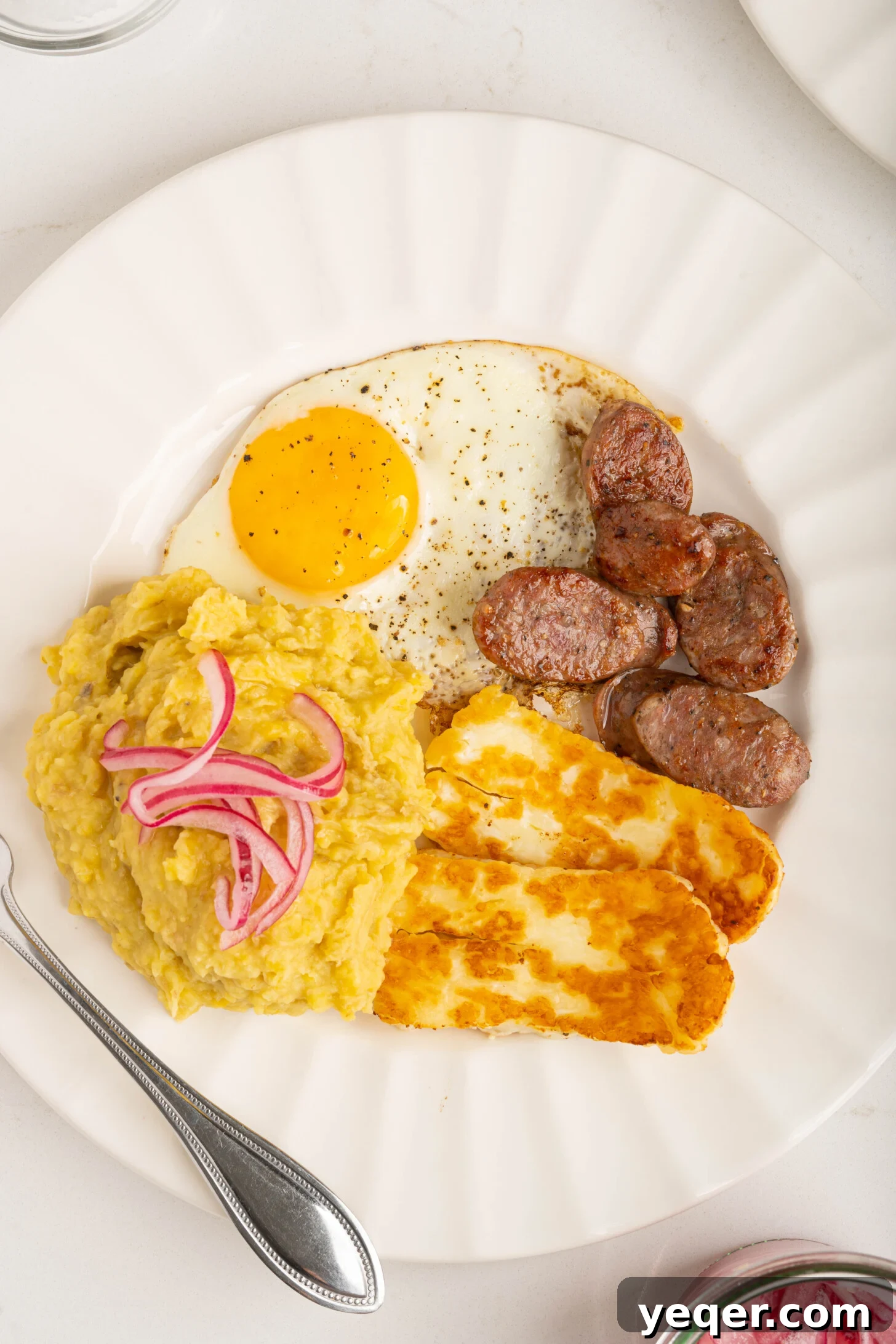
Its most iconic presentation is undoubtedly as part of a classic Dominican breakfast known as Los Tres Golpes, which translates to “The Three Hits” or “The Three Strikes.” This robust meal combines Mangu with several other traditional sides, creating a symphony of flavors and textures that is truly a staple of Dominican culture. Each component plays a vital role, from the creamy texture of the plantains to the salty richness of the cheese and the bright acidity of the onions.
The Origins and Cultural Significance of Mangu
Mangu’s roots are deeply embedded in the history and culture of the Dominican Republic. It is believed to have originated from African culinary traditions, specifically from a dish called “fufu,” brought over during the transatlantic slave trade. Over centuries, it evolved, incorporating local ingredients and tastes to become the beloved Mangu we know today. More than just a dish, Mangu represents comfort, tradition, and home for Dominicans. It’s often the first solid food many children eat and a common sight at family gatherings, celebrations, and everyday breakfasts across the island. The simple act of preparing and sharing Mangu connects generations and embodies the rich culinary heritage of the Dominican people.
Essential Ingredients for Perfect Mangu
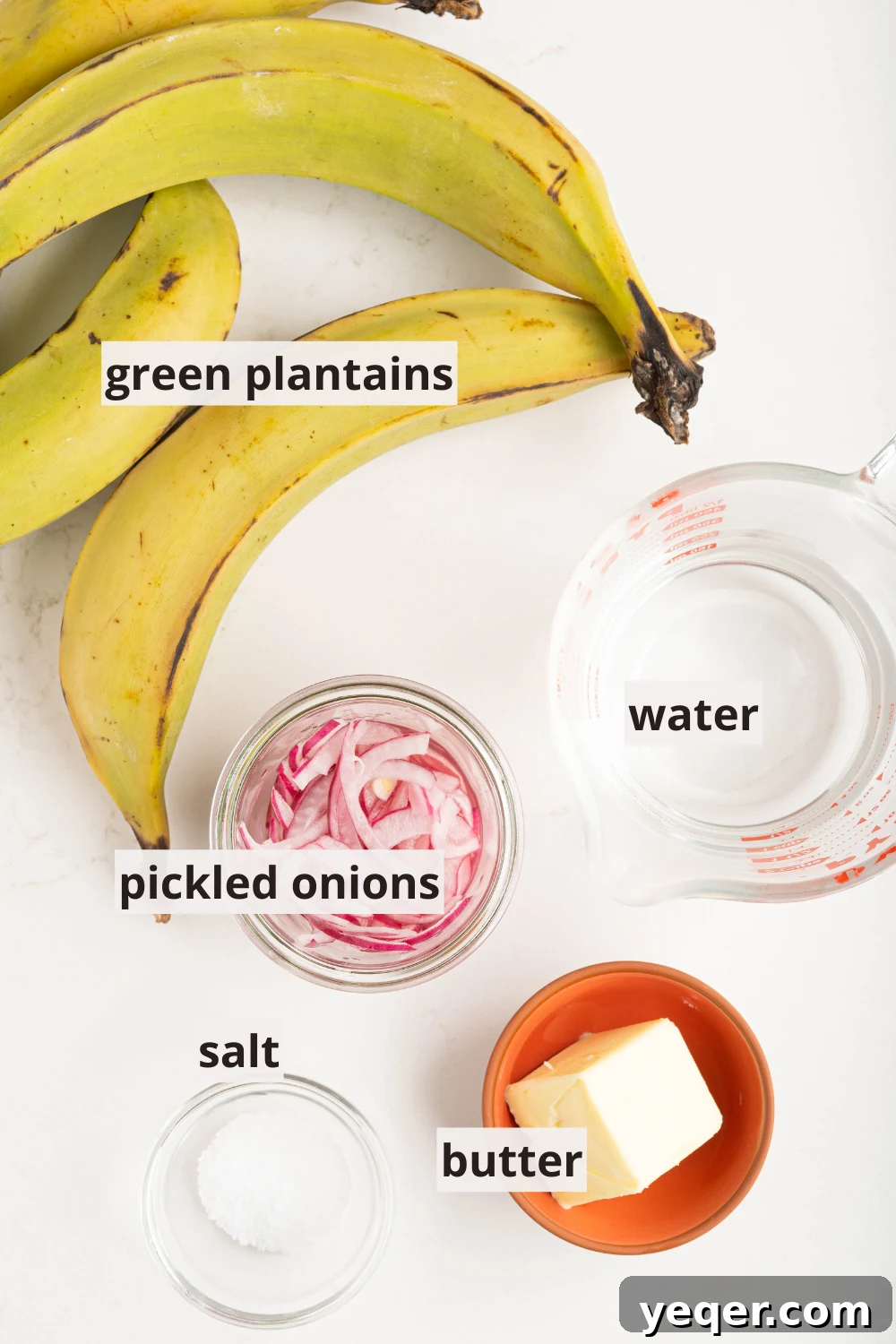
Crafting a delicious Mangu requires only a few humble ingredients, emphasizing how simplicity can lead to extraordinary flavor. Here’s a detailed look at what you’ll need to create this classic dish, along with tips for selecting the best components:
- Green Plantains: The star of the show. You’ll need about four medium-sized green plantains. Ensure they are firm, bright green, and free of any yellow or black spots, which indicate ripeness. Green plantains are starchy and hold their shape well when boiled, providing the ideal texture for mashing.
- Butter: Four tablespoons of unsalted butter, softened to room temperature, are crucial for achieving Mangu’s characteristic creamy and rich texture. Butter not only adds flavor but also helps bind the mashed plantains and contributes to their smooth consistency.
- Water: You’ll need approximately one cup of water, plus additional water for boiling the plantains. The one cup of water is primarily used during the mashing process to achieve the desired consistency, ensuring the Mangu is neither too thick nor too thin.
- Salt: A pinch of salt is necessary for seasoning the mashed plantains, enhancing their natural flavor. Additionally, a generous amount of salt should be added to the boiling water to season the plantains from the inside out, much like salting pasta water.
- Pickled Red Onions: About half a cup of pickled red onions, also known as “cebolla encebollada,” is a non-negotiable topping. Their bright, acidic, and slightly sweet flavor provides a crucial counterpoint to the rich, starchy plantains, elevating the entire dish. While store-bought are an option, making them fresh is highly recommended for the best flavor.
Having these fresh, quality ingredients on hand will ensure your Mangu is as authentic and delicious as possible.
Crafting Your Mangu: A Step-by-Step Guide
Making Mangu is a straightforward process, but paying attention to a few key details can elevate your dish from good to extraordinary. Follow these steps for perfectly smooth and flavorful Dominican mashed plantains.
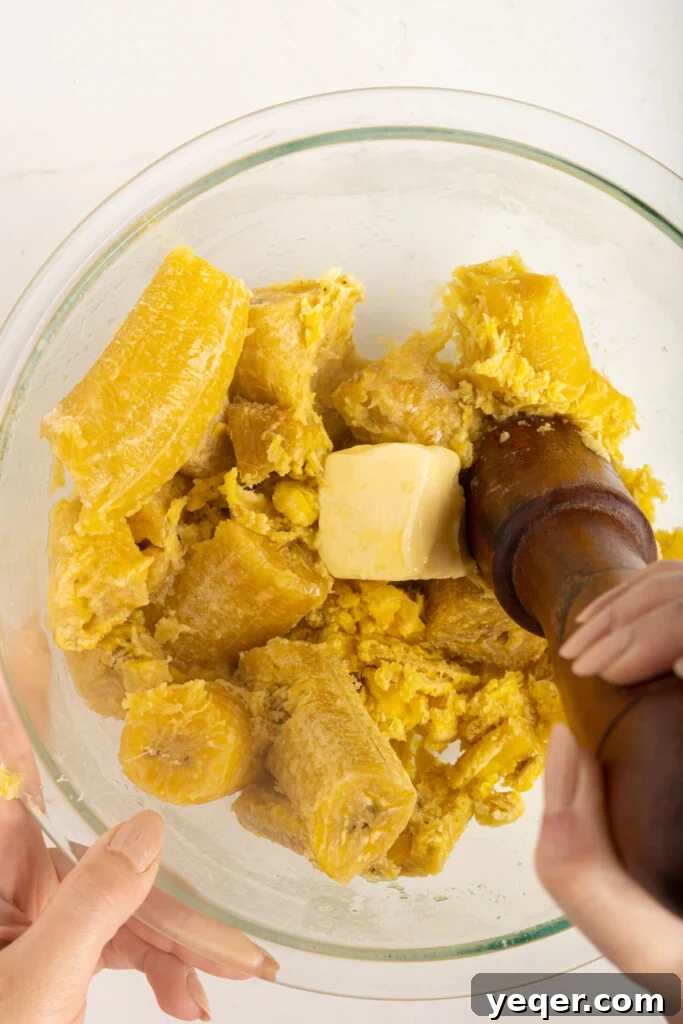
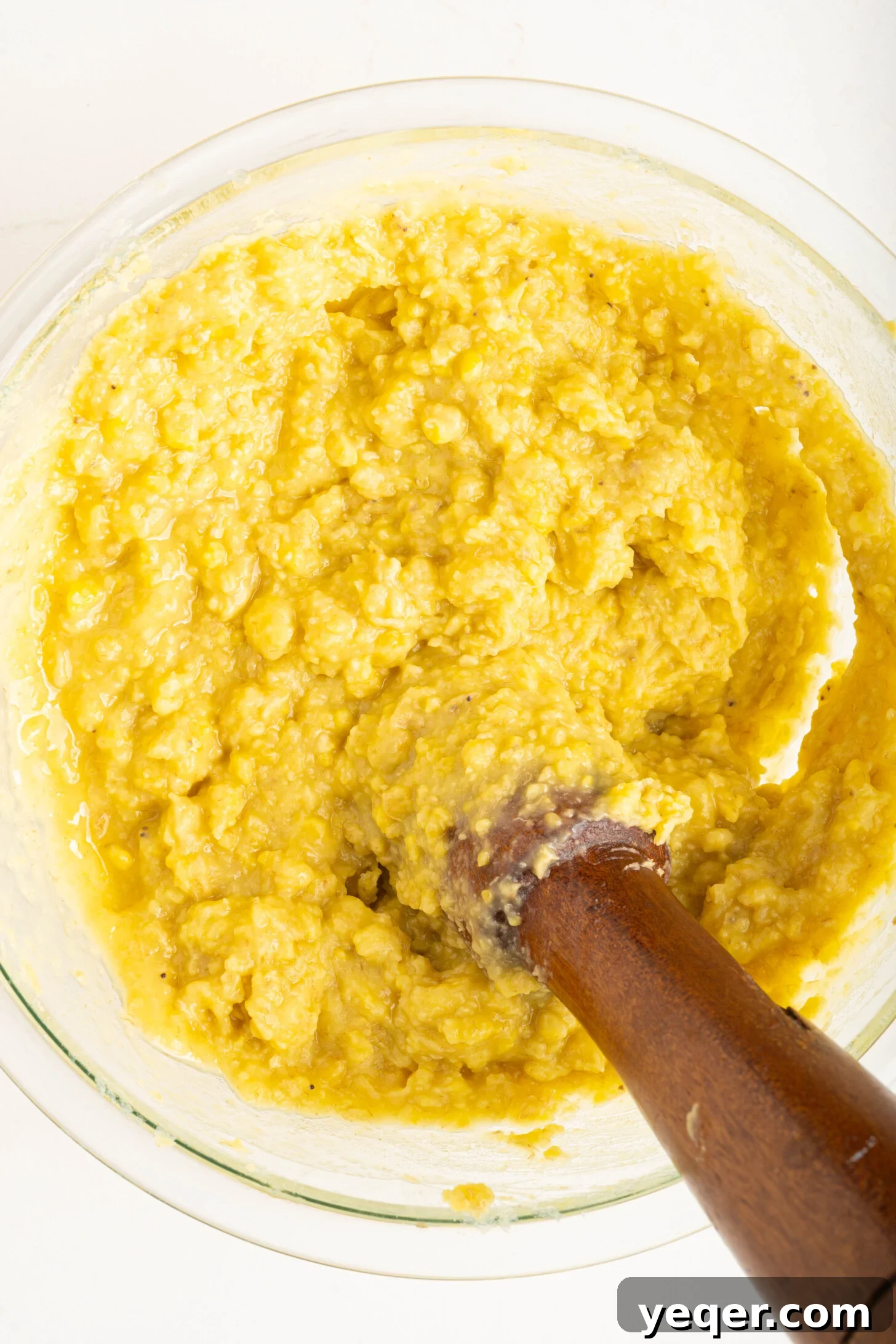
Expert Tip: Mangu is known for thickening significantly as it cools. To ensure it remains wonderfully creamy when served, aim for a consistency that is just slightly thinner than your ideal texture while it’s still warm. This allows for natural thickening without making the Mangu too dense.
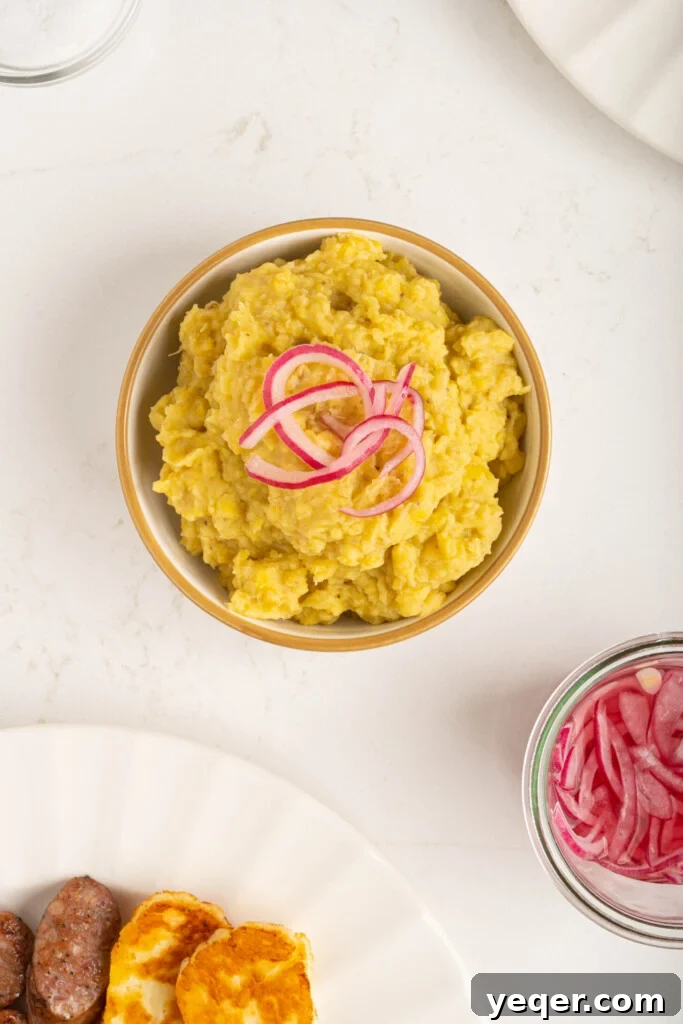
Elevating Your Mangu with Homemade Pickled Onions (Cebolla Encebollada)
The vibrant, tangy pickled red onions are not merely a garnish for Mangu; they are an absolutely essential component that elevates the entire dish. Their bright, acidic bite masterfully cuts through the rich starchiness of the plantains and the creamy richness from the butter, creating a harmonious balance of flavors that is truly addictive.
While many grocery stores now carry pre-made pickled onions, and they’re even available to buy online, making them from scratch is incredibly simple and yields superior flavor. With just three basic ingredients, you can whip up a batch in minutes. The best part? They’ll be pickling and developing their fantastic flavor while your Mangu cooks, ensuring they’re ready just in time to enjoy your traditional breakfast.
Here’s how to prepare these indispensable pickled red onions:
- In a small bowl, combine one teaspoon of salt with a quarter cup of white vinegar. Stir until the salt is mostly dissolved.
- Take half of a red onion and thinly slice it, ideally using a mandoline for uniform slices, or a very sharp knife.
- Add the thinly sliced red onion to the bowl with the salt and vinegar mixture. Toss well to ensure all the onion slices are thoroughly coated. Set the bowl aside to quick-pickle for at least 15-20 minutes, or longer for a more intense flavor. These onions will brighten in color and soften slightly as they pickle.
Los Tres Golpes: The Quintessential Dominican Breakfast Experience
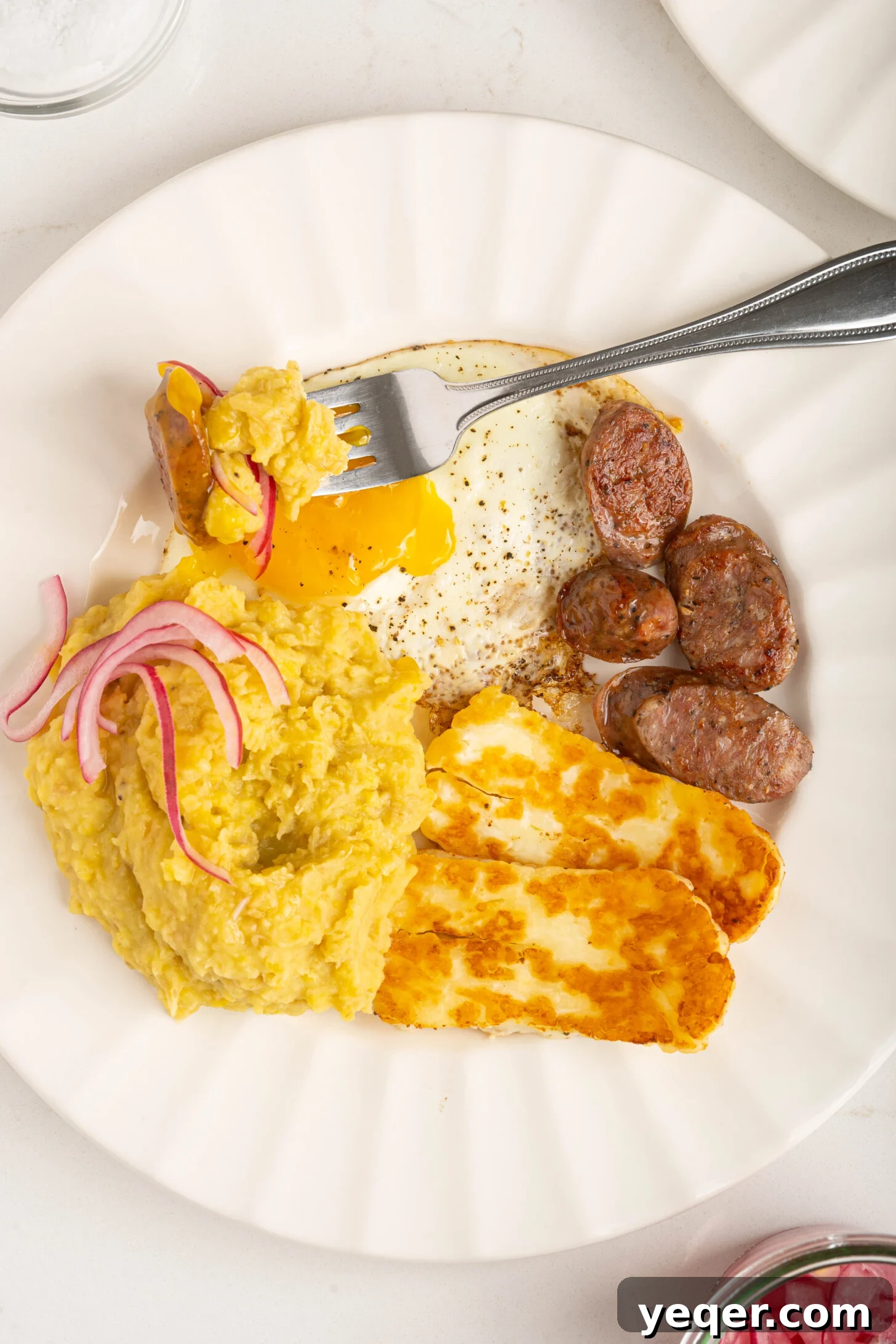
Mangu is often enjoyed on its own as a simple, comforting dish, but to truly experience a classic Dominican breakfast, it must be transformed into Los Tres Golpes. This iconic meal, whose name playfully refers to the “three hits” that accompany the Mangu, is a hearty and flavorful start to the day that is deeply ingrained in Dominican culinary tradition. Each “golpe” adds a unique dimension, creating a balanced and utterly delicious plate.
The key additions that complete this traditional ensemble are:
- Fried White Cheese (Queso Frito): This is a non-negotiable component. Dominican fried cheese is typically a semi-hard, salty white cheese that holds its shape beautifully when fried. When cooked until golden and slightly crispy on the outside, it develops a delightful chewy texture on the inside, providing a salty contrast to the creamy Mangu. This recipe is perfect for achieving authentic queso frito.
- Fried Dominican Sausage (Salami Dominicano): Savory and rich, the fried Dominican sausage adds a robust, meaty element to Los Tres Golpes. Typically pan-fried until slightly crispy, it offers a distinct flavor and texture that perfectly complements the other components. Its hearty nature makes the breakfast truly substantial.
- A Fried Egg: Usually served sunny side up or over easy, a freshly fried egg adds a touch of richness and comfort. The runny yolk, when broken, often mingles with the Mangu and other ingredients, creating an even more indulgent experience.
And, of course, no plate of Los Tres Golpes would be complete without a generous helping of those bright, tangy pickled red onions, tying all the flavors together with their essential acidic zest. Together, these elements create a meal that is not only filling but also a true celebration of Dominican flavor and hospitality.
Beyond Breakfast: Versatile Ways to Enjoy Mangu
While Mangu shines as a breakfast staple, its versatility extends far beyond the morning meal. Its mild, starchy flavor makes it an excellent accompaniment to a variety of dishes throughout the day. Consider serving Mangu as a comforting side dish for lunch or dinner. It pairs wonderfully with roasted or grilled meats, such as chicken or pork, soaking up their flavorful juices. Seafood, especially pan-seared or grilled fish, also finds a delightful partner in creamy Mangu. For a lighter, vegetarian option, Mangu can be served alongside black beans and avocado, creating a wholesome and satisfying plant-based meal. Don’t be afraid to experiment with different toppings beyond pickled onions; a sprinkle of fresh cilantro, a drizzle of olive oil, or a dash of hot sauce can introduce new dimensions of flavor. Mangu is truly a culinary canvas, ready to adapt to your taste and occasion.
Storage and Reheating Tips for Mangu
Mangu, like many mashed dishes, is best enjoyed fresh off the stove when it’s at its creamiest and warmest. However, if you find yourself with leftovers, they can be stored and reheated. To store, transfer cooled Mangu to an airtight container and refrigerate for up to 3-4 days. When reheating, Mangu tends to thicken considerably and can become quite stiff. To restore its creamy texture, place the Mangu in a saucepan over low to medium heat, adding a tablespoon or two of milk, water, or even chicken broth. Stir continuously, breaking up any lumps, until it becomes smooth and hot throughout. You might need to add more liquid until your desired consistency is achieved. Avoid microwaving Mangu if possible, as it can dry out unevenly, making it harder to get that characteristic creamy texture back.
Buen Provecho,

Print Recipe
30 Minute Mangu (Dominican Mashed Plantains)
- Author: Salima Benkhalti
- Prep Time: 10 minutes
- Cook Time: 20 minutes
- Total Time: 30 minutes
- Yield: 4 servings
- Category: breakfast, side dish
- Method: boiled
- Cuisine: Dominican, Latin
- Diet: Gluten Free
Description
Mangu is a classic Dominican dish made with boiled and mashed green plantains that comes together in just 30 minutes. It’s typically enjoyed as a breakfast, served with eggs, cheese, and sausage, and topped with pickled red onion.
Ingredients
- 1/2 cup pickled red onions
- 4 green plantains
- 4 tbsp butter, softened to room temperature
- 1 cup water + additional water for boiling the plantains
- a pinch of salt + additional salt for salting the water
Instructions
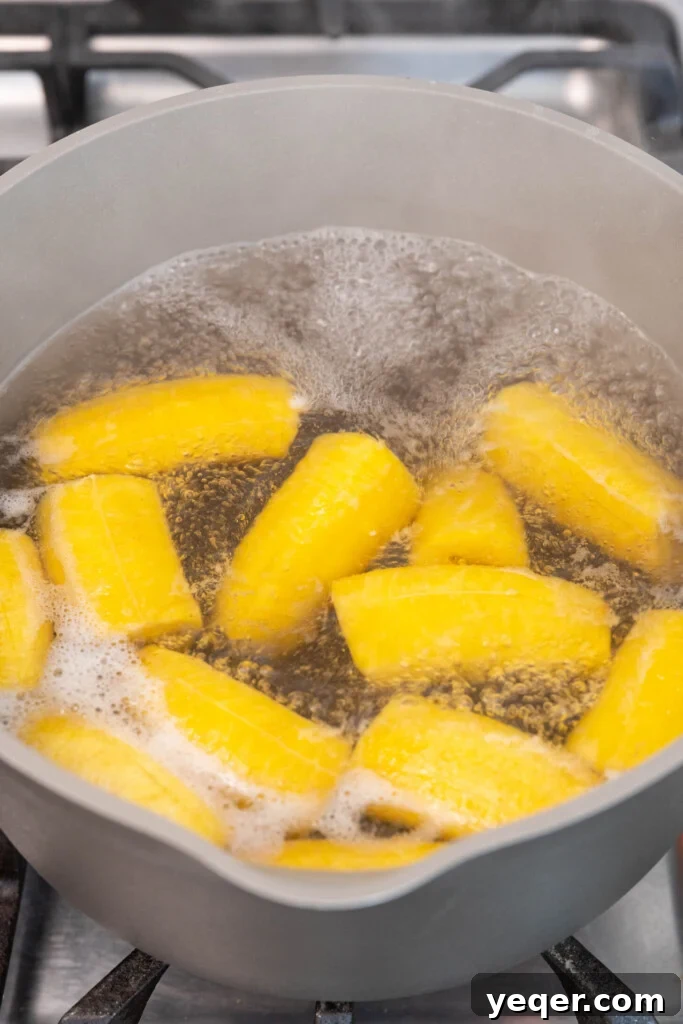
- Boil the plantains. Start by bringing a pot of salted water to a boil. Peel and slice the plantains into slices small enough to fit into your pot. Once the water is boiling, toss in the plantains and boil until fork tender, about 20 minutes.
- Mash the plantains. Strain the plantains from the water and transfer them to a pilon or bowl with the butter. Mash until they become consistent and creamy, adding water a few tablespoons at a time, until the texture is where you want it. Season with salt to taste.
- Fry the onions. In a saucepan, sauté the pickled onions until they begin to turn translucent.
- Serve. Enjoy the mangu with the fried pickled onions on top. Feel free to serve with a fried egg, fried white cheese, and Dominican sausage.
Equipment
Pilon (Mortar & Pestle)
Buy Now →
Potato Masher
Buy Now →
Sauté Pan
Buy Now →
Notes
How to make the pickled onions:
- Start by mixing together a teaspoon of salt and a quarter a cup of vinegar in a bowl.
- Thinly slice half of a red onion and toss into the bowl with the salt and vinegar. Mix to coat and set aside to quick pickle.