
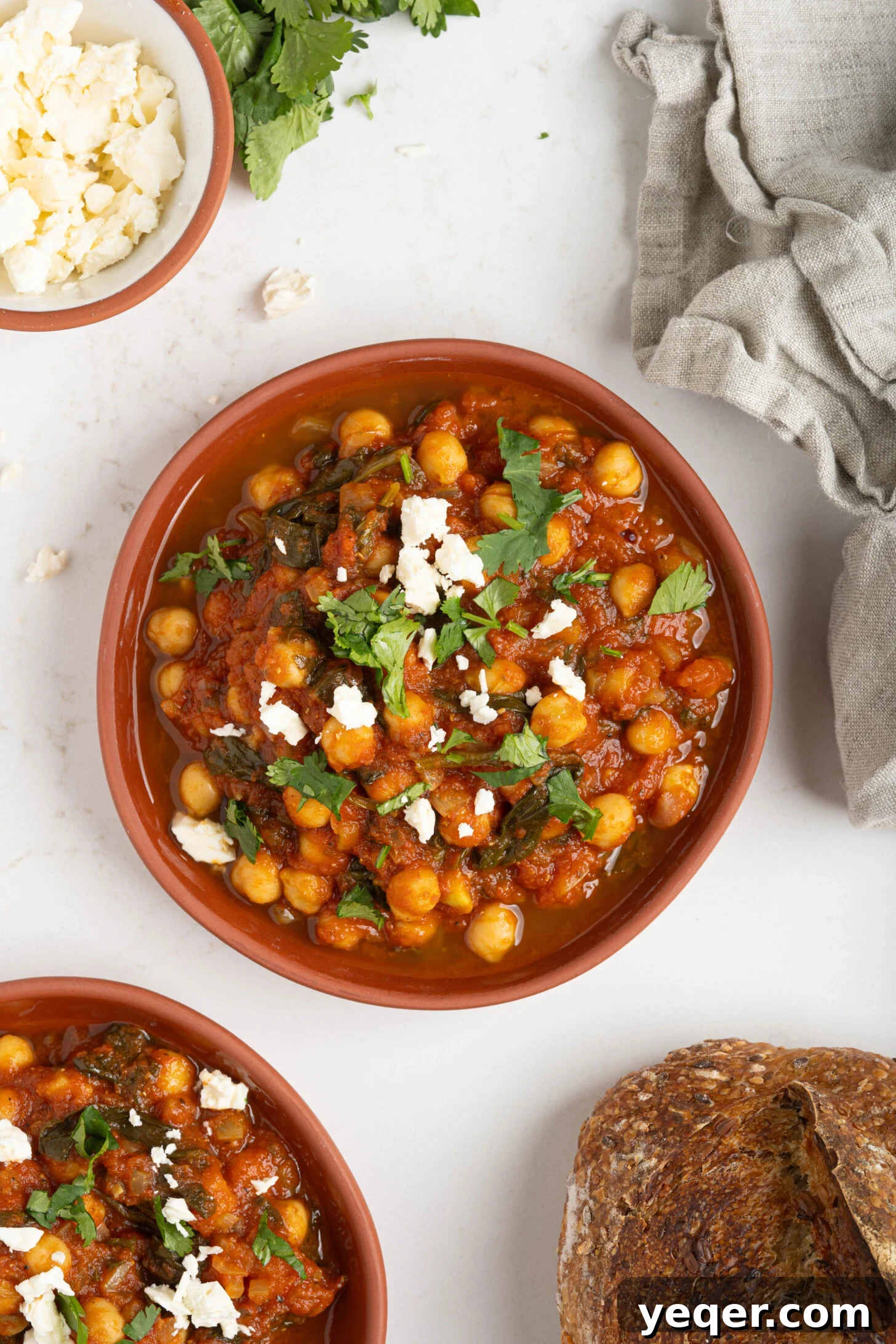
Embark on a culinary journey to North Africa with this exquisite recipe for Moroccan Stewed Chickpeas with Tomatoes. This vibrant, aromatic dish will effortlessly elevate your vegetarian and vegan recipe repertoire. Crafted from humble canned chickpeas simmered to perfection in a deeply fragrant, rich tomato-based broth, this hearty meal is a testament to quick and delicious home cooking, coming together on your stovetop in just 30 minutes. It’s the ultimate comforting main course, especially welcoming during the colder months, and perfectly served alongside a warm loaf of fresh bread, a fluffy bowl of couscous, or simply a bed of steaming rice. Prepare to tantalize your taste buds with a symphony of Moroccan spices that make this dish truly unforgettable.
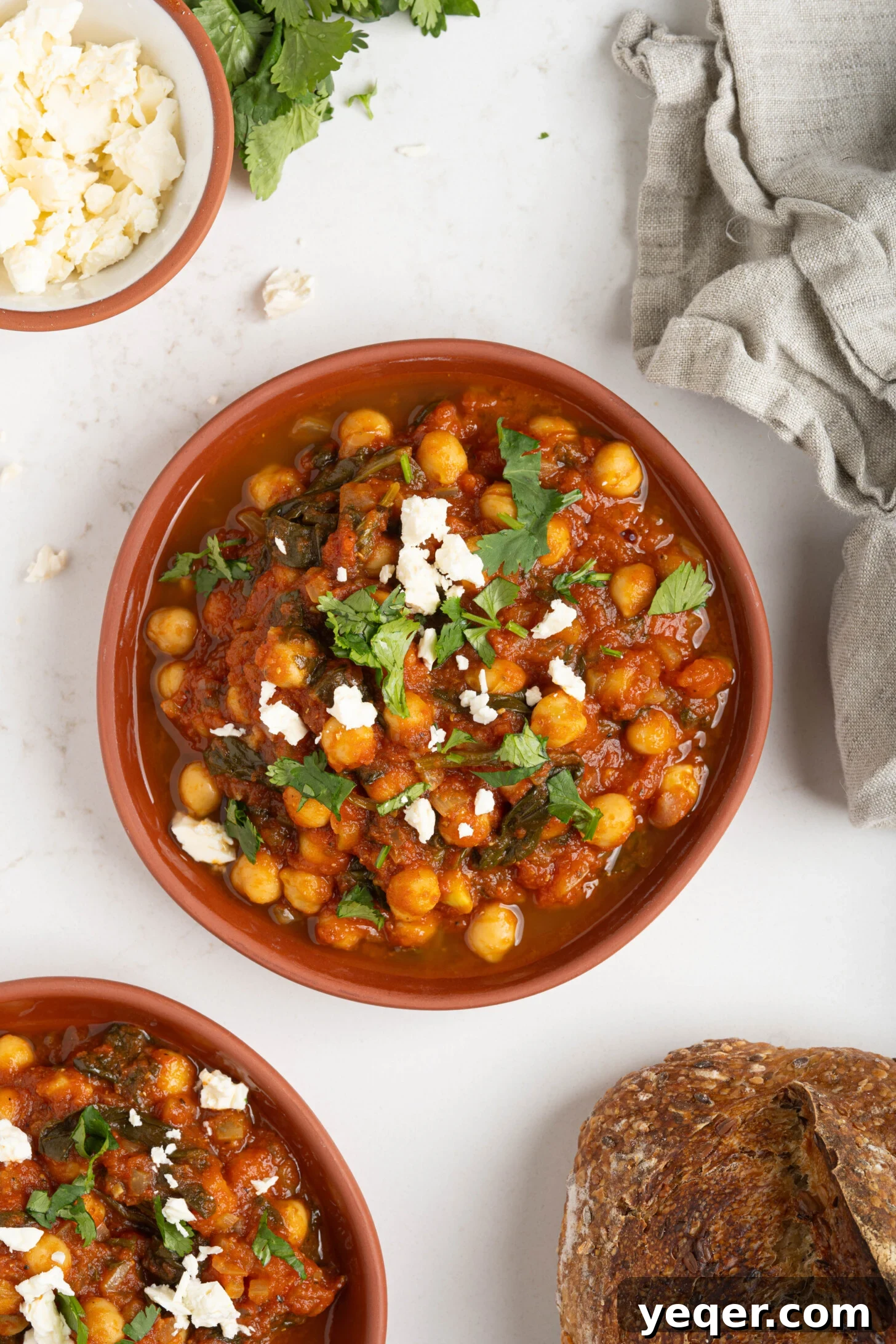
Why You’ll Love This Easy Moroccan Chickpea Stew
This Moroccan stewed chickpeas recipe is a masterpiece of convenience and flavor. Packed with wholesome ingredients and robust spices commonly found in authentic Moroccan cuisine, it offers a quick escape to the bustling souks of Marrakech with every spoonful. Beyond its tantalizing taste, this dish is incredibly:
- Hearty and Satisfying: Chickpeas provide a substantial texture and excellent plant-based protein, making this a filling meal on its own.
- Effortlessly Easy to Make: Designed for busy weeknights, it requires minimal fuss and can be prepared in a single pot, like a Dutch oven or a traditional tagine, if you have one.
- Completely Plant-Based: Naturally meat-free and dairy-free, it’s an ideal choice for vegans, vegetarians, or anyone looking to incorporate more wholesome plant-based meals into their diet. Even in households that typically enjoy meat, the sheer ease and deliciousness of this 30-minute wonder make it a beloved staple, offering a welcome break from preparing raw meat.
- Versatile and Customizable: While perfect as is, it’s also wonderfully adaptable. Feel free to add other vegetables or adjust the spice levels to suit your preference.
Learn how to make fluffy couscous to serve alongside this stew, or if you’re feeling adventurous, discover how to cook dried chickpeas from scratch for an even deeper, earthier flavor profile.
The Rich Tapestry of Moroccan Cuisine
Moroccan cuisine is renowned globally for its vibrant colors, complex aromas, and incredibly diverse flavors. It’s a culinary tradition deeply influenced by Arab, Berber, Andalusian, and Mediterranean cultures, resulting in a unique fusion of sweet, savory, and spicy notes. At its heart are fresh, seasonal ingredients combined with an extensive array of spices that transform simple dishes into extraordinary feasts.
Common elements include aromatic spices like cumin, coriander, turmeric, ginger, and saffron, often blended into signature mixes like Ras el Hanout. Fresh herbs such as cilantro and parsley are ubiquitous, along with staples like olives, preserved lemons, dried fruits, and a variety of vegetables and legumes. Chickpeas, in particular, are a cornerstone of many Moroccan stews and tagines, prized for their creamy texture and ability to absorb the rich flavors of the broth.
This stewed chickpea recipe perfectly encapsulates the spirit of Moroccan cooking: it’s wholesome, intensely flavorful, and designed to be shared. It offers a taste of this rich culinary heritage in a convenient, weeknight-friendly format, making it an excellent introduction for those new to Moroccan dishes or a cherished go-to for seasoned enthusiasts.
Key Ingredients: The Heart of the Stew
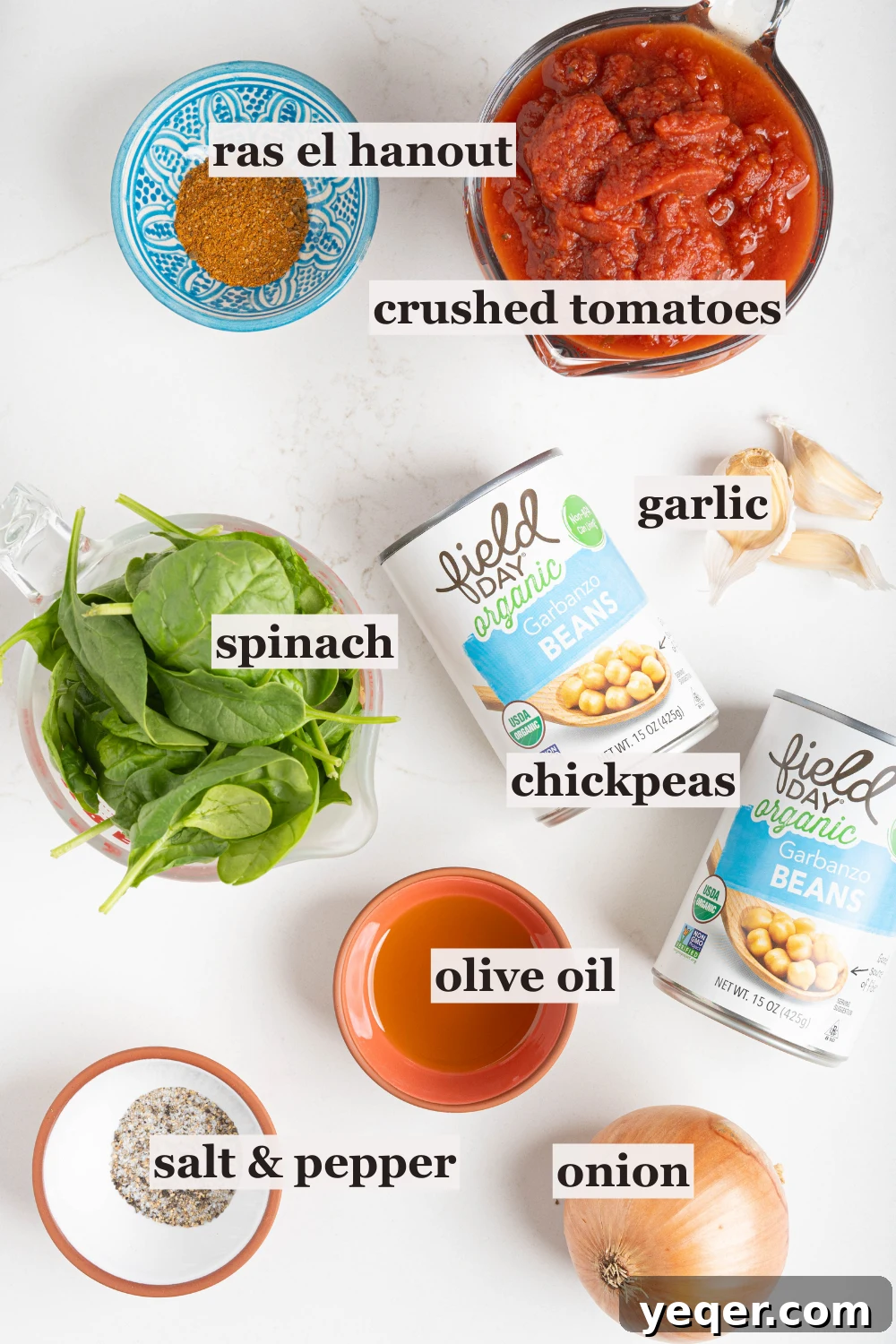
The beauty of this Moroccan chickpea stew lies in its simple yet powerful combination of ingredients. Each component plays a crucial role in building the layers of flavor that define this dish. While exact quantities will be listed in the full recipe card below, let’s explore the stars of our stew:
- Olive Oil: The foundation for sautéing our aromatics, providing a rich, fruity base and helping to bloom the spices.
- Onions & Garlic: These fundamental aromatics are essential for building a deep flavor profile. Minced and sautéed until fragrant, they sweeten and soften, creating the savory backbone of the stew.
- Ras el Hanout: This is the soul of our Moroccan stew. Meaning “head of the shop,” it’s a complex spice blend that can contain dozens of different spices, typically including cardamom, clove, cinnamon, coriander, nutmeg, mace, ginger, paprika, and turmeric. It imparts a warm, earthy, slightly sweet, and aromatic depth that is truly distinctive.
- Tomato Puree: Forms the luscious, slightly tangy, and robust base of our broth. It provides color and acidity, balancing the richness of the spices. Using a good quality canned tomato puree will make a significant difference in the final taste.
- Canned Chickpeas: The star legume! Convenient and quick, canned chickpeas are tender and absorb all the beautiful flavors of the broth. They’re an excellent source of plant-based protein and fiber, contributing to the stew’s hearty nature. (For those interested, learn how to cook chickpeas from scratch here.)
- Water or Vegetable Broth: The liquid component that brings the stew together, allowing the flavors to meld and the chickpeas to simmer. Vegetable broth will add an extra layer of savory depth compared to plain water.
- Fresh Spinach: Stirred in at the end, spinach wilts beautifully, adding a touch of vibrant green, a boost of nutrients, and a subtle earthy flavor that complements the richness of the stew.
- Salt & Pepper: Essential for seasoning to taste, enhancing all the other flavors.
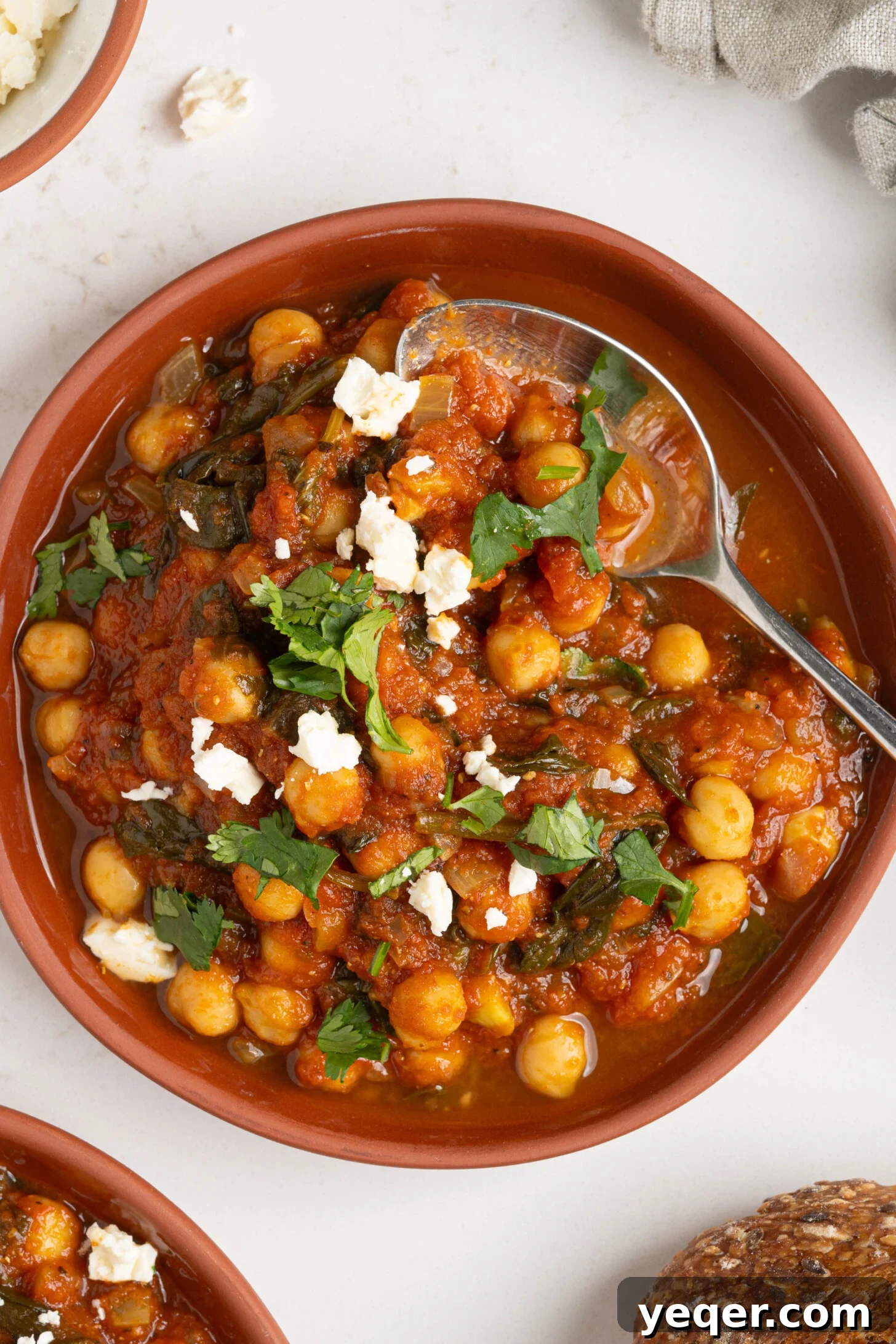
- Optional Garnishes: Crumbled feta (if not strictly vegan) or fresh minced cilantro add a burst of freshness, tang, and visual appeal, elevating the final presentation.
For a deeper dive into the flavors, the best Ras el Hanout blends, or how to create your own from individual spices, read on!
Step-by-Step Instructions for Moroccan Stewed Chickpeas
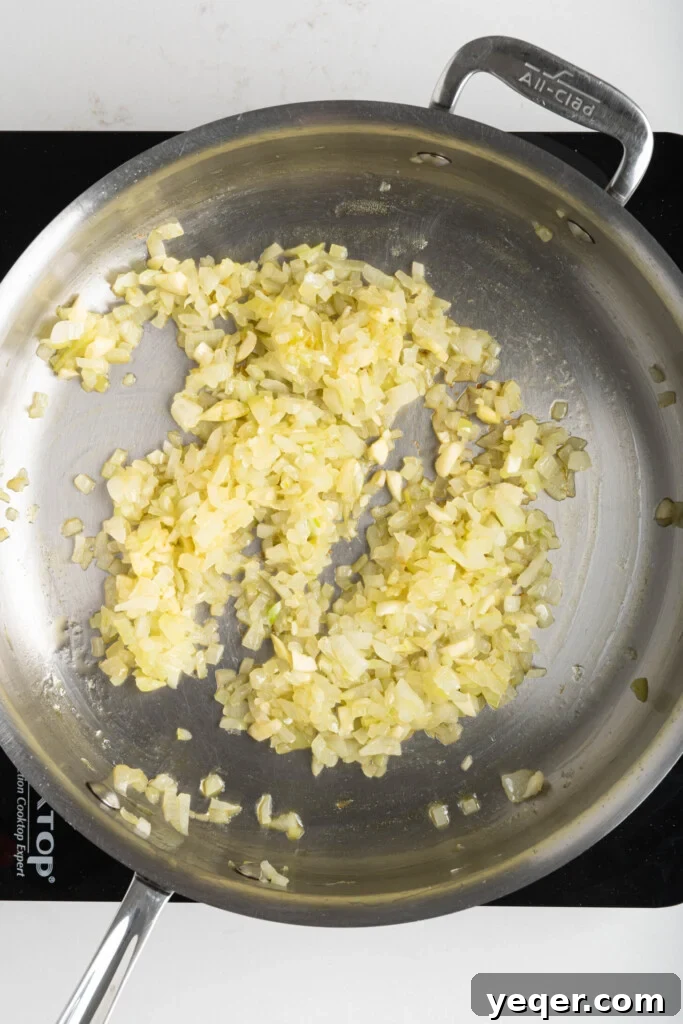
Creating this flavorful Moroccan chickpea stew is a straightforward process, making it perfect for both novice and experienced cooks. Follow these simple steps to bring this delightful dish to your table:
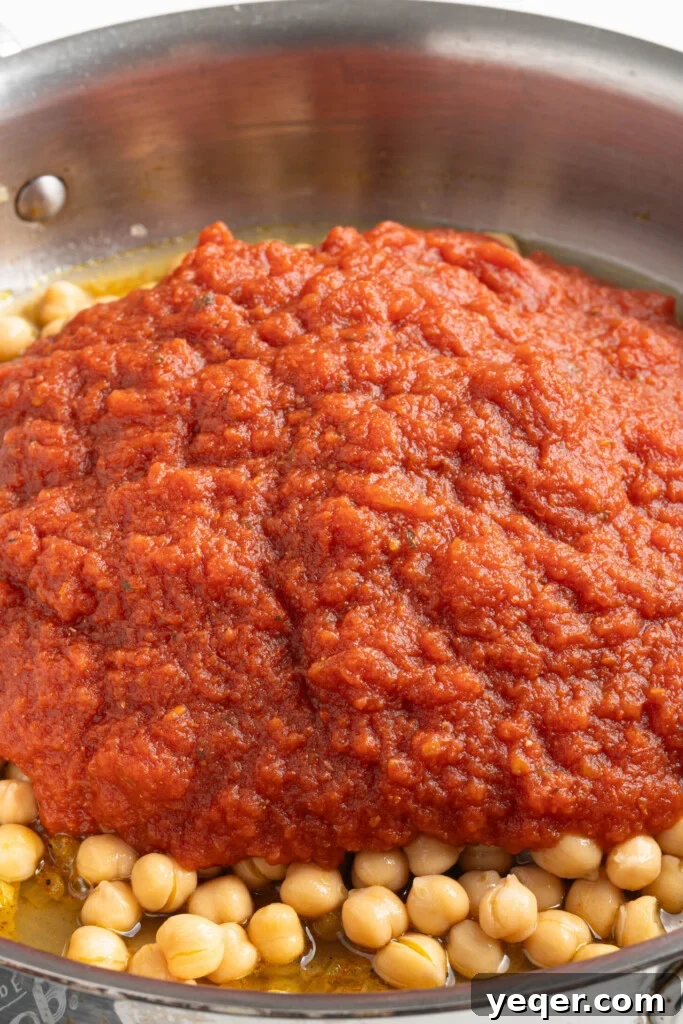
Chef’s Note: If using dried chickpeas, remember to soak 1 cup of dried chickpeas overnight. Drain them, add to a fresh pot of water, bring to a boil, then reduce to a simmer and cook for approximately 1.5 hours, or until they are perfectly fork-tender. Drain completely before adding to the stew. This preparation results in roughly 2.5 cups of cooked chickpeas, equivalent to two 14oz cans.
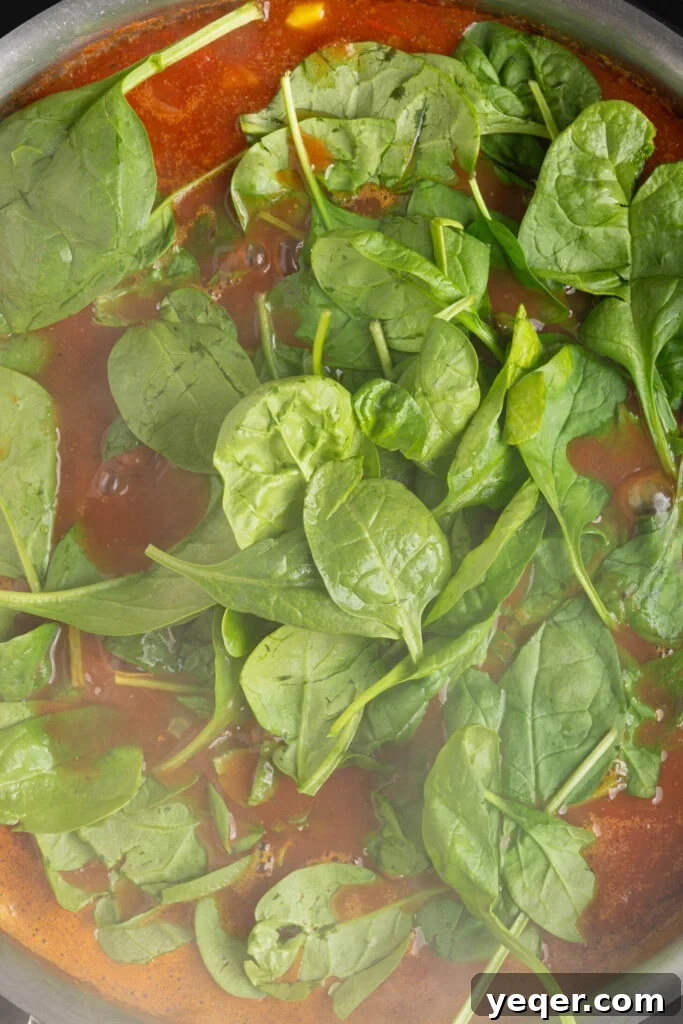
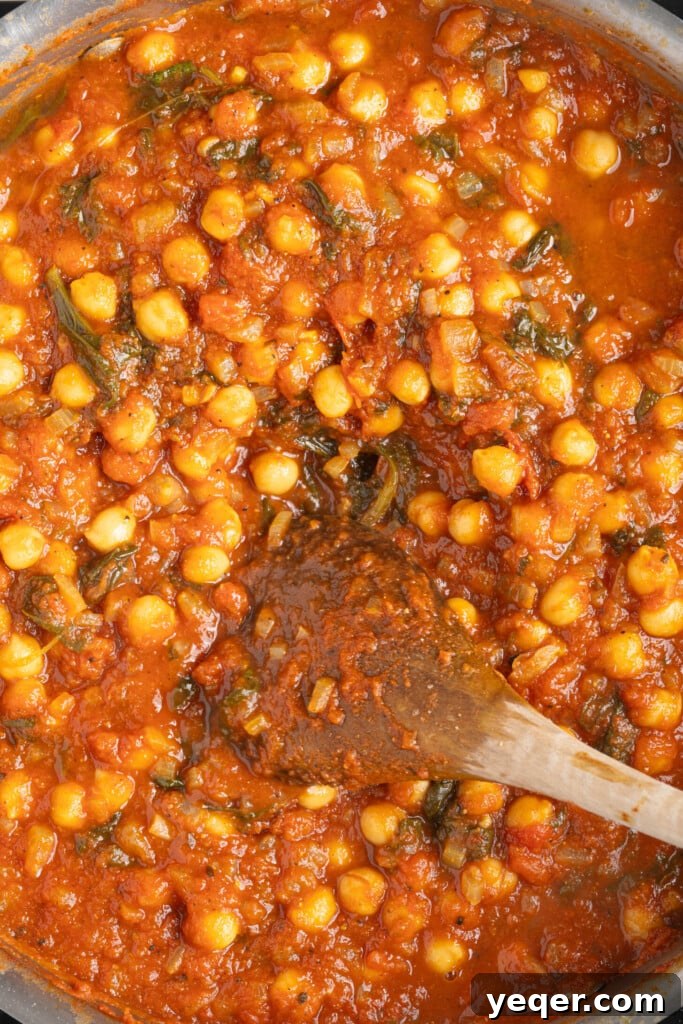
Ras el Hanout Substitute: If you can’t find this unique spice blend, you can always make your own Ras el Hanout from scratch for the freshest flavor, or buy a quality jar online. Alternatively, a good approximation can be achieved by combining equal parts ground cumin, ground cinnamon, ground ginger, black pepper, and ground turmeric. While not an exact match, it will still lend a wonderful warm, spiced flavor to your stew.
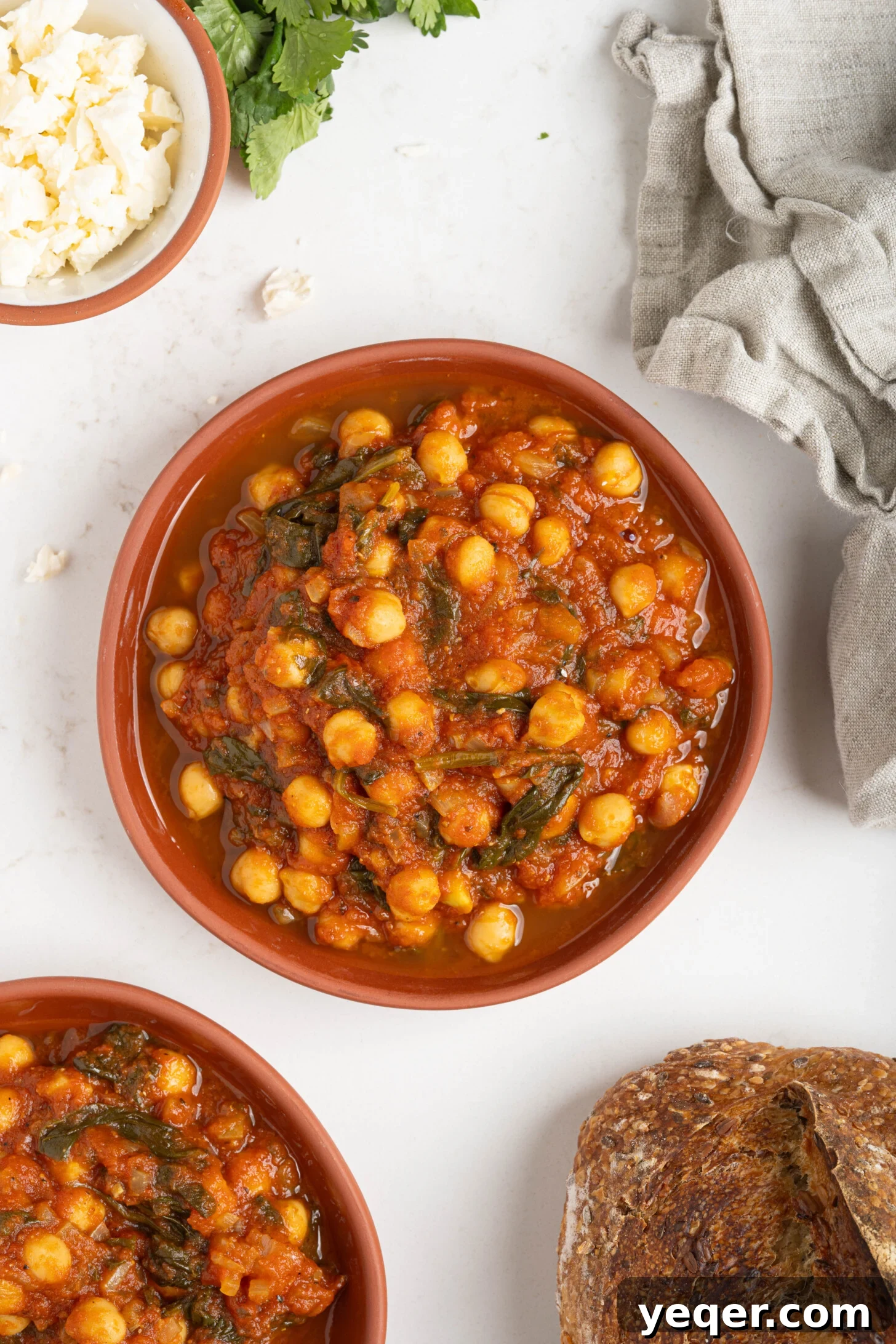
Serving Suggestions: Completing Your Moroccan Feast
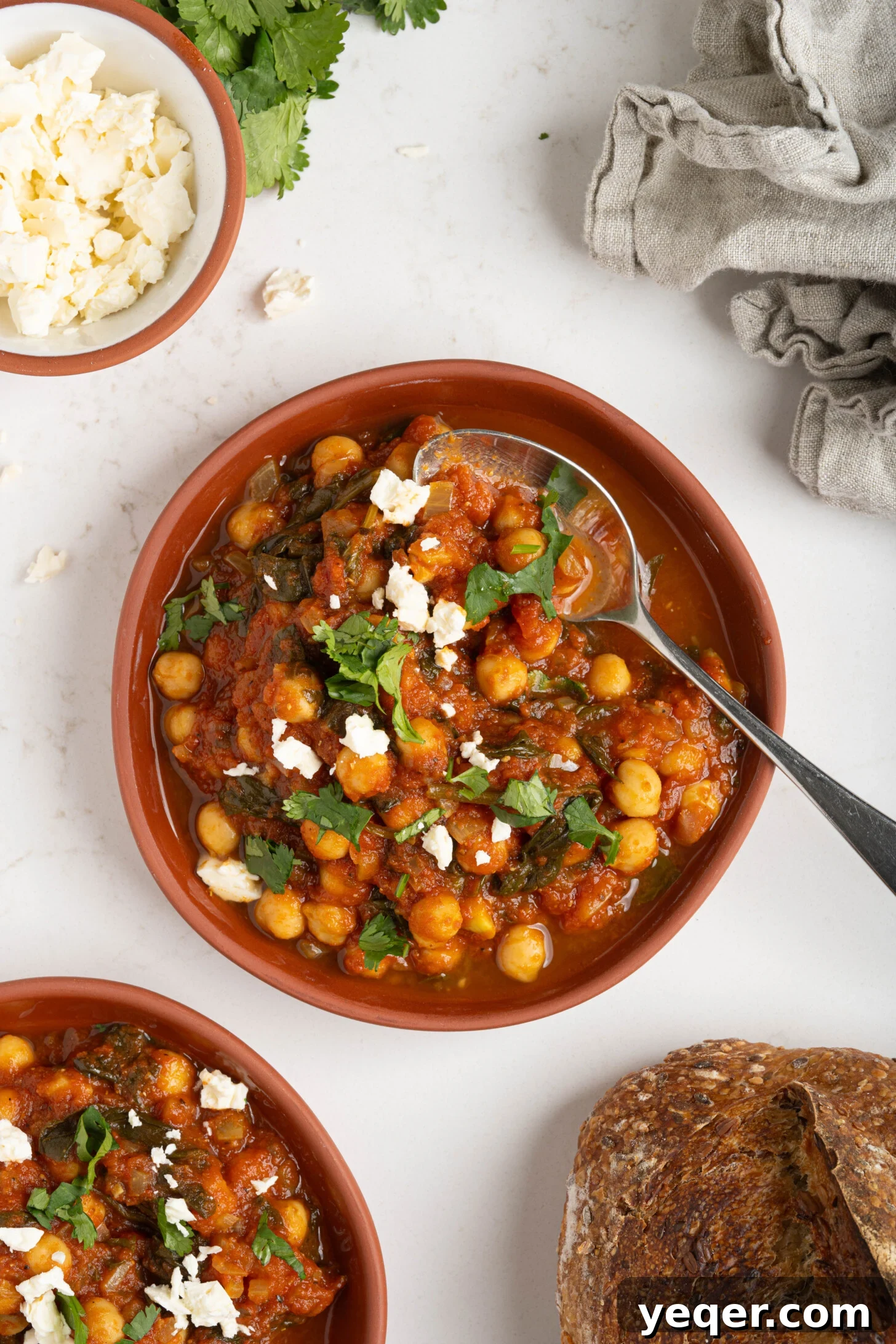
The rich, aromatic, and deeply satisfying broth of these Moroccan stewed chickpeas is designed to be savored, making it incredibly versatile when it comes to serving. The perfect accompaniment allows you to scoop up every last drop of the flavorful sauce and fully appreciate the stew’s complexity. Here are some of our favorite ways to enjoy this tagine-inspired dish:
- Moroccan Bread (Khobz): There’s truly nothing better than tearing off a piece of warm, rustic Moroccan bread (khobz) and using it to soak up the luxurious sauce. Its soft interior and slightly crusty exterior are ideal for this purpose.
- Fluffy Couscous: A classic pairing, a bed of light and fluffy couscous provides a wonderful contrast in texture and a neutral canvas that highlights the stew’s bold flavors.
- Steamed Rice: For a gluten-free option or simply a different texture, serve the chickpeas over a mound of plain steamed white or brown rice.
- Toasted Pita Bread: Quick and convenient, toasted pita bread makes an excellent dipper for the savory broth.
- Fresh Herbs: A generous sprinkle of fresh cilantro or parsley adds a bright, herbaceous note that cuts through the richness of the stew.
- Plain Yogurt or Vegan Sour Cream: A dollop of plain yogurt (or a dairy-free alternative) on top adds a creamy, tangy element that cools and balances the spices.
- Side Salad: A simple, crisp green salad with a light vinaigrette provides a refreshing counterpoint to the warm, spiced stew.
- Roasted Vegetables: Enhance the vegetable content by serving with a side of roasted root vegetables like carrots, sweet potatoes, or parsnips.
These stewed chickpeas also pair wonderfully with other authentic Moroccan dishes to create a more expansive meal:
Using Dried Chickpeas: An Alternative Preparation
While this recipe prioritizes speed and convenience by utilizing canned chickpeas, which are perfectly delicious and always recommended for a 30-minute meal, you can certainly opt for dried chickpeas for an even richer, earthier flavor and a slightly firmer texture. Using dried chickpeas requires a bit more foresight and preparation, as they need to be rehydrated and cooked from scratch.
Preparing Dried Chickpeas from Scratch:
- Soak Overnight: The night before you plan to make your stew, place 1 cup of dried chickpeas in a large bowl. Cover them with at least 3-4 inches of cold water, as they will expand significantly. Let them soak at room temperature overnight, or for at least 8-12 hours.
- Rinse and Cook: The next day, drain the soaking water and rinse the chickpeas thoroughly under cold running water. Transfer the soaked chickpeas to a large pot and cover them with fresh cold water by several inches.
- Simmer until Tender: Bring the water to a rolling boil over high heat, then immediately reduce the heat to a gentle simmer. Cover the pot and cook for approximately 1 hour to 1 hour and 30 minutes, or until the chickpeas are perfectly fork-tender but still hold their shape. The cooking time can vary based on the age of the chickpeas, so test for doneness.
- Drain and Use: Once cooked, drain all the liquid from the chickpeas before incorporating them into your Moroccan stew recipe.
One cup of dried chickpeas will yield approximately 2 ½ to 3 cups of cooked chickpeas, which is roughly equivalent to two standard 14-ounce cans or about 28 ounces of canned chickpeas. While the extra step adds to the total preparation time, the superior texture and flavor of freshly cooked chickpeas are often worth the effort for a truly authentic and deeply satisfying stew.
Tips for Success and Recipe Variations
To ensure your Moroccan Stewed Chickpeas turn out perfect every time, and to inspire you to make it your own, consider these tips and variations:
- Don’t Skimp on Sautéing: Taking the time to properly sauté the onions until translucent and fragrant, and then blooming the Ras el Hanout in the hot oil, are critical steps for building a deep, complex flavor base. This technique releases the full aromatic potential of the spices.
- Adjust Spice Levels: If you prefer a spicier kick, consider adding a pinch of cayenne pepper or a small amount of harissa paste along with the Ras el Hanout. For a milder stew, stick to the recommended amount of spice blend.
- Enhance with Vegetables: This stew is incredibly adaptable. Feel free to toss in other quick-cooking vegetables during the simmering phase. Diced carrots, bell peppers, zucchini, or even green beans would make excellent additions, boosting both nutrition and texture.
- Lemon Brightness: A squeeze of fresh lemon juice just before serving can brighten all the flavors and add a zesty finish. A few slivers of preserved lemon, if available, would also be a fantastic, authentic Moroccan addition.
- Garnish Generously: Don’t underestimate the power of fresh herbs! Cilantro is traditional and adds a wonderful freshness. A sprinkle of chopped fresh parsley can also be lovely.
- Sweetness Balance: Some Moroccan stews incorporate a touch of sweetness. If you find your stew a bit too acidic from the tomatoes, a teaspoon of sugar or a drizzle of maple syrup can help balance the flavors.
- Make Ahead: This stew tastes even better the next day as the flavors have more time to meld. It’s a fantastic meal prep option for lunches or quick dinners throughout the week. Store in an airtight container in the refrigerator for up to 3-4 days.
The Nutritional Powerhouse: Chickpeas
Beyond being delicious, chickpeas are a nutritional powerhouse, making this Moroccan stew not only flavorful but also incredibly good for you. These versatile legumes are packed with benefits:
- Rich in Protein: Chickpeas are an excellent source of plant-based protein, crucial for muscle repair, growth, and overall body function. This makes them a satisfying choice for vegetarians, vegans, and anyone looking to reduce their meat intake.
- High in Fiber: Loaded with dietary fiber, chickpeas promote healthy digestion, help regulate blood sugar levels, and contribute to a feeling of fullness, which can aid in weight management.
- Essential Minerals: They provide vital minerals such as iron, magnesium, potassium, and zinc, which are important for energy production, bone health, nerve function, and immune support.
- Vitamins: Chickpeas are a good source of B vitamins, including folate, which is essential for cell growth and metabolism.
- Heart Health: The fiber and nutrients in chickpeas can contribute to cardiovascular health by helping to lower cholesterol levels and manage blood pressure.
Incorporating dishes like this Moroccan Stewed Chickpeas into your diet is a delicious way to enjoy the numerous health benefits these incredible legumes offer, supporting a wholesome and balanced lifestyle.
Bismillah,

Print Recipe Card
30 Minute Moroccan Stewed Chickpeas with Tomatoes
5 from 1 review
- Author: Salima Benkhalti
- Prep Time: 10 minutes
- Cook Time: 20 minutes
- Total Time: 30 minutes
- Yield: 4 servings
- Category: Entree, Dinner, Lunch, Side Dish
- Method: Stewed
- Cuisine: Moroccan, North African, Mediterranean, African
- Diet: Vegan
Description
Elevate your vegetarian recipe repertoire with these Moroccan spiced stewed chickpeas. Made with canned chickpeas simmered in a fragrant tomatoey broth, this meal comes together on the stovetop in just 30 minutes. It’s the perfect cozy main dish to serve in the colder months with a loaf of fresh bread or bowl of rice.
Ingredients
- 2 tbsp olive oil
- 1 large yellow onion, minced
- 3 garlic cloves, minced
- 2 tsp ras el hanout (see note for substitute)
- 1 (28 oz) can tomato puree
- 2 (14 oz) cans chickpeas, drained
- 2 cups water or vegetable broth
- 3 cups spinach
- Salt & pepper to taste
- Optional: crumbled feta and/or cilantro, minced
Instructions
- Cook the onions & garlic. Warm olive oil in a saucepan over medium heat. Add minced onion and cook for a few minutes before adding the minced garlic. Continue to sauté until fragrant.
- Add spices, chickpeas & tomatoes. Add the ras el hanout and mix in with the onions & garlic until fragrant before pouring in tomato puree, chickpeas, and water.
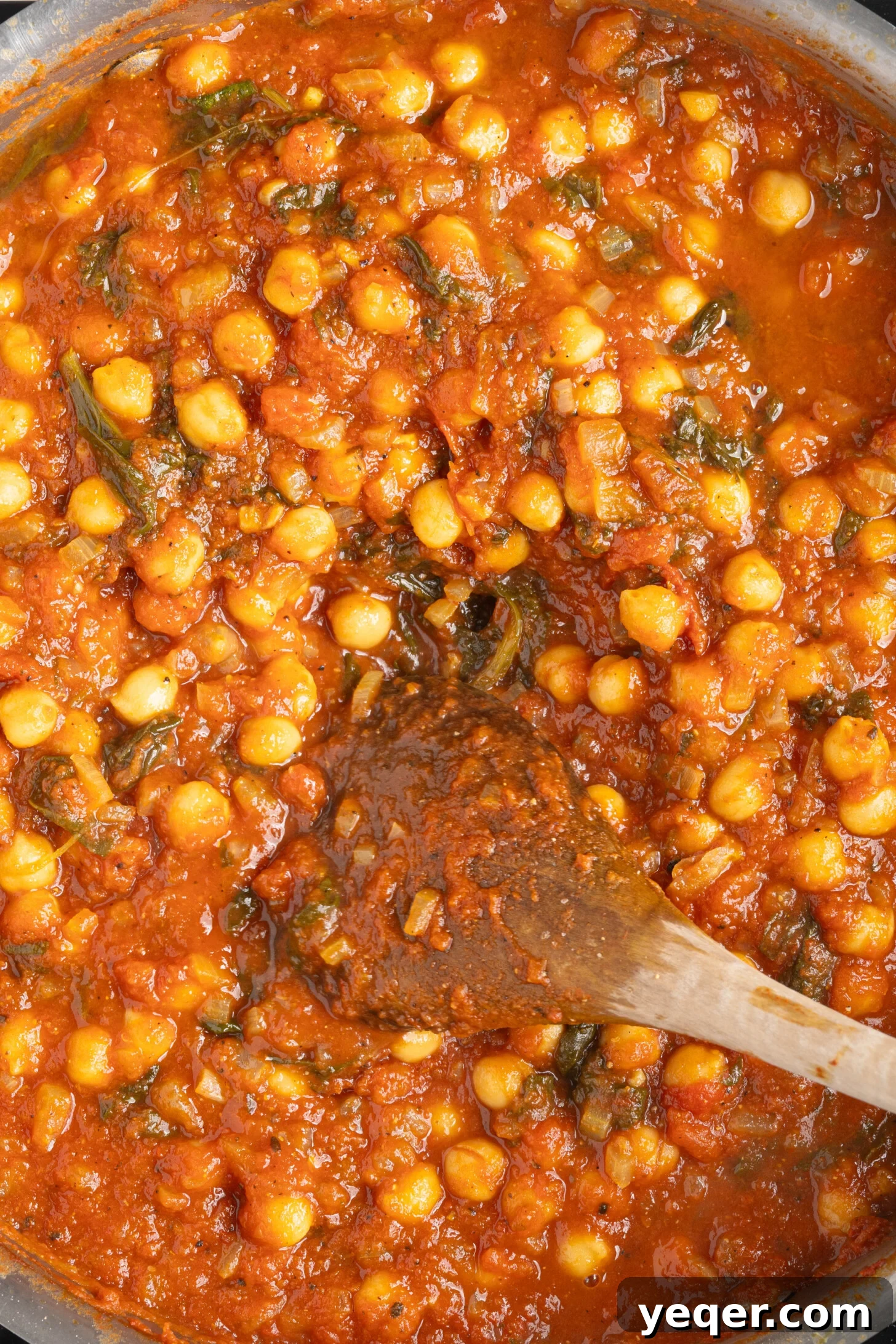
- Stew chickpeas. Bring the broth to a simmer before adding spinach. Continue to stew for 20 minutes or until the broth has reduced and thickened.
- Season to taste & serve. Add salt & pepper to taste before serving with a sprinkle of crumbled feta and/or fresh cilantro (optional). Enjoy with bread or rice!
Equipment
Ras el Hanout
Buy Now →
Stockpot
Buy Now →
Notes
If using dried chickpeas: soak 1 cup of dried chickpeas overnight. Drain and add to a pot full of water. Bring to a boil before lowering to a simmer and cooking until fork tender, about an hour and a half.
Ras el hanout substitute: make your own ras el hanout, buy a jar online, or substitute with equal parts cumin, cinnamon, ginger, black pepper, and turmeric.