
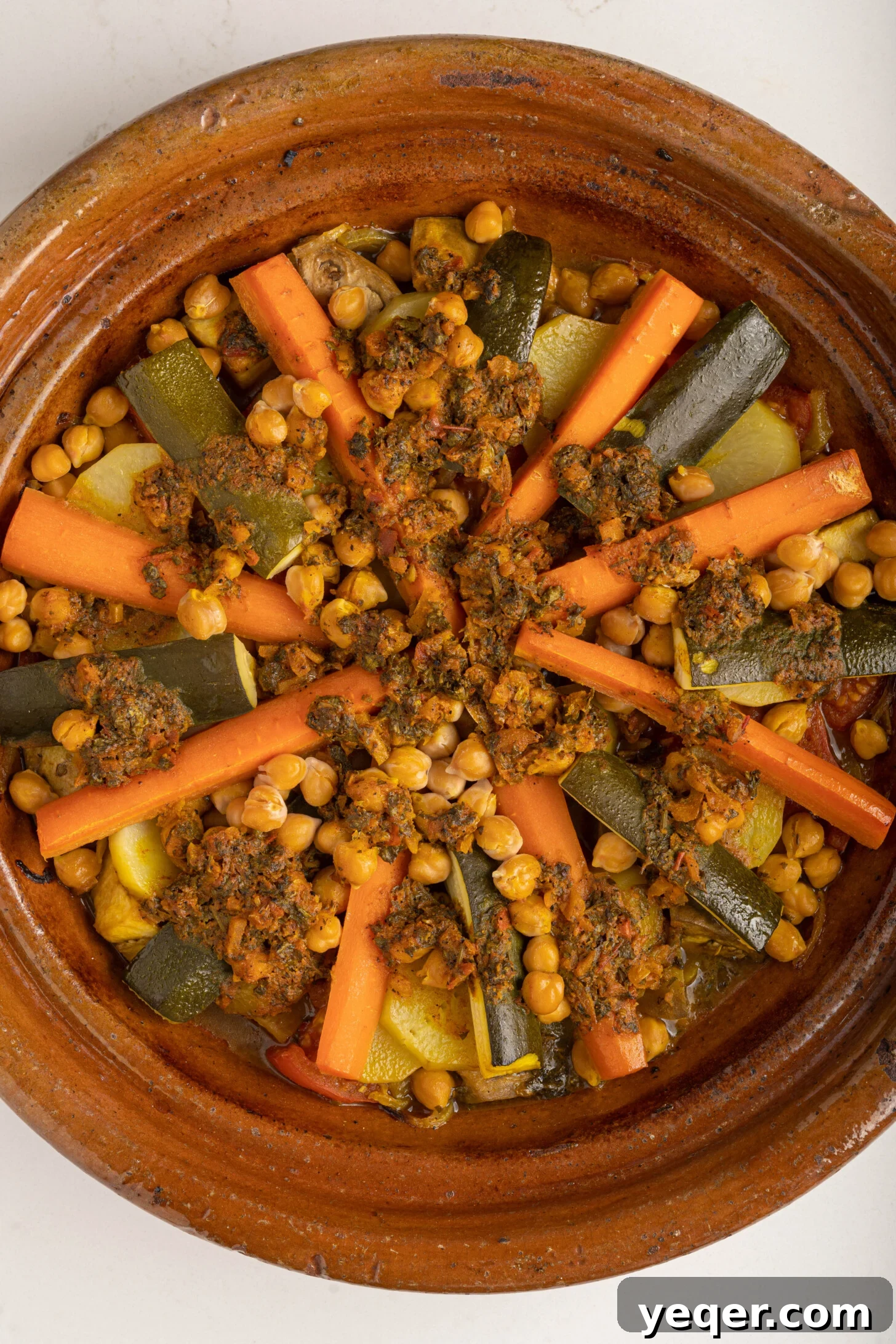
This Moroccan Vegetable Tagine is the perfect stew for the colder months, loaded with warm spices and hearty veggies. Served over a bed of couscous or with warm bread, this flavorful vegan meal is bound to warm up the entire family!
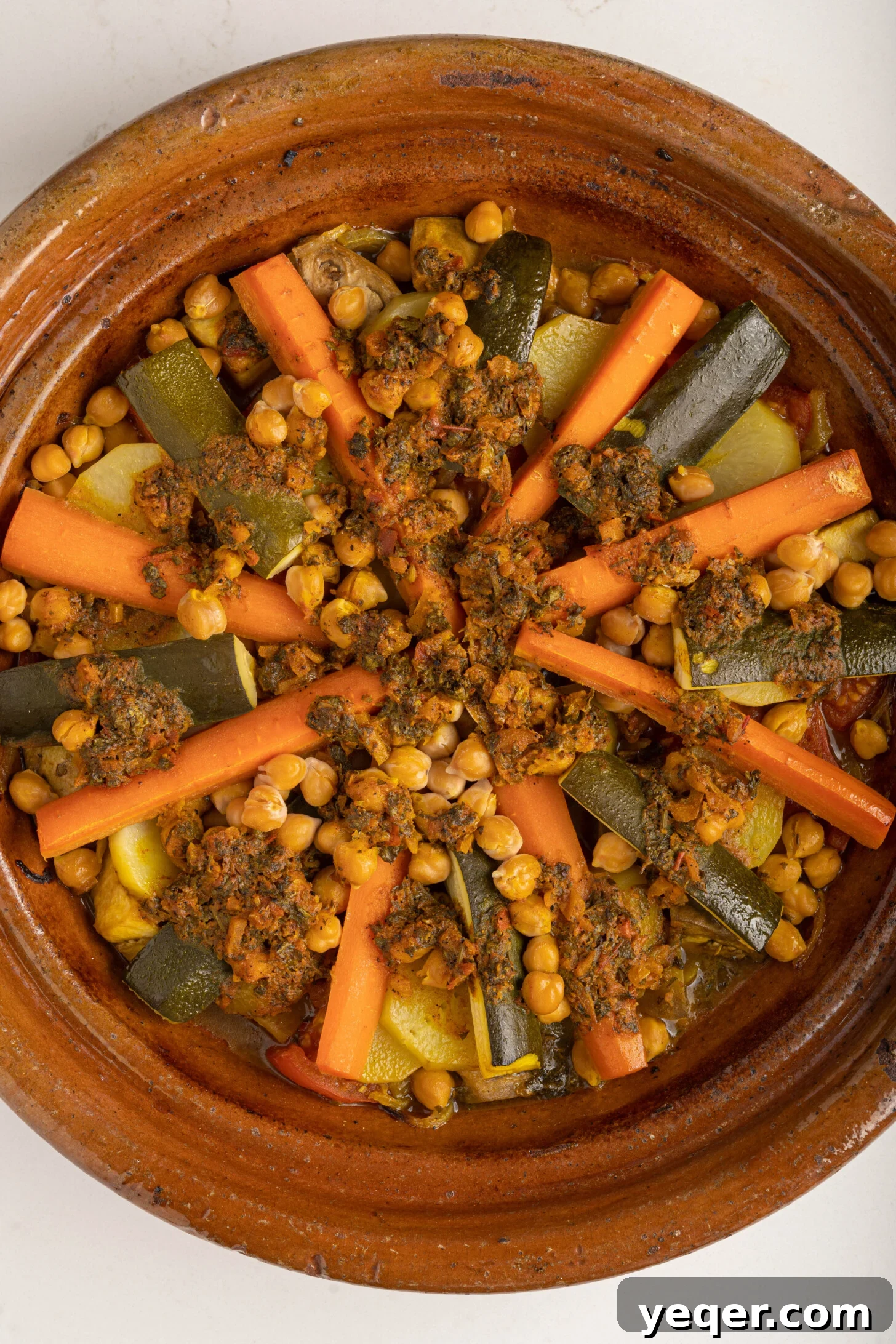
Authentic Moroccan Vegetable Tagine: A Hearty & Flavorful Vegan Stew
Embark on a culinary journey to the vibrant heart of Moroccan cuisine with this exquisite vegetable tagine recipe. This dish transcends a mere meal; it’s a captivating experience, a celebration of deep flavors, aromatic spices, and wholesome, fresh ingredients. Ideal for a cozy family dinner or a delightful gathering with friends, this hearty stew is entirely plant-based, showcasing the incredible richness and versatility of vegan Moroccan food. Crafted with tender sliced Yukon gold potatoes, sweet carrots, succulent eggplant, crisp zucchini, and protein-rich chickpeas, it offers a nourishing and profoundly satisfying culinary adventure.
What is a Tagine? Understanding the Moroccan Culinary Icon
In Morocco, the term “tagine” refers to both the distinctive conical earthenware pot used for cooking and the slow-simmered stew prepared within it. This iconic cooking vessel, with its unique lid design, is fundamental to developing the complex, layered flavors characteristic of Moroccan culinary traditions. The ingenious design allows steam to circulate and condense, returning moisture to the pot. This self-basting action ensures that ingredients remain exceptionally tender and moist, while the aromatic spices are concentrated into an irresistibly rich and flavorful sauce. This traditional method of cooking results in a stew that is not only bursting with bold flavors but also boasts a wonderfully soft texture, where every vegetable is perfectly cooked, creating a delightful sensation with each bite.
While many people commonly associate tagines with rich meat dishes, such as beef tagine, lamb tagine, or chicken tagine, this particular recipe proudly highlights the bounty of Morocco’s fresh produce. It serves as a testament that incredibly satisfying and flavorful meals can be created entirely from vegetables, infused with a signature blend of Moroccan seasonings that shine brightly on their own. This vegan interpretation offers a lighter yet equally fulfilling alternative, making it accessible to a broader range of dietary preferences without compromising on the authentic taste or heartwarming essence of a traditional Moroccan tagine.
The Essence of Moroccan Flavor: A Deep Dive into Spices and Aromatics
The true magic of Moroccan cuisine, and especially this vegetable tagine, lies in its exquisite and carefully balanced blend of spices and aromatic ingredients. Much like many authentic Moroccan recipes, this tagine relies on a harmonious symphony of flavors that elevate simple vegetables into an extraordinary and memorable dish.
- Ginger and Turmeric: These two essential spices form a warm, earthy foundation for the tagine, imparting a beautiful golden hue and offering numerous health benefits. Ginger introduces a gentle heat and a fresh, zesty note, while turmeric contributes its distinctive golden color and a mild, peppery undertone.
- Fresh Cilantro and Parsley: Herbs are indispensable in Moroccan cooking. Generous amounts of minced fresh cilantro and parsley add a vibrant freshness and a profound herbaceous depth, brightening the entire stew and infusing it with their characteristic fresh aromas.
- Harissa: For those who enjoy a hint of warmth and spice, harissa, a beloved spicy chili paste, delivers a delightful kick and a smoky complexity. Its rich, fiery notes beautifully complement the natural sweetness of the vegetables and the earthy warmth of the other spices.
- Preserved Lemons: A true Moroccan culinary gem, preserved lemons are crucial for their unique tangy, salty, and subtly floral notes. Unlike fresh lemons, they offer a mellowed, deeply integrated citrus flavor that adds an irreplaceable layer of complexity and brightness to the stew.
- Saffron: Often referred to as the “king of spices,” saffron, with its delicate aroma and vibrant golden color, elevates the tagine to a gourmet level. When bloomed in warm water, it releases its subtle yet distinctive essence, lending an unparalleled elegance and depth to the dish. While optional, its inclusion is highly recommended for an authentic and luxurious experience.
Collectively, these ingredients create a sauce that is remarkably rich, intensely fragrant, and utterly addictive—perfectly designed for soaking up with a piece of warm bread or a fluffy bed of couscous.
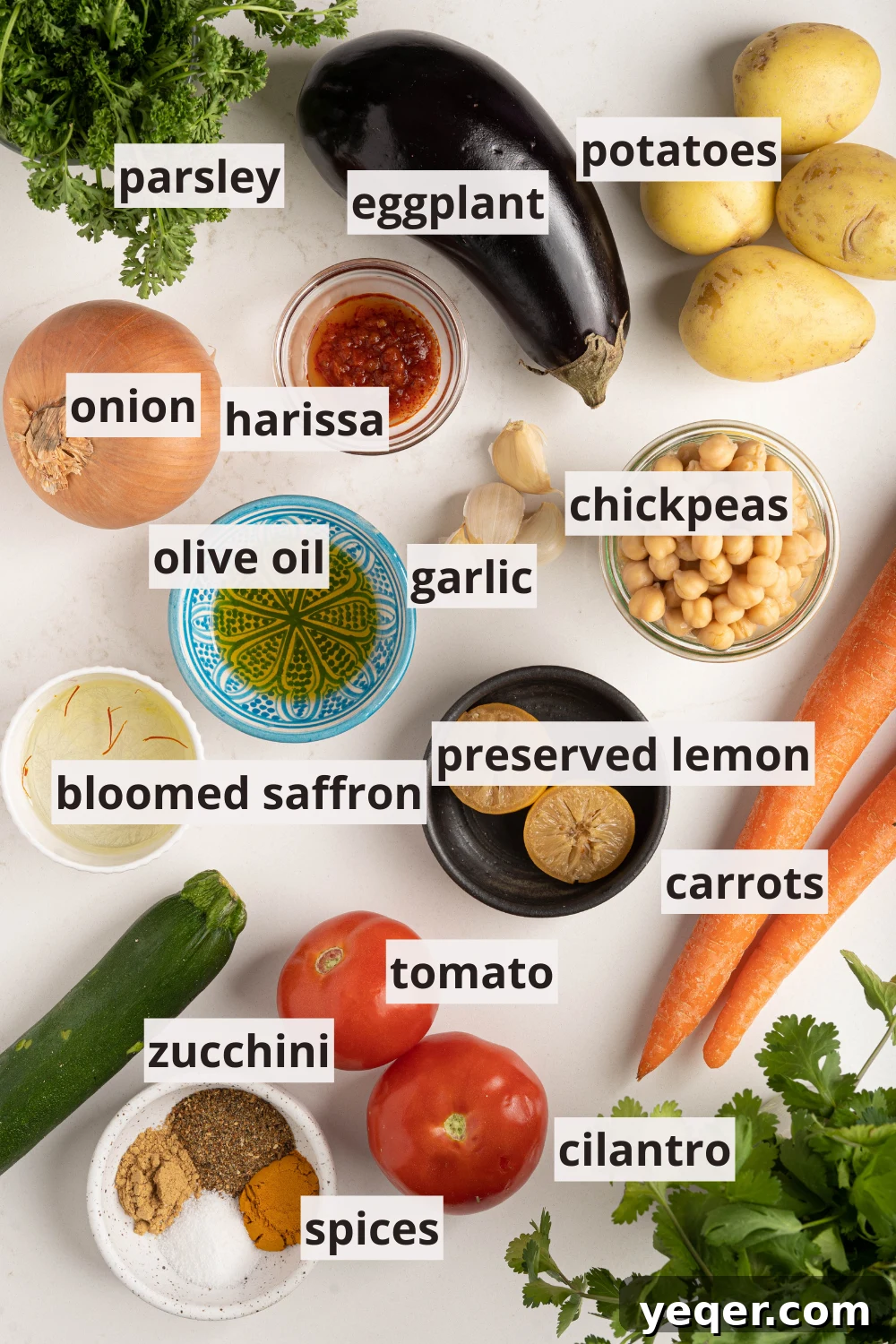
Ingredients for Your Moroccan Vegetable Tagine
This vibrant and wholesome stew calls for a selection of fresh, seasonal vegetables paired with classic Moroccan spices. Here’s a detailed look at what you’ll need to create this comforting vegan masterpiece:
- Olive Oil: Forms the foundational base for sautéing and building the initial layers of flavor.
- Yellow Onion: Provides a sweet and savory backbone to the dish.
- Garlic, Minced: Adds a pungent, aromatic depth that is crucial for Moroccan flavors.
- Tomatoes, Diced: Contributes natural sweetness and acidity, essential for the tagine’s rich sauce.
- Fresh Parsley, Minced: For vibrant freshness and a herbaceous lift.
- Fresh Cilantro, Minced: Adds a distinct, bright flavor profile that is characteristic of Moroccan cooking.
- Preserved Lemon, Minced: Essential for its unique tangy, salty, and floral complexity that cannot be replicated.
- Ground Ginger: Infuses the stew with warmth and a subtle spicy kick.
- Turmeric: Provides its signature earthy flavor and beautiful golden color.
- Salt and Pepper: Basic seasonings to enhance and balance all the flavors.
- Harissa: A Moroccan chili paste that adds a delightful touch of heat and depth.
- Saffron: A few strands bloomed in warm water for an aromatic complexity and an exquisite golden hue. (Plain water can be used as an alternative if saffron is unavailable).
- Yukon Gold Potatoes: Sliced into rounds, they become wonderfully tender and absorb the tagine’s rich, savory flavors.
- Carrots: Sweet, hearty, and packed with nutrients, providing essential texture.
- Eggplant: Adds a satisfying, meaty texture and beautifully soaks up the savory sauce.
- Zucchini: Contributes a delicate freshness and softens wonderfully during the slow cooking process.
- Chickpeas, Drained (Optional): Added for an extra boost of plant-based protein and a pleasant texture, making the stew even more filling.
- Couscous or Bread (Optional): Perfect accompaniments for serving, designed to soak up every drop of the delicious sauce.
(Please refer to the complete recipe card below for precise quantities and detailed measurements.)
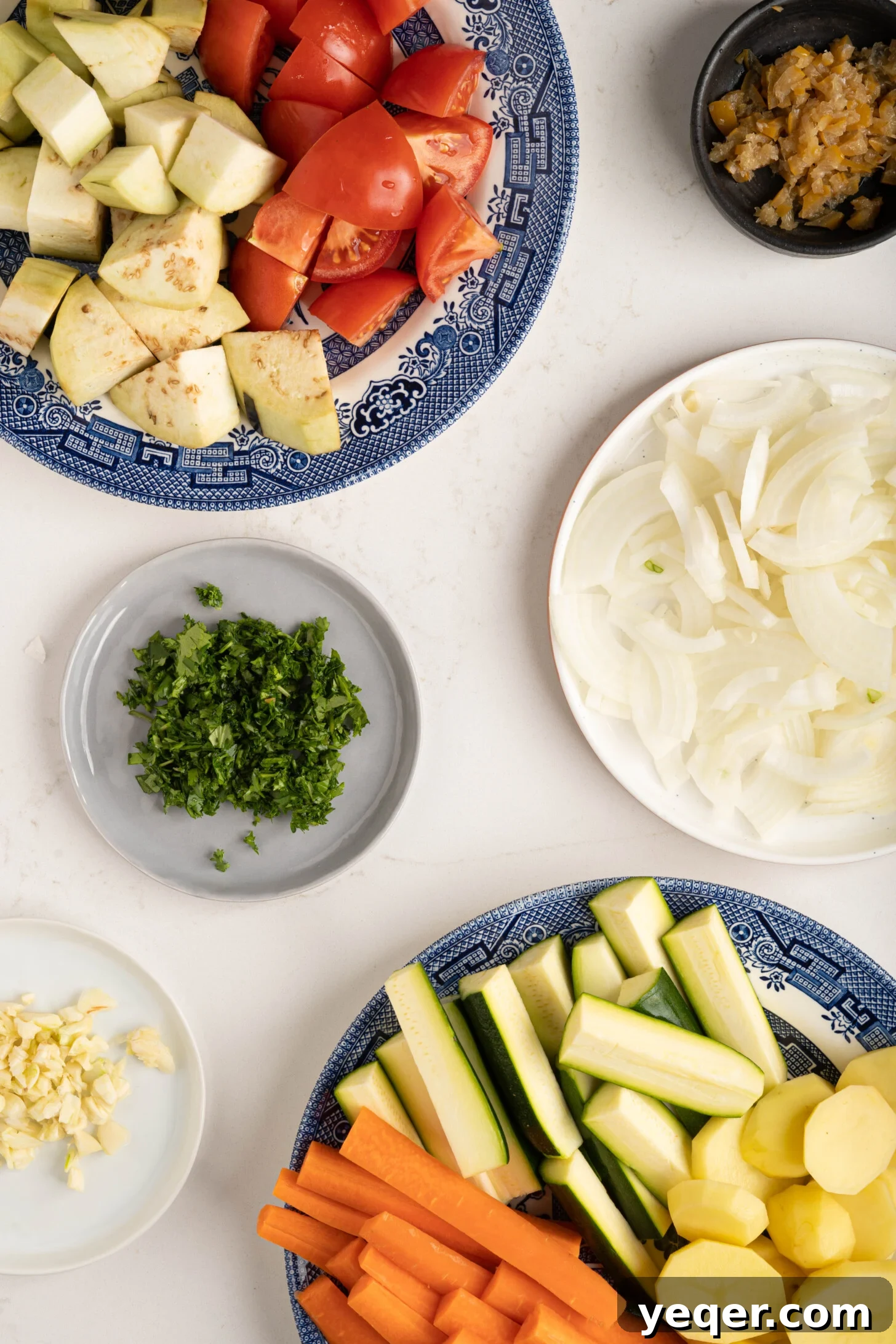
Step-by-Step Instructions: Crafting Your Authentic Moroccan Vegetable Tagine
Creating this flavorful and hearty tagine is a straightforward and rewarding process. By combining simple steps with a blend of aromatic ingredients, you will achieve a truly satisfying meal. Follow these detailed instructions carefully for a perfect outcome that captures the essence of Moroccan home cooking:
Cooking in Your Tagine vs. Dutch Oven: The Best Vessel for Your Stew
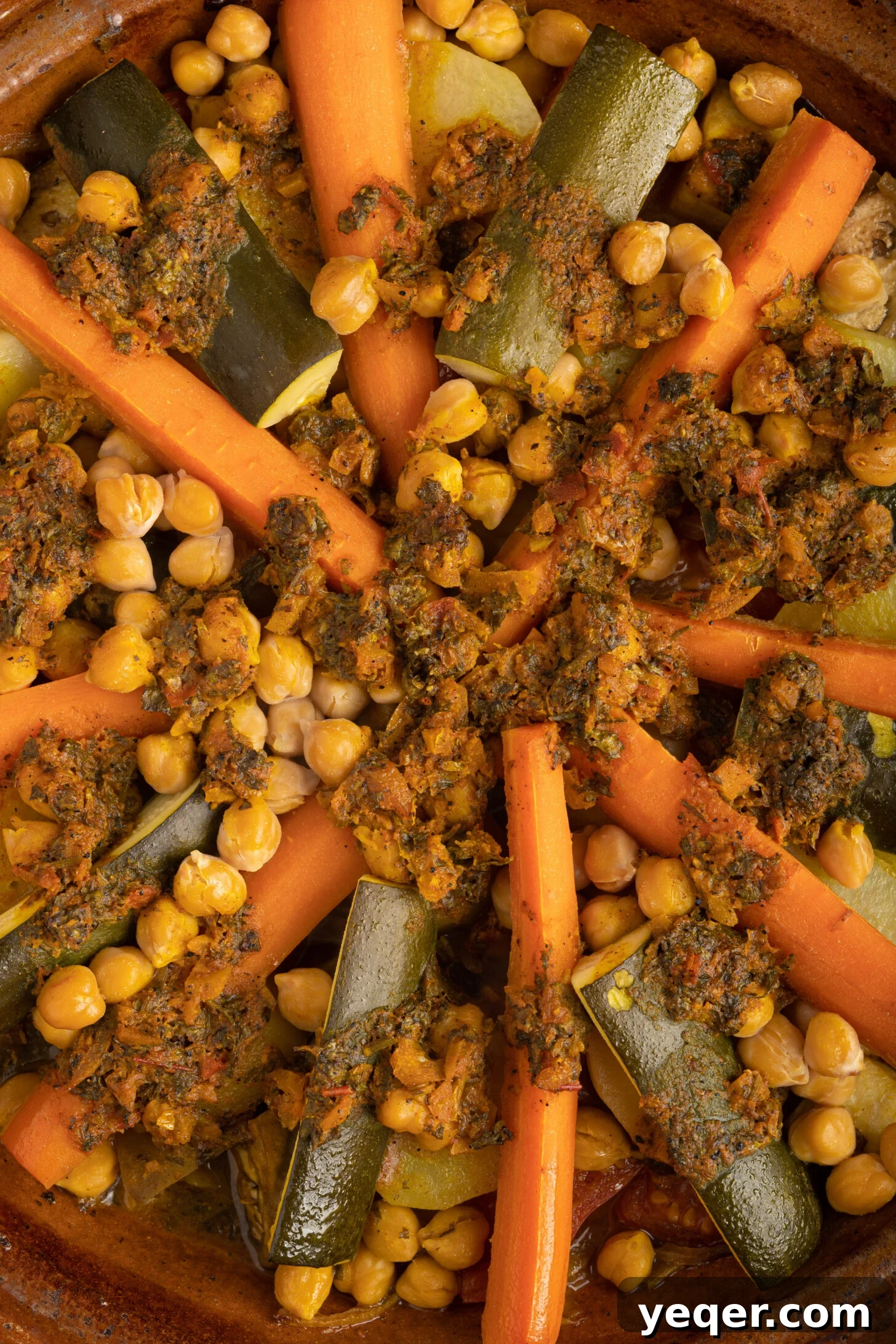
As a proud Moroccan, I admit to a strong preference for cooking with a traditional tagine. Its distinctive design, particularly the iconic conical lid, is unmatched in its ability to create a perfectly self-basting environment. This design efficiently captures steam, condenses it, and returns it directly to the dish, resulting in an incredibly luscious sauce and perfectly soft, tender vegetables. A true tagine genuinely enhances the slow-cooking process, concentrating and refining flavors and textures in a way that is challenging to replicate.
However, if a traditional tagine is not part of your kitchen arsenal, there’s absolutely no need to rush out and purchase one! A high-quality Dutch oven serves as a fantastic and highly effective alternative. These robust, heavy-bottomed pots with tight-fitting lids excel at retaining and distributing heat evenly, creating an environment that closely mimics many of the tagine’s benefits. Dutch ovens are a valuable investment for any kitchen, renowned for their versatility and their capacity to produce exceptionally flavorful stews, braises, and roasts. So, whether you possess a traditional tagine or a dependable Dutch oven, rest assured that you can confidently use what you have to create this magnificent vegetable tagine. The essential elements for success are slow cooking and a tight-fitting lid, allowing all the incredible flavors to meld beautifully.
How to Serve Your Moroccan Vegetable Tagine for Maximum Enjoyment
Tagines are celebrated globally for their rich, aromatic, and deeply flavorful sauces, which truly embody the soul of the dish. To fully appreciate this culinary delight, it’s essential to pair it with an accompaniment that can effectively absorb every precious drop of that exquisite liquid. Here are some traditional and popular serving suggestions to enhance your tagine experience:
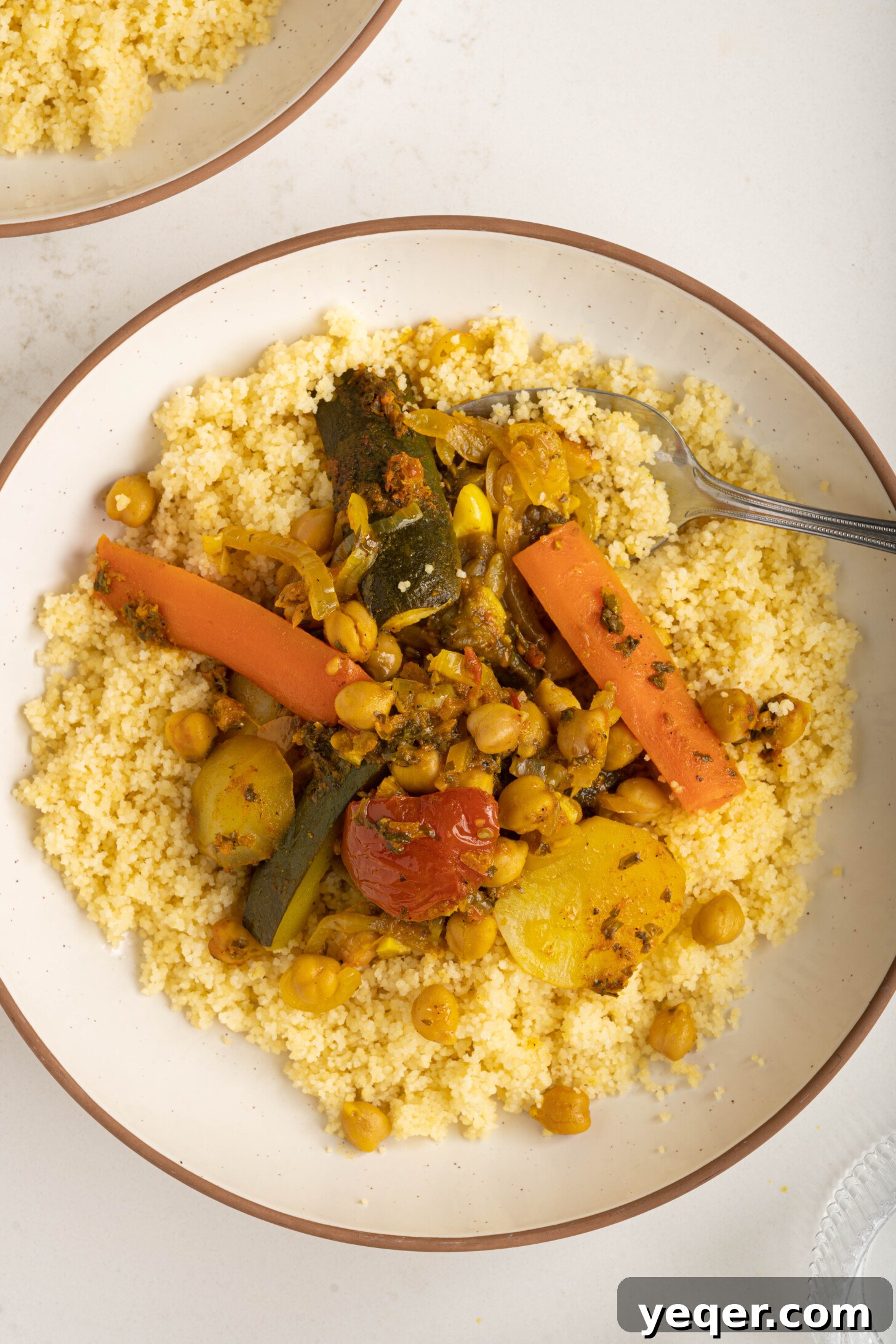
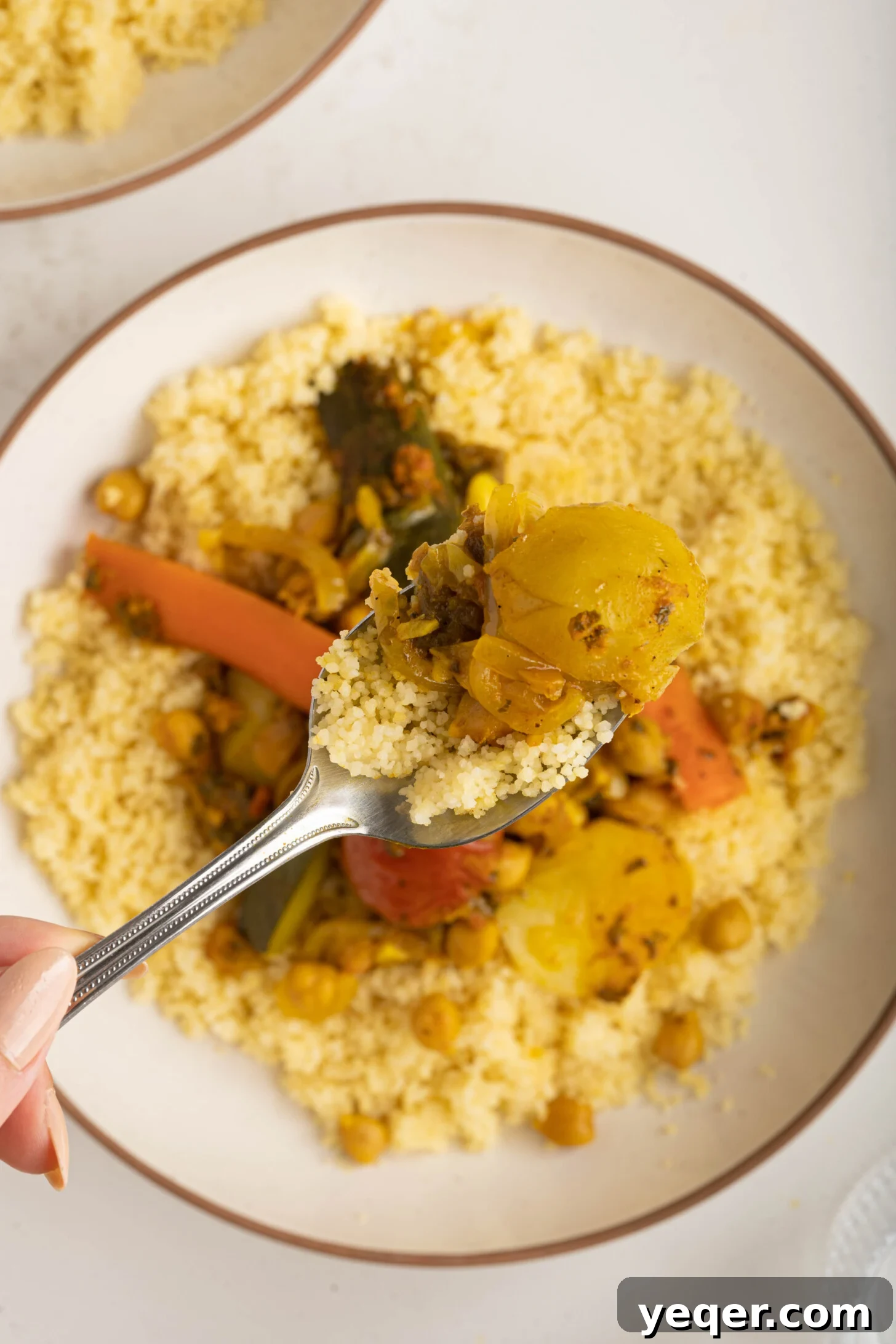
- Over Fluffy Couscous: This is, without a doubt, the most classic and cherished pairing. Serving most tagines over a generous bed of light and fluffy couscous allows the tiny pasta grains to soak up all the wonderful spices and savory vegetable juices, creating a harmonious and truly complete meal.
- With Fresh, Warm Bread: In my Moroccan household, the preferred method of enjoying tagine was often with freshly baked Moroccan bread (khobz). We would tear off pieces of the soft, round bread and use it as a natural utensil, skillfully dipping it directly into the tagine to scoop up the savory sauce and tender vegetables. Any warm, crusty bread you enjoy will serve as a beautiful accompaniment.
- Keep it Simple with a Spoon: If you’re seeking a more direct and unadorned way to savor your tagine, simply enjoying it in a bowl with a spoon is perfectly acceptable and equally delightful. Embrace the wholesome goodness of the stew on its own!
- Alongside a Simple Salad: A fresh, crisp Moroccan salad—perhaps featuring finely diced cucumber, tomato, and red onion, dressed with a light vinaigrette—can provide a refreshing contrast to the rich and warm tagine, balancing the flavors beautifully.
Tips for Success & Delightful Variations for Your Tagine
To ensure your Moroccan vegetable tagine turns out perfectly every time and to explore different flavor profiles, consider these helpful tips and exciting variations:
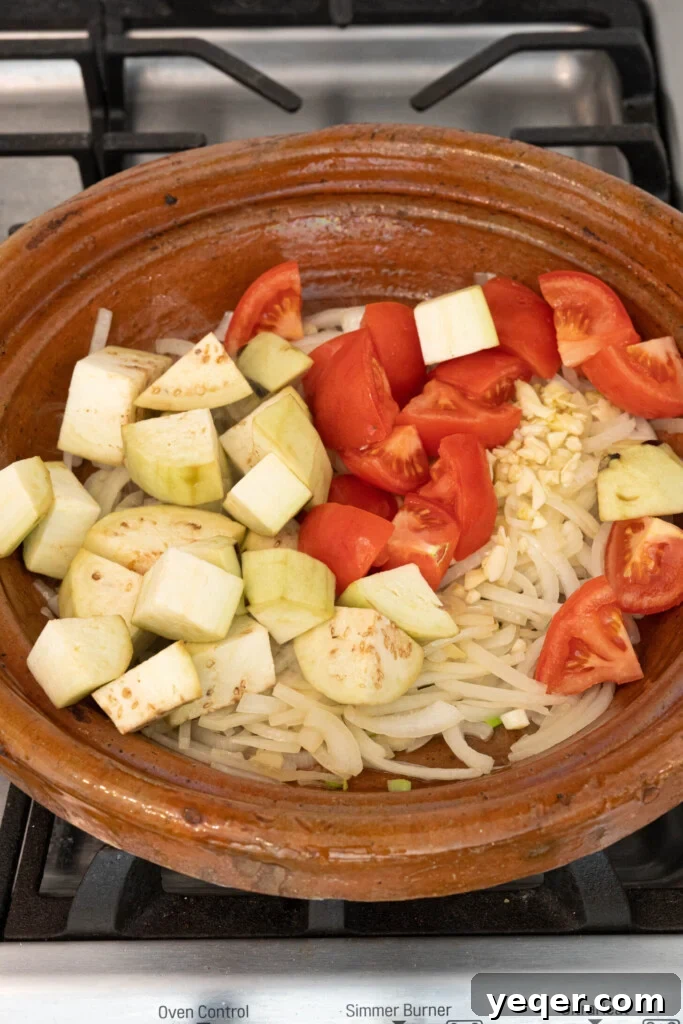
- Embrace the Sauté: Do not rush the initial sautéing of the onions, garlic, tomatoes, and eggplant. This crucial step is where the foundational layers of flavor are built, which will permeate the entire tagine.
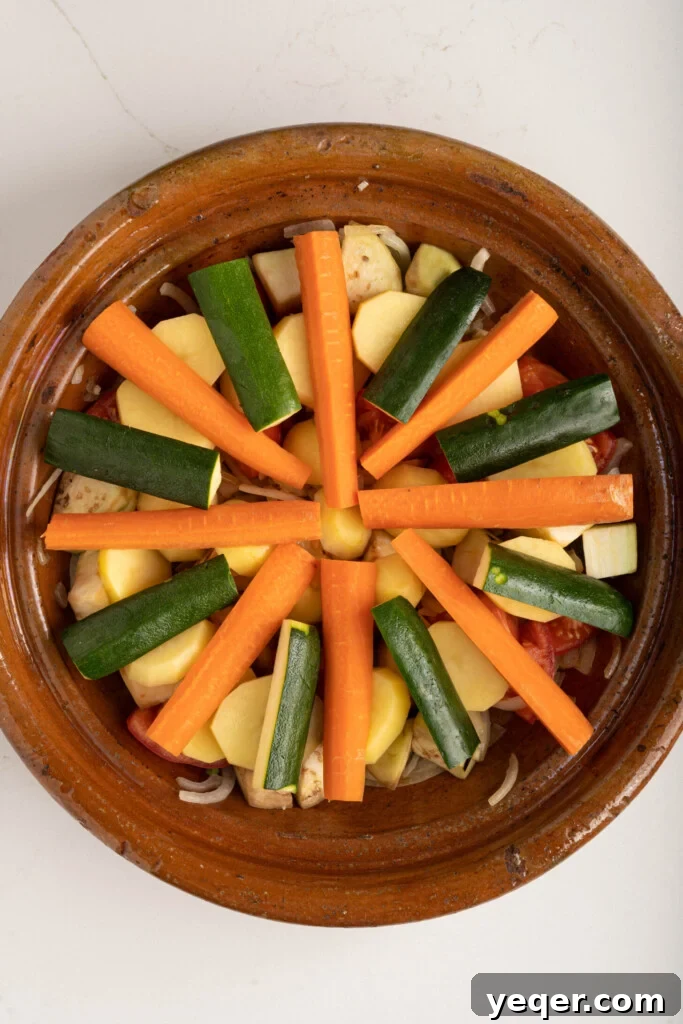
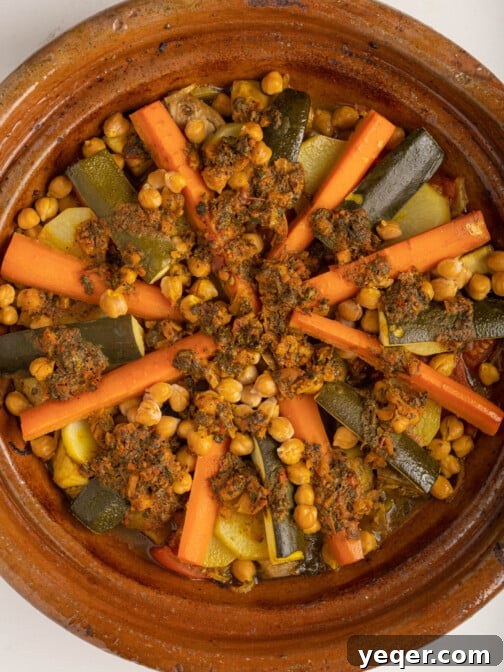
- Mindful Layering: While not strictly essential for taste, arranging your vegetables in an aesthetically pleasing manner (such as the traditional circular pattern) can significantly enhance the visual appeal and overall enjoyment of your meal. It also aids in more even cooking.
- Vegetable Swaps: Feel empowered to experiment with other hearty and seasonal vegetables! Sweet potatoes, bell peppers, green beans, or even fresh spinach can be wonderful additions. Just be mindful to adjust cooking times as needed, especially for softer vegetables.
- Add Moroccan Cured Olives: For an extra layer of briny, complex flavor, consider adding a handful of Moroccan cured olives (red or green) during the last 15-20 minutes of cooking. Their salty notes perfectly complement the rich stew.
- Spice it Up: If you adore a good spicy kick, feel free to increase the amount of harissa in the sauce, or add a pinch of cayenne pepper to taste. Adjust to your desired level of heat.
- Fresh Herbs at the End: A final sprinkle of fresh cilantro and parsley just before serving can brighten the flavors and add a beautiful garnish.
Choosing Your Tagine Pot: A Comprehensive Guide
The choice of your cooking vessel can indeed have a noticeable impact on the final outcome of your tagine. As someone deeply embedded in Moroccan culinary traditions, I can unequivocally state that my most treasured tagines are those meticulously handcrafted in Morocco. They embody impeccable quality, often fashioned from natural clay, and are surprisingly affordable when acquired directly from local artisans and vendors. Opting for a Moroccan-made tagine not only provides a truly authentic cooking experience but also directly supports the skilled craftspeople and local communities that preserve this rich heritage.
However, I fully understand that not everyone has the opportunity to travel to Morocco to procure an authentic pot. Fortunately, the market now offers several excellent mainstream brands that produce high-quality tagines perfectly suitable for home cooking. When selecting a tagine, consider your preference: unglazed clay models typically require seasoning before first use and offer superior heat retention and moisture absorption, while glazed ceramic options are often easier to maintain. Regardless of your choice, ensure the lid fits snugly to maximize steam retention, which is crucial for the tagine’s signature moist and tender results.
Here are a few reputable brands I would recommend for readily accessible options:
- Treasure of Morocco Tagine: These are generally known for their traditional aesthetic and good heat retention properties.
- Emile Henry Tagine: A high-quality ceramic option, often praised for its exceptional durability and consistent, even cooking.
- Le Creuset Tagine: A premium enameled cast iron option that delivers outstanding heat distribution, remarkable longevity, and versatility.
Whichever tagine you ultimately choose, ensure it is suitable for oven use if you intend to follow this baked tagine preparation method.
Tagine vs. Tajine: What’s in a Name?
One of the fascinating aspects of delving into global culinary traditions is encountering the various ways foreign words are transliterated and adapted into English. The iconic Moroccan dish and its distinctive cooking pot serve as perfect examples of this linguistic diversity. Whether you spell it “tagine” or “tajine,” both spellings are widely accepted and perfectly understood in American English when referring to this beloved term. Both transliterations refer to the exact same traditional earthenware cooking vessel and the incredibly delicious, slow-cooked stew that is so famously prepared within it. So, regardless of your preferred spelling, rest assured you are referring to the same wonderful and authentic Moroccan culinary experience!
Storing Leftovers & Making Ahead: Enjoying Your Tagine Longer
One of the most delightful qualities of stews, and this Moroccan vegetable tagine is certainly no exception, is that they often taste even better on the second day! The flavors have additional time to meld, deepen, and fully develop, creating an even richer and more complex profile that enhances the overall culinary experience.
To properly store any leftovers, first allow the tagine to cool completely to room temperature. Then, transfer it to an airtight container. It is generally best to store the tagine stew separately from any couscous you might have served it with, as couscous can tend to become mushy when stored directly in the sauce. Refrigerate the tagine for up to 4 days for optimal freshness and flavor.
Making Ahead: This Moroccan vegetable tagine is an excellent candidate for meal preparation. You can prepare the entire dish a day in advance, allow it to cool, refrigerate it, and then gently reheat it on the stovetop over low heat or in the oven until it is thoroughly warmed through. The flavors will be even more developed and integrated, making it a perfect, easy, and satisfying meal for busy weeknights or when you need a quick, flavorful option.
Bismillah,

Moroccan-Style Potato & Vegetable Tagine
- Author: Salima Benkhalti
- Prep Time: 30 minutes
- Cook Time: 1 hour 30 minutes
- Total Time: 2 hours
- Yield: 4 servings
- Category: main dish, entree
- Method: baked
- Cuisine: Moroccan, Mediterranean
- Diet: Vegan
Description
This Moroccan vegetable tagine recipe is a delicious, hearty stew. It’s made with sliced Yukon gold potatoes, carrot, eggplant, zucchini, and chickpeas. Serve it with couscous or warm bread for a nourishing Moroccan-style meal!
Ingredients
- 3 tbsp olive oil
- 1 yellow onion
- 4 cloves garlic, minced
- 2 tomatoes, diced
- 1 tbsp parsley, minced
- 1 tbsp cilantro, minced
- 1/2 preserved lemon, minced
- 1 tsp ground ginger
- 1 tsp turmeric
- 1 tsp salt
- 1 tsp pepper
- 1 tbsp harissa
- 3 strands of saffron bloomed in 1/2 cup warm water (or 1/4 cup plain water)
- 4 small yukon gold potatoes
- 1-2 carrots
- 1 eggplant
- 1-2 zucchini
- 1 can chickpeas, drained (optional)
- couscous or bread to serve with (optional)
Instructions
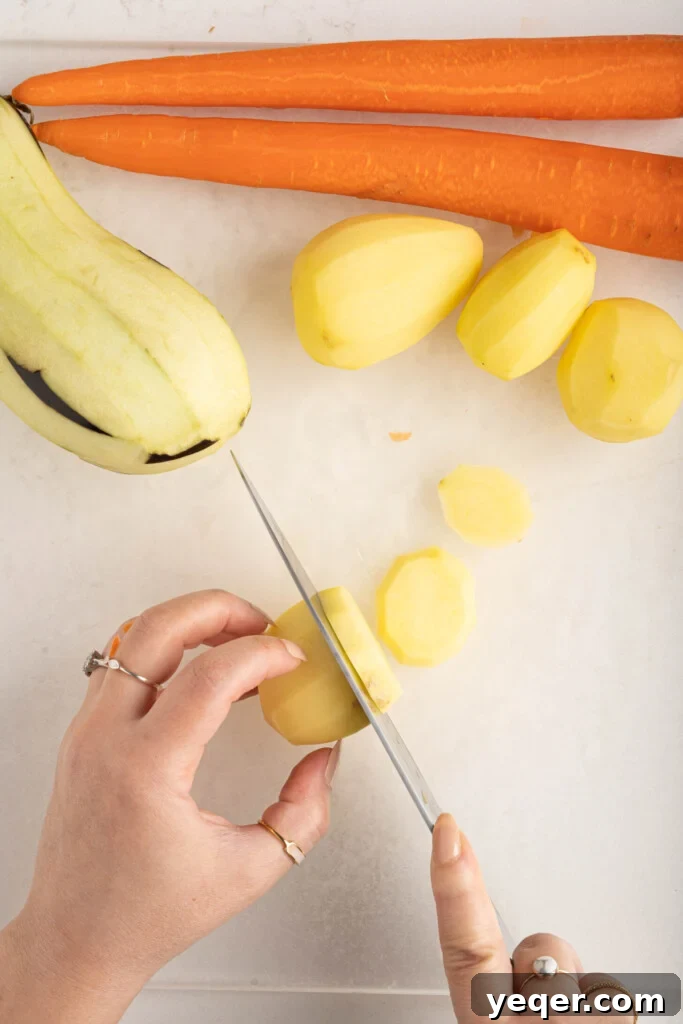
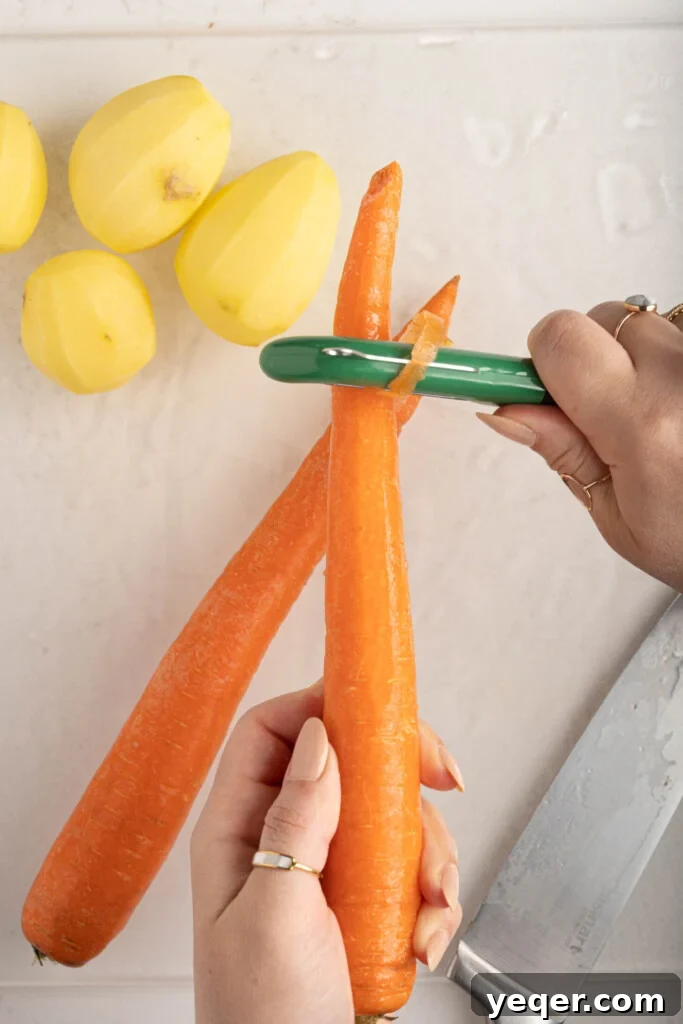
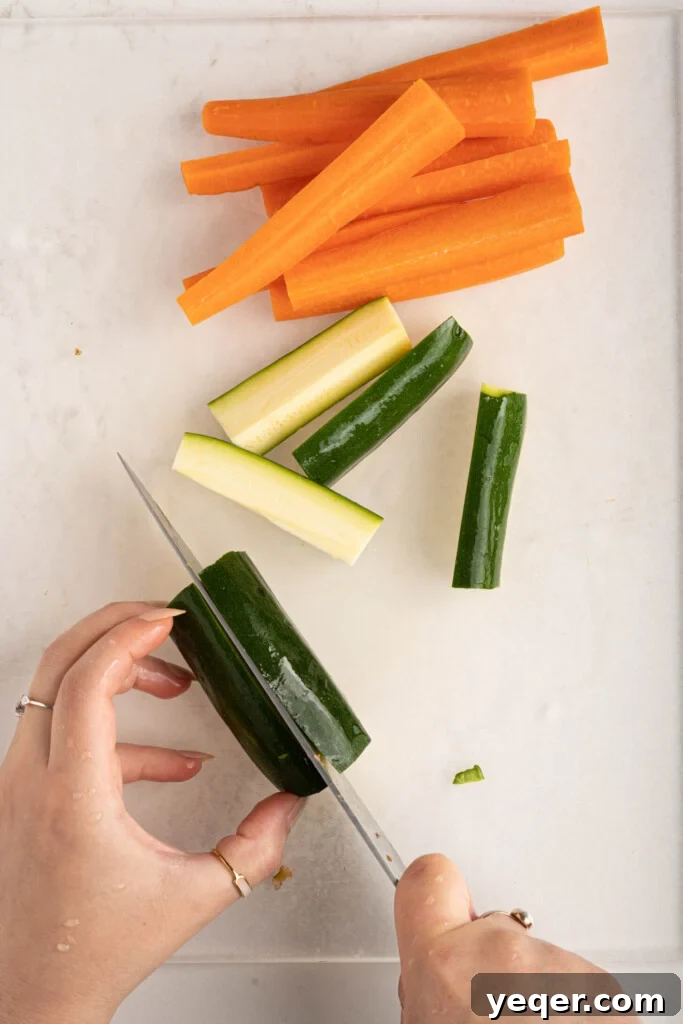
- Prep the veggies. Peel the potatoes, eggplant and carrots. Dice the onion, tomatoes, and eggplant and cut the potatoes into circular pieces. Cut the carrots and zucchini into thick matchstick shaped pieces. Mince the garlic, cilantro, parsley, and preserved lemon.
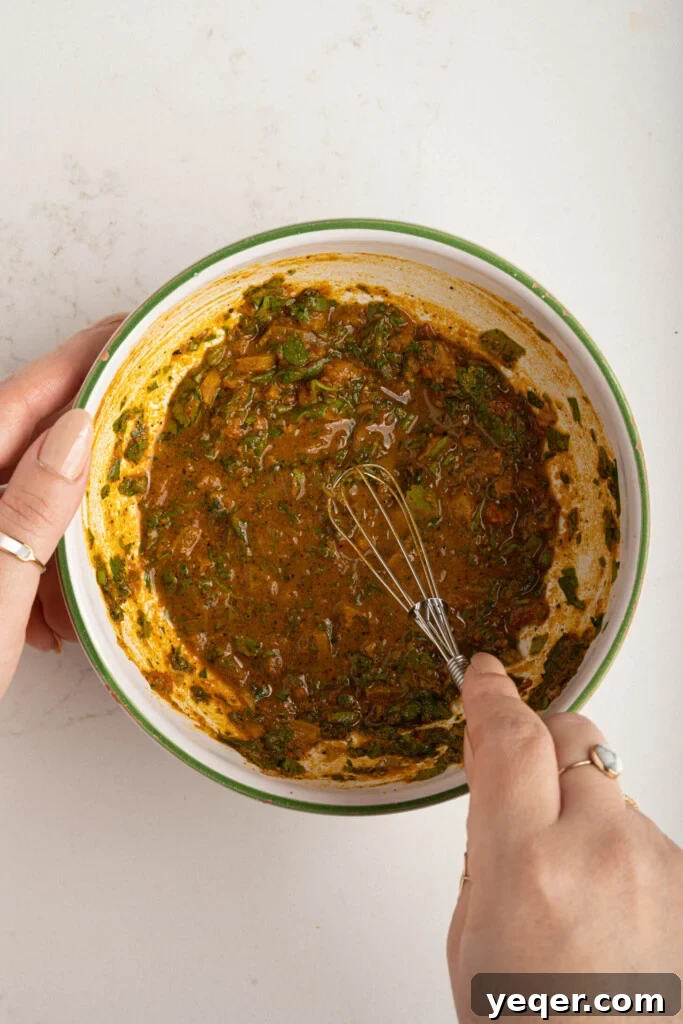
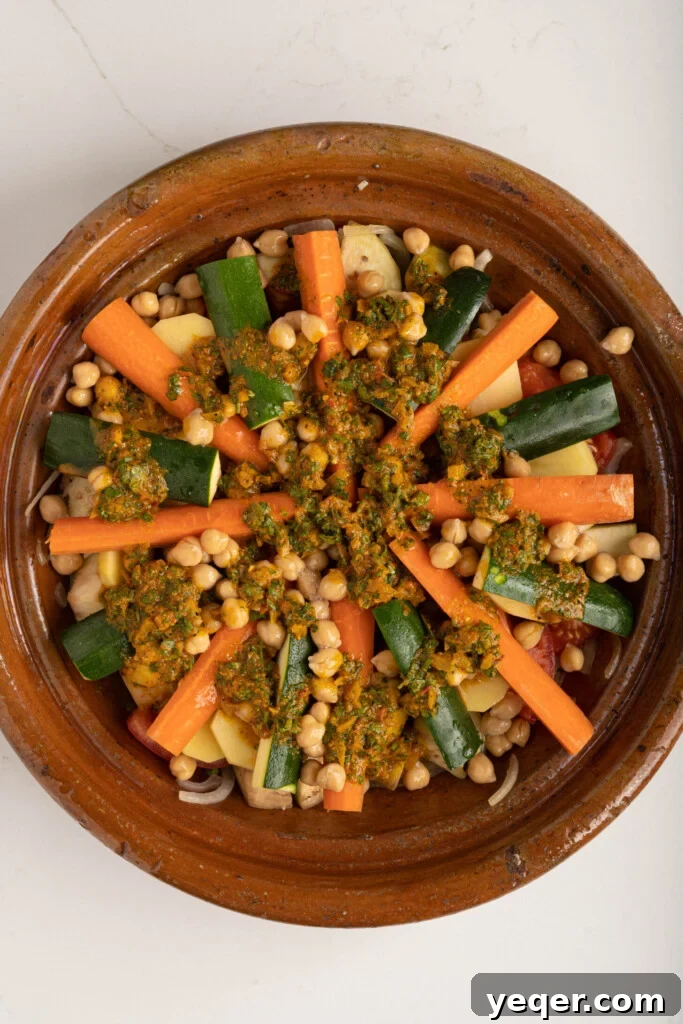
- Make the sauce. In a small bowl combine half of the olive oil, minced parsley, cilantro, preserved lemon, spices, harissa, and water with saffron. Mix well and set aside.
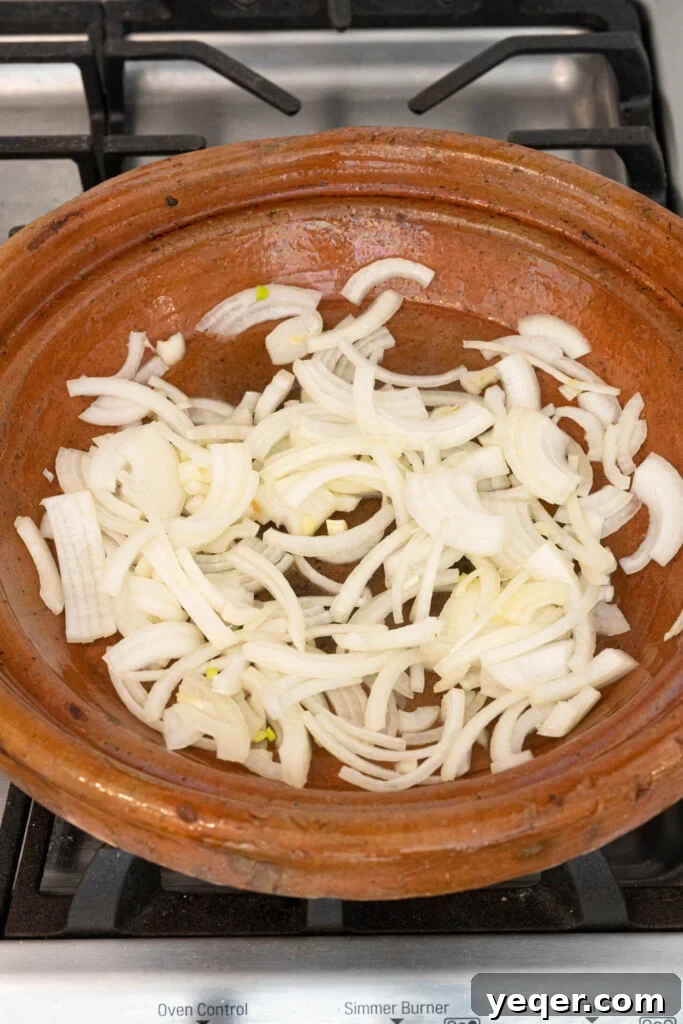
- Sauté onions & garlic. Add remaining olive oil over medium heat in the base of your tagine or pot on the stovetop. Once the oil is hot, add in onion and sauté until translucent. Toss in minced garlic, tomatoes, and eggplant and sauté for another few minutes before turning off the heat.
- Assemble the tagine. Preheat oven to 400°F (200°C). In the base of the tagine, start arranging the sliced potatoes, carrots, and zucchini over the onions and garlic in a circular design. Add the drained chickpeas, if using. Drizzle the sauce mixture over top.
- Bake. Cover the tagine and bake for 45 minutes to an hour, or until the potatoes are cooked through. Serve over a bed of couscous or with a warm piece of bread.